
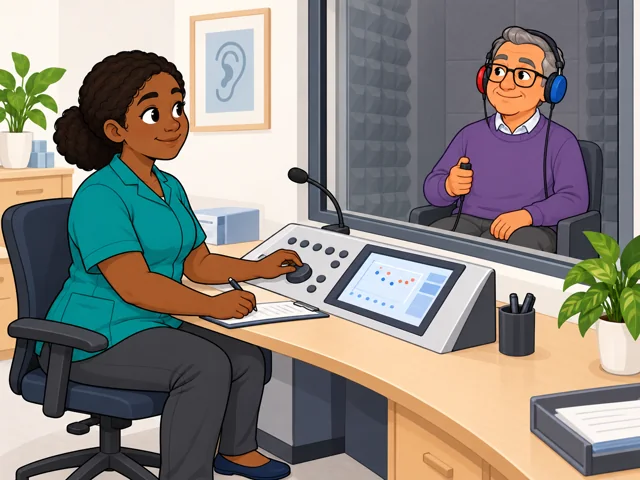
Test hearing to recommend an aid
Play tones of varying pitch and loudness in a sound-treated room, note each reaction, and test speech understanding.
Career profile
Hearing aid specialists fit hearing aids and help people lean on them in everyday conversation.
Does this hearing aid help someone hear better, and can they wear and work it comfortably? Testing, fitting and teaching are how you find out.
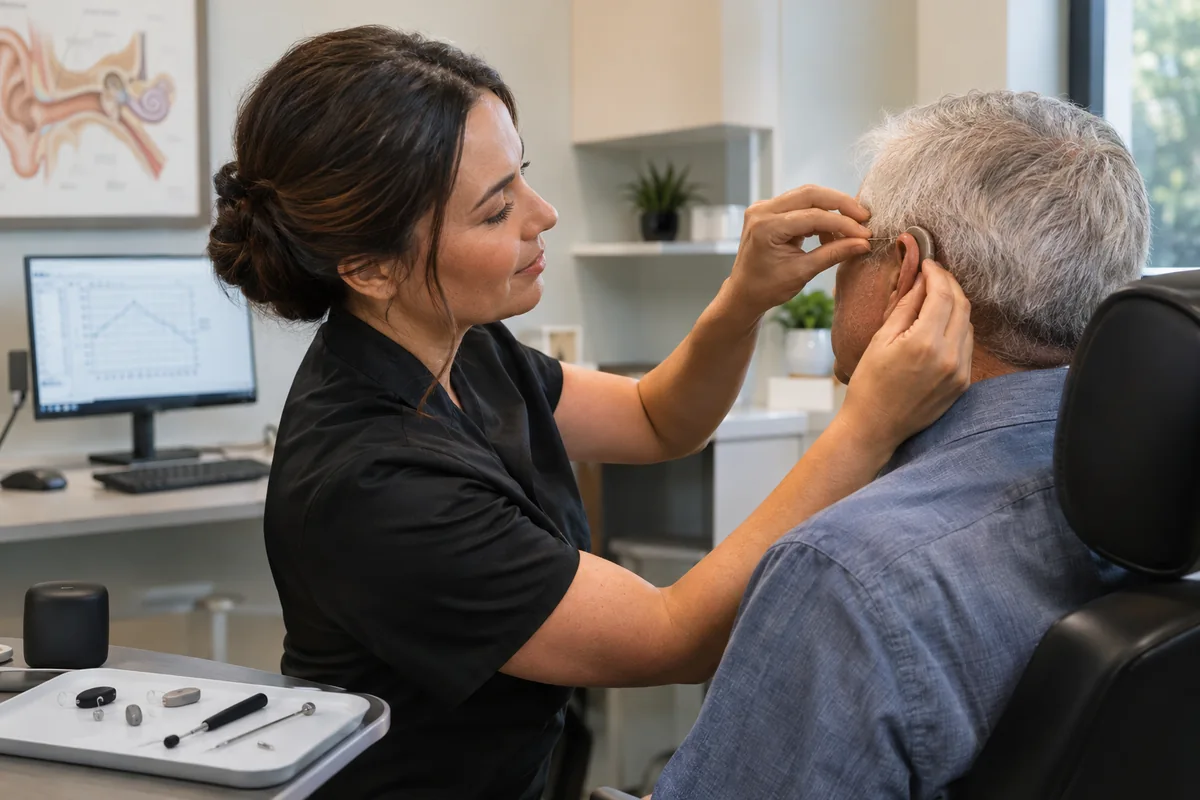
Play tones of varying pitch and loudness in a sound-treated room, note each reaction, and test speech understanding.
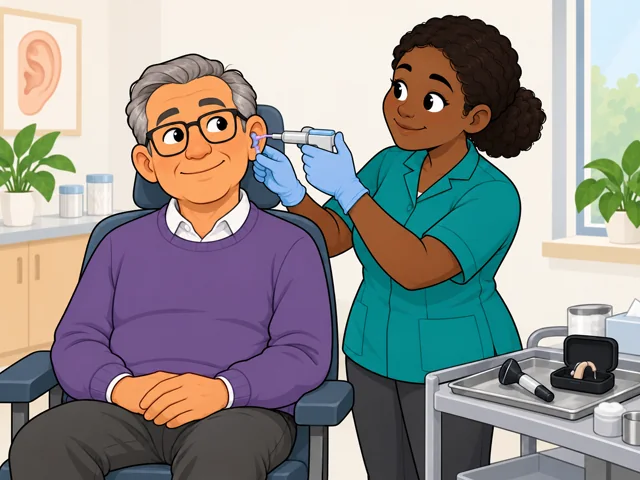
Choose a device for the client's hearing, and for custom fits, take an ear impression for the earmold.
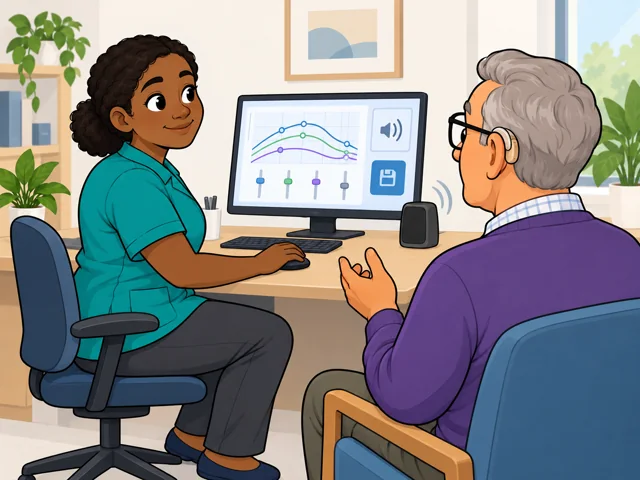
Change settings in programming software, watch the client's reaction, and save the new settings to their electronic file.
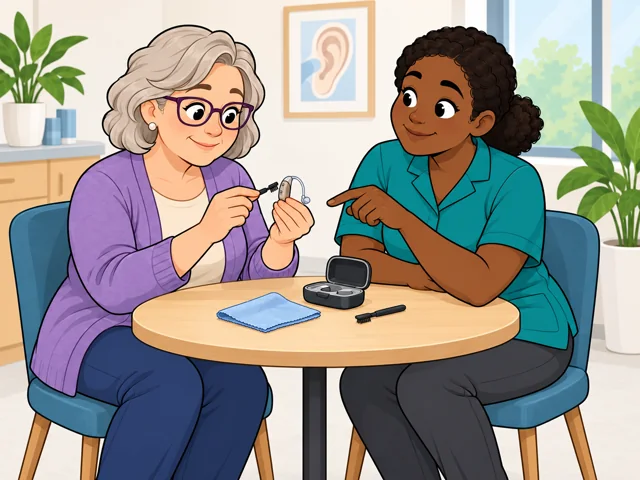
Demonstrate cleaning with the hearing-aid brush, have the client repeat it, and re-explain any part they struggle with.
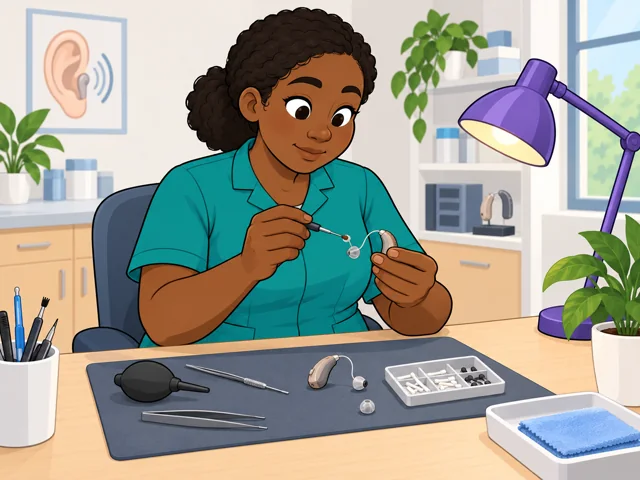
Examine a hearing aid that quit working, find the problem, and maintain or repair it.
United States
United States · May 2025
United States · 2025–2035
Quick orientation
A high school diploma or equivalent is the typical entry education. State requirements may call for supervised training or an approved college program.
National median for hearing aid specialists, equivalent to $31.33 an hour.
Employment of hearing aid specialists is projected to grow nationally from 2025 to 2035.
Programming software helps you adjust devices. Some over-the-counter hearing aids also let users customize settings through tests and phone apps; these products are for adults 18 or older with perceived mild to moderate hearing loss.
In a fitting appointment, you check comfort, explain device care, and respond when a client's experience does not match their expectations.
As self-fitting products improve, some appointments may shift from initial setup toward troubleshooting. How much fitting people will handle themselves remains uncertain.
Pay in context
The national median is $65,160 a year, or $31.33 an hour. Treat that as a comparison point when you read job offers.
In May 2025, the 10th-percentile annual wage was $38,400 and the 90th-percentile wage was $94,020. These describe the lower and upper parts of the wage distribution, not starting pay and a guaranteed later salary.
Some hearing-care jobs combine a base salary with commission. Ask what pay is guaranteed, what earns commission, and how returned hearing aids affect it.
National employment is projected to grow 19.4% from 2025 to 2035, with about 900 openings a year on average. Openings include replacement needs as well as growth; local hiring can differ.
Check the licensing board where you want to work before choosing training. These two routes show why the state matters.
After entry
This starts where the entry routes leave off: early work, growing capability, and advancement or specialization.
Build a reliable appointment routine: prepare devices, keep client records current, and make sure orders and follow-up visits are tracked.
Learn to demonstrate additional listening devices and explain how clients can use them.
A senior specialist role can add staff scheduling, apprentice mentoring, and responsibility for daily operations while keeping some fitting appointments.
You move between a sound-treated testing room and retail operations. The job can include taking payments, managing device inventory, and covering the front desk between appointments.
Independently owned hearing centers can bring hearing professionals, patient coordinators, and office support staff together in one practice. Ask who handles appointment calls and office work; the staffing arrangement affects your day.
Try it
Find a manufacturer's public hearing-aid care guide. Turn one cleaning task into a short explanation for a classmate, using a drawing of the device. Ask them to explain it back. Notice whether you enjoy spotting confusion and making the steps clearer.
Stay safe: Keep this a paper exercise; you do not need to handle anyone's hearing aid or test their hearing.