
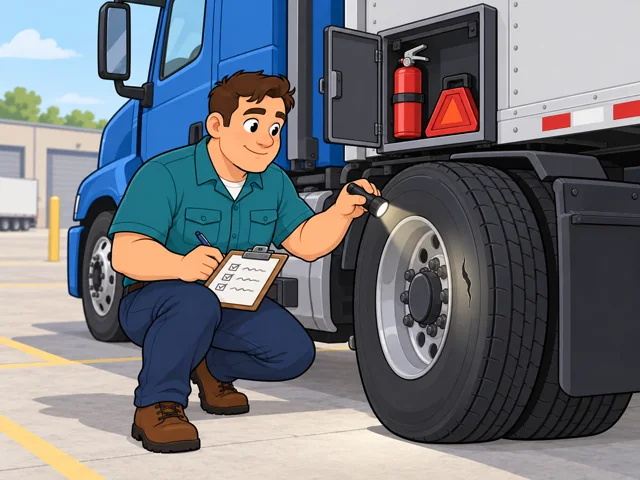
Walk around before driving
Prior to pulling out, circle the truck, check its safety gear and note faults for whoever repairs them.
Career profile
Truck drivers haul cargo in big trucks or tractor-trailers, from first inspection to signed delivery.
Patient drivers thrive both on long highway runs and quick checks before departure, and some days end inching a long trailer back to a dock.
Prior to pulling out, circle the truck, check its safety gear and note faults for whoever repairs them.
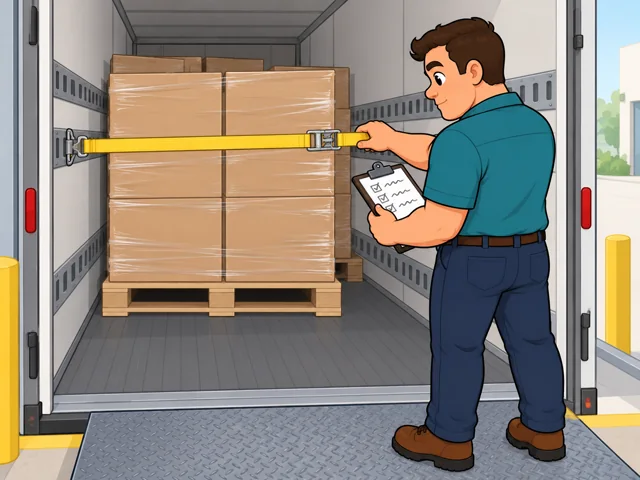
Match cargo to the bill of lading and secure it, using straps, chains or covers on some loads.
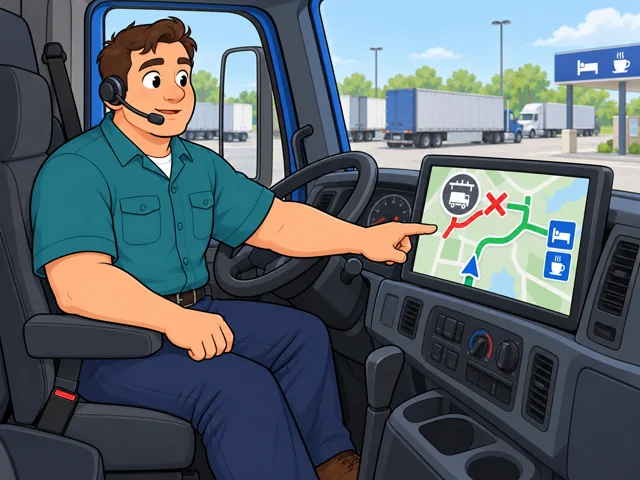
Drive a truck route, schedule rests, and at a closure, check the detour's truck limits and tell dispatch.
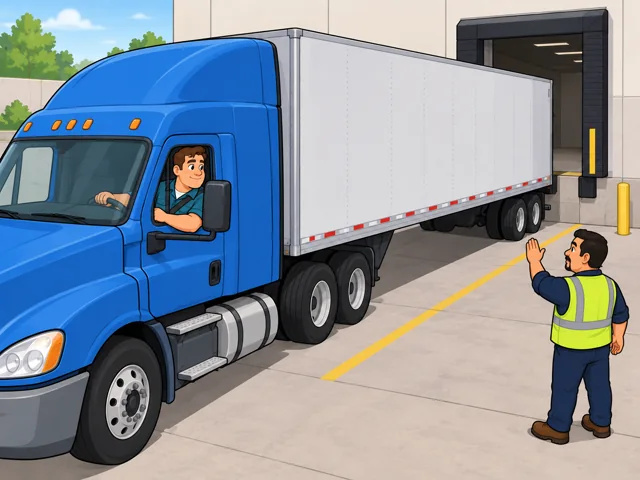
Reverse into place following dock workers' hand signals, and check that the truck lines up with the dock.

Get the receiver's signature and update hours and vehicle logs, though trucks with digital recorders capture driving time.
United States
United States · May 2025
United States · 2025–2035
Quick orientation
Truck-driving school is a common starting point. You need the appropriate commercial driver's license (CDL).
National median for heavy and tractor-trailer truck drivers, equivalent to $28.19/hour.
About 214,500 openings per year, including replacements for drivers who leave the occupation.
Navigation software helps with routes, while electronic logging devices automatically capture driving time and make records easier to share.
In conventional driving jobs, you still inspect the truck, check the load, and respond to what is happening around the vehicle.
Driverless freight trucks already operate on selected routes. How widely they spread—and how much highway driving shifts away from people—remains uncertain.
Pay in context
The national median is a midpoint across heavy-truck and tractor-trailer jobs, not a starting offer. Compare the pay formula as well as the advertised total.
The May 2025 median was $58,640 a year, or $28.19 an hour. The lowest-paid 10% earned below $40,140; the highest-paid 10% earned above $79,380. These are wage percentiles, not beginner and experienced pay bands.
Annual medians were $60,320 in truck transportation, $58,550 in wholesale trade, $56,570 in manufacturing, and $56,080 in construction.
Mileage pay plus bonuses is common. Rates can vary with employer, cargo, and experience. Ask how waiting at docks, loading, and other non-driving time are paid.
Employment is projected to grow 4% during 2025–35. About 214,500 annual openings include many replacements for people changing occupations or leaving the workforce.
Most employers expect a high school diploma or equivalent. You can prepare through a driving school or an employer training program; either way, training and earning the license are separate steps.
After entry
This starts where the entry routes leave off: early work, growing capability, and advancement or specialization. This path also has a credential or licensing boundary; see the requirements and limits.
After hiring, work with an experienced mentor-driver to learn the equipment and cargo you will handle.
Get better at planning routes and rest stops, spotting delays early, and keeping the dispatcher informed when the plan changes.
Tank-truck work is one option: learn its cargo procedures and earn the required tank-vehicle endorsement.
Your workplace moves between highways, truck stops, and delivery sites. Trips may last days or weeks; some teams alternate driving and sleeping in the truck's berth.
Haul freight containers between customers and rail yards while trains cover the long-distance leg. These shorter runs mix city and regional driving; home time depends on the route and employer.
Try it
On paper, plan a pretend truck delivery between two nearby cities. Mark truck-route restrictions and possible rest stops, then add a road closure and revise the plan. Notice whether checking details and adjusting the trip holds your interest.
Stay safe: Keep this a map exercise; it is not a verified route for operating a truck.