
Career profile

Extraction Helper

Extraction helpers get gear and supplies ready so drillers and miners can work.

Like using tools beside a seasoned crew? Unloading parts, watching machines and clearing the site give you a close-up view of real drilling and mining.
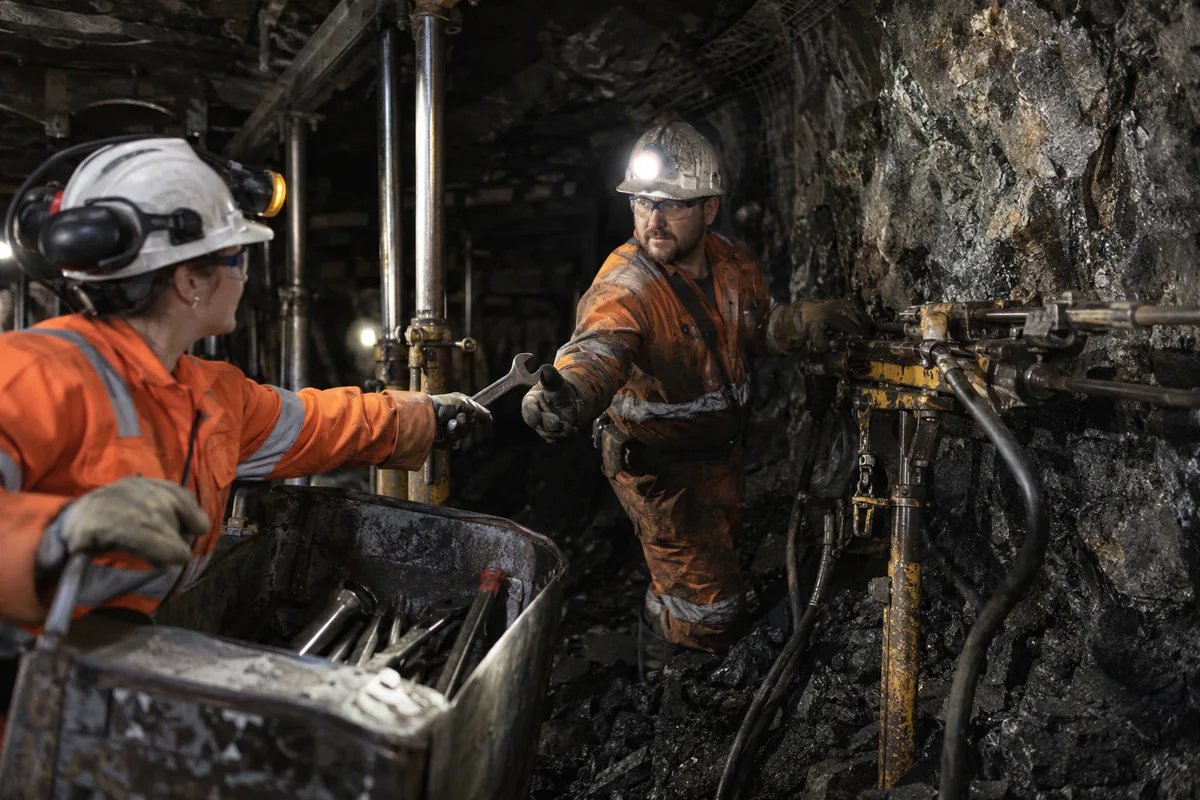
Extraction helper passing tools to a miner beside an underground ore face with visible support equipment.

A day in the life

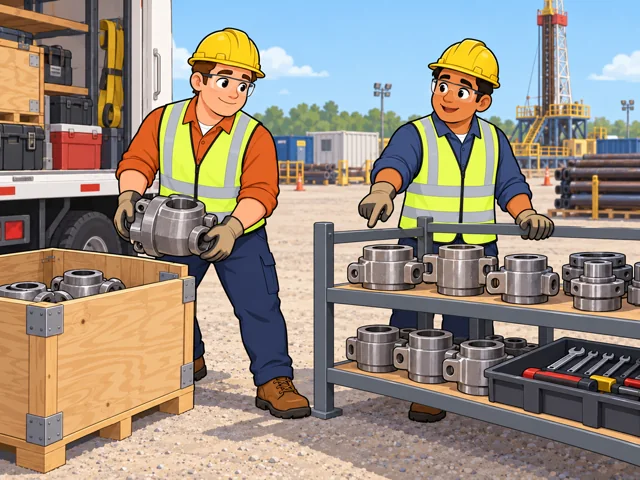
1An extraction helper unloads a machine coupling onto a parts rack while a coworker helps organize tools for the next drilling setup.

Unload and sort machine parts

Unload tools and machine parts, then set aside what the driller or miner needs for the upcoming setup.
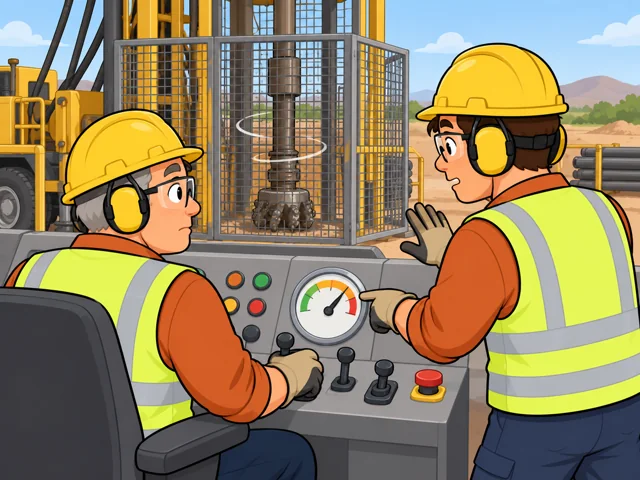
2An extraction helper points out an unexpected gauge reading to the drilling operator while staying clear of moving equipment.

Watch gauges during extraction

While extraction runs, watch gauges and moving equipment, and report any sudden reading shift to the operator.
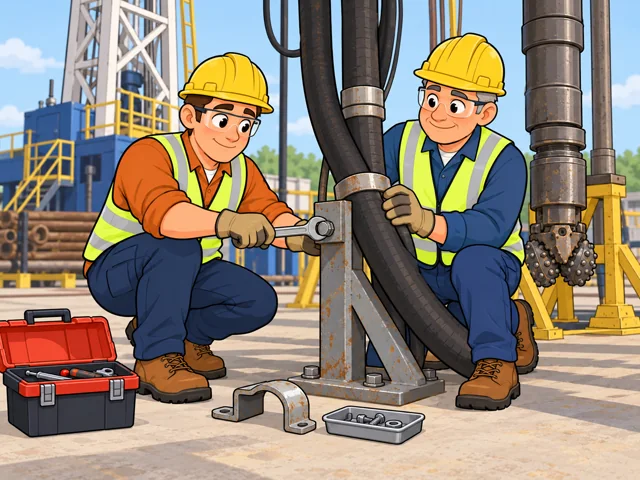
3An extraction helper uses a wrench to remove a worn bracket from stopped drilling equipment while a coworker supports the part.

Fix worn drill parts

Grab your hand tools to help maintain the drilling equipment and repair damaged or worn parts.
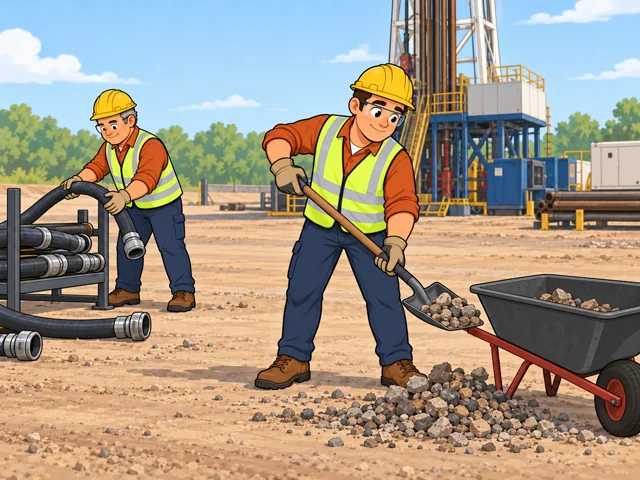
4An extraction helper shovels debris into a wheelbarrow as a coworker gathers disconnected equipment to clear the drilling area.

Haul debris after extraction ends

Haul away debris and help dismantle equipment so the crew can clear the area.

Quick facts

Preparation

High school diploma or equivalent

United States · 2026

Pay

$47,730/year

United States · May 2025

Outlook

1.7% growth

United States · 2025–2035

Quick orientation

Preparation, pay & outlook

Preparation

High school diploma or equivalent

Typical entry preparation, followed by learning the equipment and work routines on the job.

Geography
United States
Period
2026

Pay

$47,730/year

National median for extraction helpers, equivalent to $22.95 an hour.

Geography
United States
Period
May 2025

Outlook

1.7% growth

About 700 openings a year nationally, including openings to replace workers who leave the occupation.

Geography
United States
Period
2025–2035

Fit, tradeoffs & changing tools

Things to weigh

  • Repeated lifting, standing, and handling materials can leave you physically tired.
  • Noise, dust, and moving machinery are part of many sites. Protective equipment is an everyday part of the job.
  • Workweeks can run beyond 40 hours, and outdoor jobs expose you to heat, cold, and bad weather.

Where AI may help

On some drilling rigs, mechanical rod loaders position sections of drill pipe and reduce manual handling. Controls also let the operator watch the wireline from a panel.

What people still lead

Helpers still organize supplies, maintain equipment, and communicate changes they notice around the machine.

What we can’t predict yet

As more rigs gain automated handling, the balance between moving materials and tending equipment may shift. How much shifts depends on the machines a crew uses.

Pay in context

Earnings

Use the national figures as a starting point when comparing offers, not as a promised starting wage.

The middle of the pay range

Extraction helpers had a median wage of $47,730 a year, or $22.95 an hour. Half earned more and half earned less.

Geography
United States
Period
May 2025
Pay basis
National occupational wages for Helpers--Extraction Workers, SOC 47-5081; annual and hourly medians

The national spread

The 10th-percentile wage was $36,960 a year ($17.77 an hour), and the 90th-percentile wage was $68,020 ($32.70 an hour). These mark the lower and upper ends of the middle 80% of wages, not beginner and experienced-worker rates.

Geography
United States
Period
May 2025
Pay basis
National 10th and 90th percentile occupational wages for SOC 47-5081

Openings despite slow growth

Employment is projected to grow 1.7% from 2025 to 2035, with about 700 openings annually on average. Openings include replacement needs, so they are not all newly created jobs.

Geography
United States
Period
2025–2035
Pay basis
Employment projection, not compensation; national average annual openings for SOC 47-5081

Getting started

Join as a helper or drilling assistant

What the route involves
Apply for helper work and learn equipment handling and crew routines on the job with experienced workers.
What it can lead to
You build experience supplying, maintaining, and watching extraction equipment while contributing to the crew's daily work.

Enter a mining apprenticeship

What the route involves
Look for a Registered Apprenticeship using the Miner I (Mine & Quarry) occupation title. Apprentices combine paid work with a mentor and related classroom learning.
What it can lead to
Completing a registered program gives you structured work experience and a nationally recognized apprenticeship credential.
What to check
Check the sponsor's entry requirements and whether it is recruiting before planning around this route.

A high school diploma or equivalent is typical. You begin by helping experienced extraction workers. Most mining work is off-limits before age 18. Mine jobs also require site and task safety training; the Mine Safety and Health Administration rules that apply depend on the operation.

After entry

Career paths

This starts where the entry routes leave off: early work, growing capability, and advancement or specialization.

  1. Become reliable on the crew

    Learn where supplies belong, recognize the equipment the crew uses, and get comfortable communicating before materials or machinery move.

  2. Build your equipment skills

    Develop your maintenance skills and learn to describe equipment problems clearly: what changed, when it changed, and what you observed.

  3. Train toward a driller role

    In drilling, a next step can be driller. Ask what additional training and demonstrated skills are needed to move from assisting to operating the rig.

Where you can work

Traveling drilling crews

You may move between remote outdoor sites with a small crew. Extended shifts and stretches away from home can shape your routine as much as the drilling work.

  • Outdoors
  • Field work
  • Travel
  • Physical demands
  • Safety-sensitive

Underground mines

You support mining-machine crews below ground. Roof conditions, ventilation, and routes back to the surface shape where you work and move; evacuation practice is part of working in this setting.

  • Physical demands
  • Safety-sensitive

Try it

See whether the job clicks before you commit to the path.

Try a ten-minute supply handoff at a table. Label small household objects as pretend drill parts, organize them, and have a partner request them in a changing order. Notice whether you enjoy keeping track, listening carefully, and making someone else's work run smoothly.

Stay safe: Use only lightweight household objects. This explores the helper's organizing role; it is not practice for handling extraction equipment.

Explore more careers

Sources

  1. O*NET OnLine. 47-5081.00 — Helpers--Extraction Workers. Accessed 2026-10-09.
  2. U.S. Bureau of Labor Statistics. Occupational Employment and Wage Statistics — May 2025 national estimates, SOC 47-5081. Accessed 2026-09-29.
  3. U.S. Bureau of Labor Statistics. Employment Projections Table 1.2 — 2025–2035, SOC 47-5081. Accessed 2026-09-29.
  4. Boart Longyear. Driller Assistant — UT Pump. Accessed 2026-10-09.
  5. Boart Longyear. LF160 Surface Coring Drill Rig. Accessed 2026-10-09.
  6. U.S. Department of Labor. Career Seekers — Registered Apprenticeship. Accessed 2026-10-09.
  7. U.S. Department of Labor. What jobs are off-limits for kids?. Accessed 2026-10-09.
  8. Mine Safety and Health Administration. Part 46 Training Pamphlet — New Training Requirements for Surface Non-Metal Mines. Accessed 2026-10-09.
  9. Mine Safety and Health Administration. Part 46 or Part 48. Accessed 2026-10-09.
  10. Mine Safety and Health Administration. Emergency Mine Evacuation; Final Rule. Accessed 2026-10-09.

Your message goes to the Great Jobs team. How we use your information