
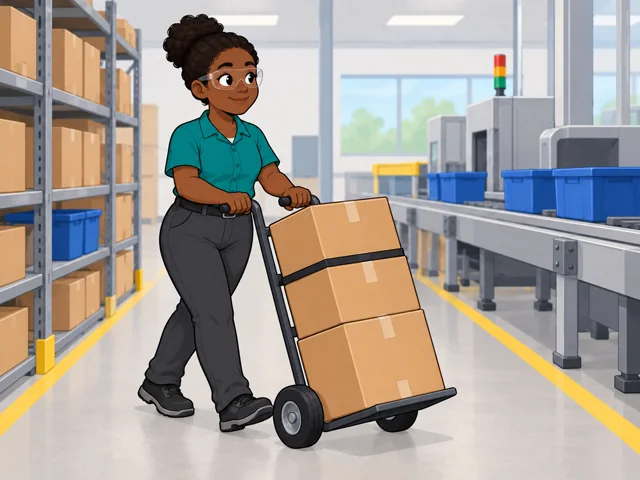
Wheel materials to the crew
Push a loaded hand truck from the storage area to the crew's workspace so materials are within reach.
Career profile
Production helpers keep a factory crew supplied and get its workspace ready for use.
Hauling materials to the production line, checking goods and helping machine operators keeps output moving, and the physical work teaches how a plant runs.
Push a loaded hand truck from the storage area to the crew's workspace so materials are within reach.
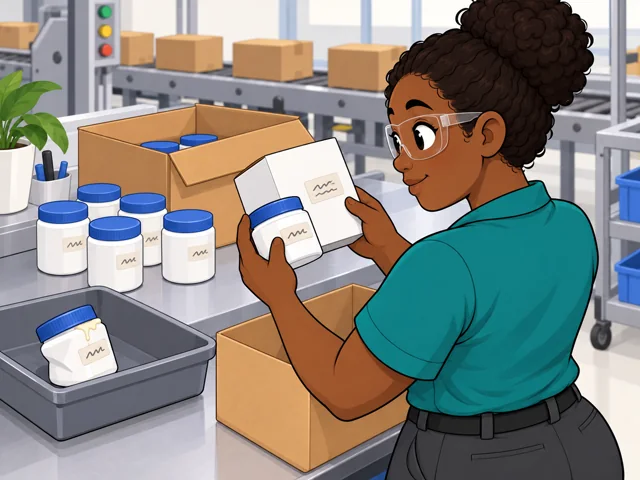
In adhesive packaging, you match lot numbers and check items for damage or contamination before packing.
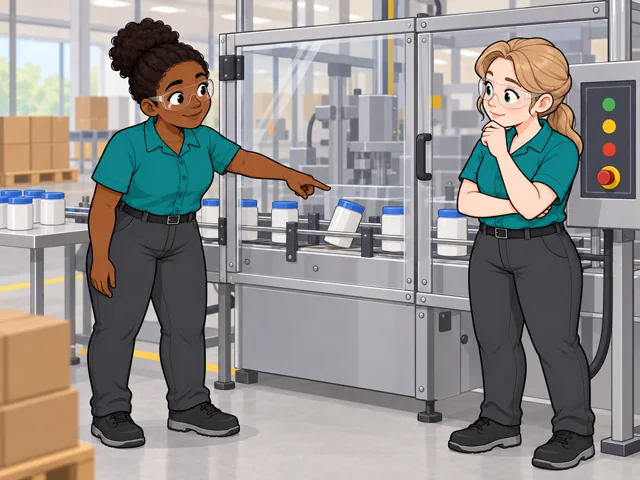
Keep watch on the machines, and when one is not working right, let its operator know.
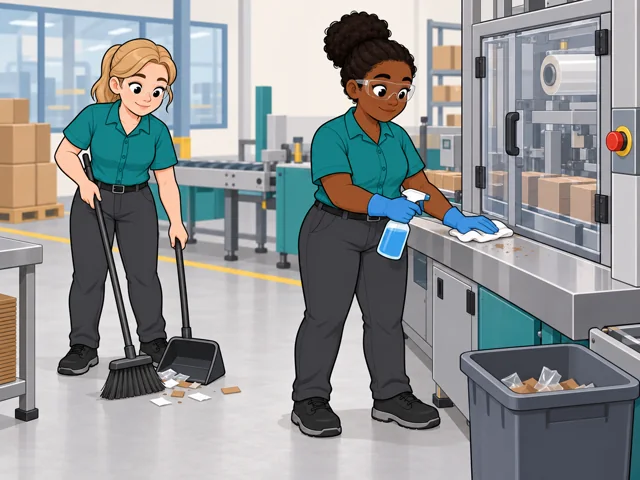
Wipe down the machines and tidy the work area so the crew is set to keep producing.
United States · 2025
United States · 2025
United States · 2025–2035
Quick orientation
A high school diploma or equivalent is typical, followed by short-term training on the job.
The national median was $39,070 a year in 2025.
Employment is projected to shrink 8.2% from 2025 to 2035, while openings continue as workers leave or change occupations.
In some plastics plants, computer systems hold inventory counts and repair requests, giving helpers another way to track materials and equipment problems.
You still inspect the actual product and communicate problems to the operator.
How much handling or checking becomes automated will depend on the plant's equipment and products; the helper's mix of tasks may change.
Pay in context
Use the national median as a comparison point when you look at an offer, not as a promised starting rate.
The 2025 median was $39,070 a year, or $18.78 an hour. Half of workers earned less and half earned more.
The lowest-paid 10% earned $31,140 or less annually; the highest-paid 10% earned $53,410 or more. These are wage percentiles, not beginner and experienced-worker rates.
About 20,900 openings are projected each year on average during 2025–2035, even as total employment declines 8.2%. This is a national projection, not a count of jobs available near you.
In May 2023, production helpers averaged $17.29 an hour in printing and related support work, compared with $20.09 in converted paper product manufacturing. These older industry averages give context, not current starting rates.
You usually learn this work on the job. A high school diploma or equivalent is typical; related work experience is not usually required.
After entry
This starts where the entry routes leave off: early work, growing capability, and advancement or specialization.
Learn the safety routine, read the work order and make accurate measurements.
Build inspection and recordkeeping skills. In plastics work, that can include logging material use and entering repair requests.
Assistant operator or operator can be a next step where the plant trains helpers for those roles. Advancement is not automatic.
Your day follows machine orders and quality checks. Some plants rotate shifts or run overnight, so the schedule matters as much as the task.
You may move between cutting support, repacking and shipping. Sawdust collection and computer inventory records add duties beyond feeding a production line.
Try it
Try supplying a small paper-kit assembly task: have a friend make kits while you replenish pieces, count completed kits and flag anything missing. Notice whether you enjoy keeping someone else's work moving while staying accurate.
Stay safe: Use paper and ordinary desk supplies; this exercise does not require machinery.