
Career profile

Hoist and Winch Operator

Hoist and winch operators move big, heavy loads on a cable that holds each one.

Keep an eye on the indicators and the crew's signals, then shift the controls until each load lands right where it belongs.
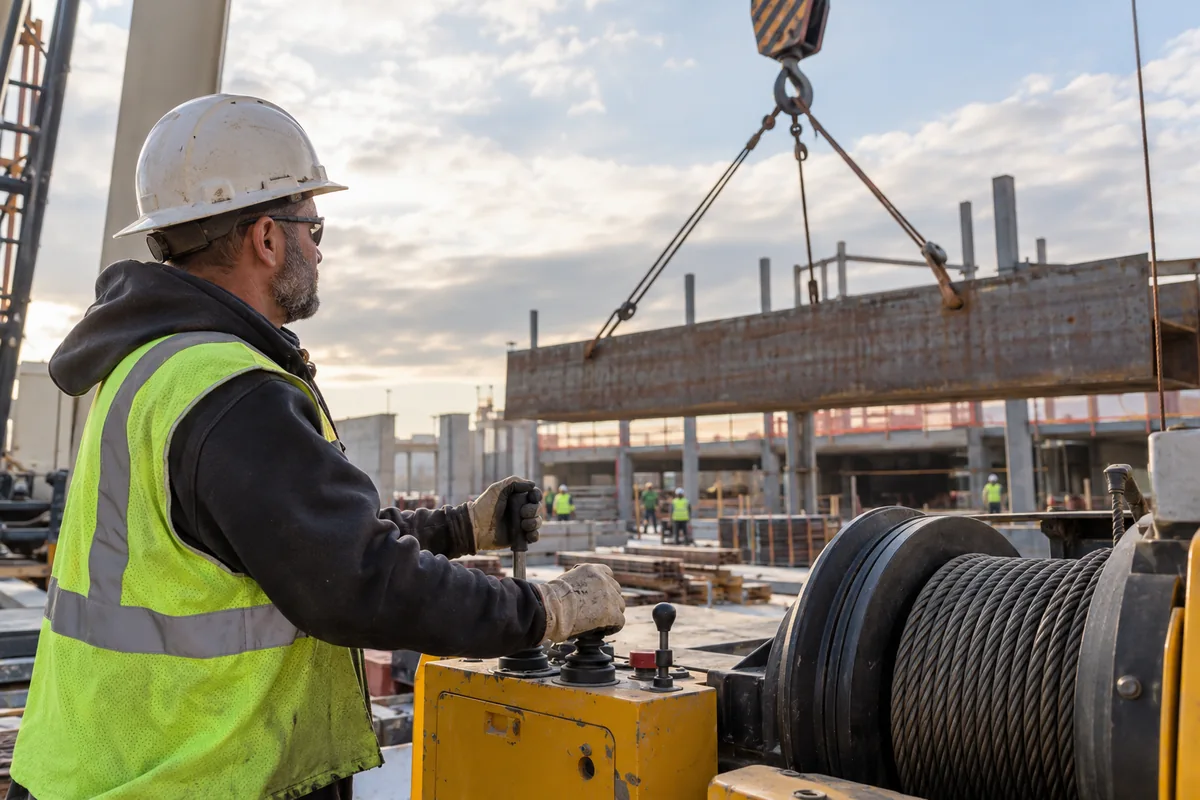
Hoist and winch operator using controls to lift a heavy load with a winch at a construction site.

A day in the life

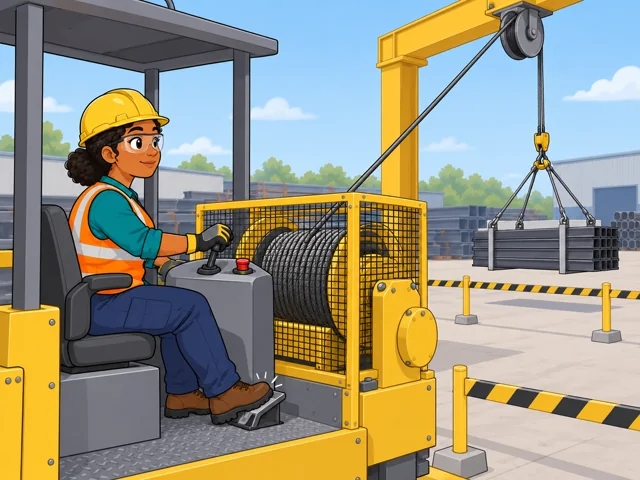
1A hoist and winch operator works a lever and brake pedal beside a guarded cable drum, carefully stopping a cradle of bundled steel.

Wind cable and brake the load

Work pedals and levers to wind or unwind cable on the drum, then brake so the load stops.
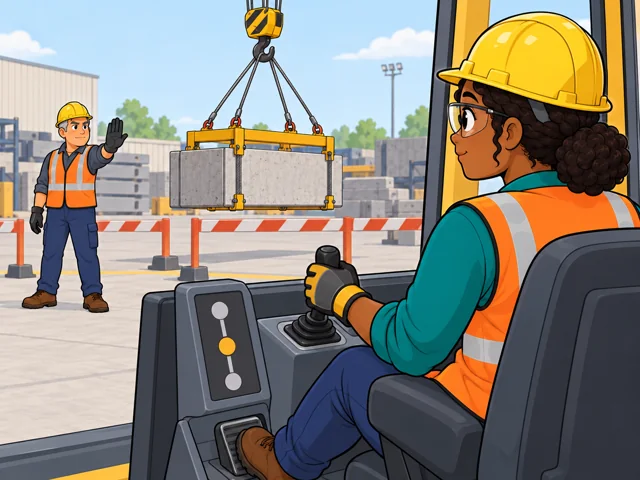
2The operator watches a coworker's raised stop signal while checking a wordless position indicator, with the suspended load visible beyond the controls.

Follow the crew's signals

You match each move to the crew's hand gestures or bells while checking indicators for the load's position.
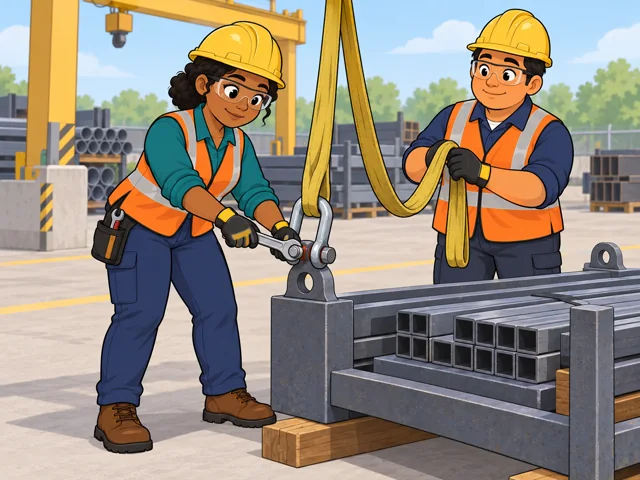
3The operator tightens a shackle on a grounded material cradle while a coworker steadies the slack lifting sling.

Switch lines to the next load

When the load changes, use hand tools to unfasten lines and cables, then attach them to the next.
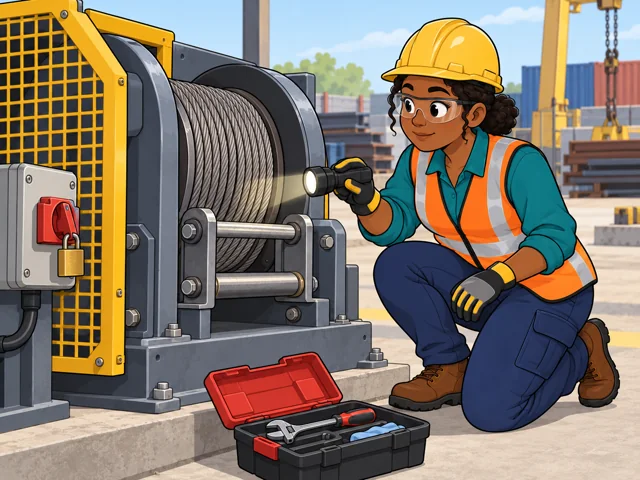
4Kneeling beside an isolated winch, the operator uses a flashlight to inspect the cable guide and drum before the next lift.

Keep the machine in shape

Look over the machine and gear, fixing small problems so it runs well when the next move begins.

Quick facts

Preparation

Learn on the job

United States · 2025–2035

Pay

$56,450/year

United States · May 2025

Outlook

Little change

United States · 2025–2035

Quick orientation

Preparation, pay & outlook

Preparation

Learn on the job

No formal educational credential is typically required, though employers may prefer a high school diploma.

Geography
United States
Period
2025–2035

Pay

$56,450/year

National median for hoist and winch operators, equivalent to $27.14 an hour.

Geography
United States
Period
May 2025

Outlook

Little change

Employment is projected to grow 0.2%, with about 300 openings a year.

Geography
United States
Period
2025–2035

Fit, tradeoffs & changing tools

Things to weigh

  • Noise and hot or cold conditions can make concentration harder.
  • In shaft work, people may ride in a cage you cannot see. You depend on clear communication while carrying that responsibility.

Where AI may help

Some mine-hoist systems monitor speed and position and apply brakes when limits are exceeded. Electronic controls can also replace older manual operating stations.

What people still lead

You still coordinate with the people loading, riding, or receiving the cage and interpret their messages before moving it.

What we can’t predict yet

How much routine control shifts to automation will depend on the installation. Your balance of hands-on operation and system monitoring may change as equipment is upgraded.

Pay in context

Earnings

Use the national figures as a starting point, then compare an offer's hourly rate, expected hours, and overtime terms.

The national midpoint

The median was $56,450 a year, or $27.14 an hour. Half of hoist and winch operators earned more and half earned less.

Geography
United States
Period
May 2025
Pay basis
National employee wage estimates for SOC 53-7041; annual and hourly medians

A wide spread

The 10th–90th percentile range was $35,640–$118,210 a year, or $17.13–$56.83 an hour. These are positions in the wage distribution, not starting and senior pay rates.

Geography
United States
Period
May 2025
Pay basis
National employee wage estimates for SOC 53-7041; 10th and 90th percentiles

Openings despite little growth

Projected employment growth is 0.2% over 2025–2035. About 300 openings are expected annually, including replacement needs; that does not mean 300 newly created jobs each year.

Geography
United States
Period
2025–2035
Pay basis
Employment projection, not compensation; annual average openings for SOC 53-7041

Getting started

Learn with an experienced operator

What the route involves
Train on the job with an experienced employee, learning the controls, signals, and safety procedures.
What it can lead to
Build the machine-specific skills needed to take responsibility for operating that hoist.

Move into hoisting from mine work

The agreement restricts bidding out of the progression program during the first two years and limits later transfers.
What the route involves
At Genesis Alkali's trona mine, mine-department employees need at least one year of underground experience there to bid for hoist training.
What it can lead to
Successful trainees can progress to relief operator and operator vacancies in trainee-seniority order.
What to check
This internal route requires a medical examination and practical testing. A training bid must be posted; experience alone does not secure a place.

Training is tied to the machine and workplace. Look for an employer that explains how new operators learn and demonstrate readiness.

After entry

Career paths

This starts where the entry routes leave off: early work, growing capability, and advancement or specialization.

  1. Get established

    Make smooth starts, controlled stops, and clear radio exchanges consistent habits on your regular hoist.

  2. Expand your equipment range

    At a multi-hoist site, learn additional machines and how they behave with different loads.

  3. Consider crane operation

    Hoist experience can support a later move into crane operation. Expect additional training and any licensing or certification required for that work.

Where you can work

High-rise construction

Move platforms or cages carrying workers and materials between building levels. Your pace responds to what the construction crew needs moved.

  • Outdoors
  • Safety-sensitive

Underground research facilities

Operate shaft hoists from a hoistroom, coordinating by radio with crews far below. Some installations use enclosed control booths; the cage itself may be out of your sight.

  • Indoors
  • Safety-sensitive

Try it

See whether the job clicks before you commit to the path.

Tie a short string to an empty paper cup and wind the other end around a pencil. Keep the cup sliding on a table while a partner calls start, slow, and stop at marked positions. Notice whether precise cable control and listening hold your attention.

Stay safe: Use only this lightweight tabletop model, without powered equipment or suspended loads.

Explore more careers

Sources

  1. O*NET OnLine. 53-7041.00 — Hoist and Winch Operators. Accessed 2026-10-09.
  2. U.S. Bureau of Labor Statistics. Material Moving Machine Operators. Accessed 2026-10-09.
  3. U.S. Bureau of Labor Statistics. Occupational Employment and Wage Statistics, May 2025 national estimates — SOC 53-7041. Accessed 2026-09-29.
  4. U.S. Bureau of Labor Statistics. Employment Projections, Table 1.2, 2025–2035 — SOC 53-7041. Accessed 2026-09-29.
  5. Sanford Underground Research Facility. The Yates Shaft—primary access. Accessed 2026-10-09.
  6. United Steelworkers / Genesis Alkali LLC. 2024–2029 collective bargaining agreement, Hoist Operator Progression Program. Accessed 2026-10-09.
  7. ABB. ABB safety PLC enables SIL3 protection for mine hoist systems. Accessed 2026-10-09.
  8. Sanford Underground Research Facility. Crews complete major upgrade to Ross Hoists. Accessed 2026-10-09.

Your message goes to the Great Jobs team. How we use your information