
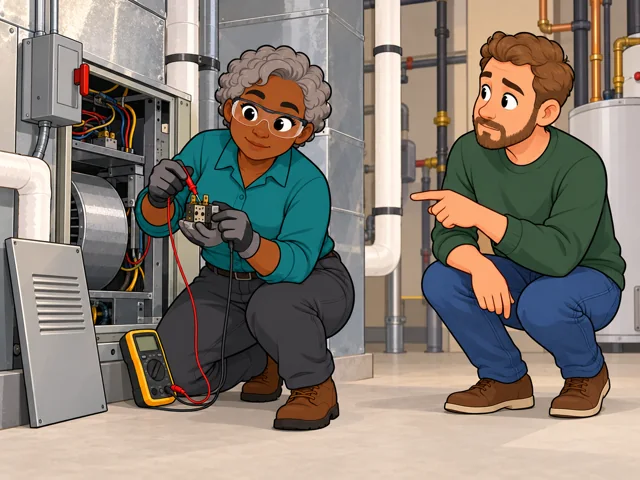
Narrow down the cause
Ask what the customer noticed, inspect the system, read gauges and displays, and test electrical and mechanical parts.
Career profile
Heating and cooling mechanics install, check, and fix systems that heat, cool, ventilate, and refrigerate.
When someone reports warm air, that's only a first clue: you follow wiring, pressures, airflow, controls, and moving parts until the whole system makes sense.
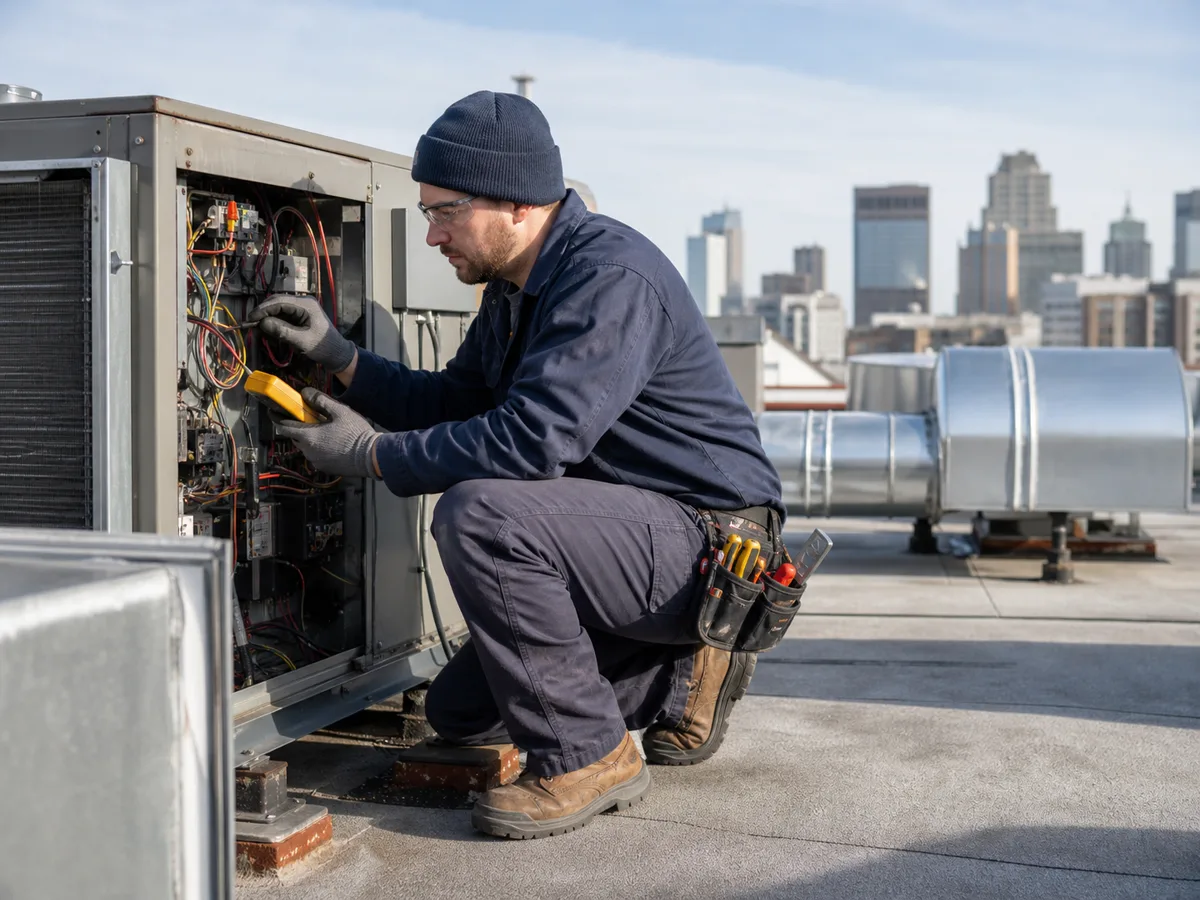
Ask what the customer noticed, inspect the system, read gauges and displays, and test electrical and mechanical parts.
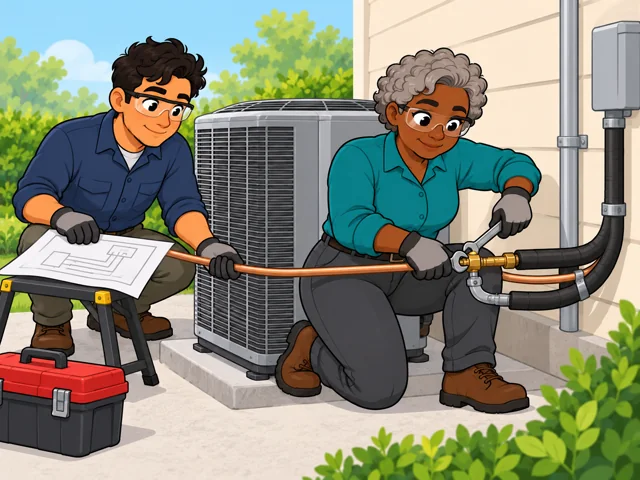
Place units, wire controls, fit pipe or tubing, then check the setup against the plans and manufacturer's settings.
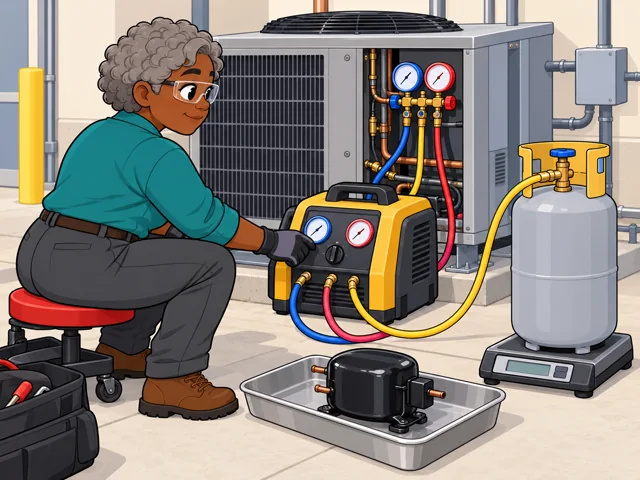
Replace bad parts or wiring, and recover refrigerant properly when federal rules cover the equipment and job.
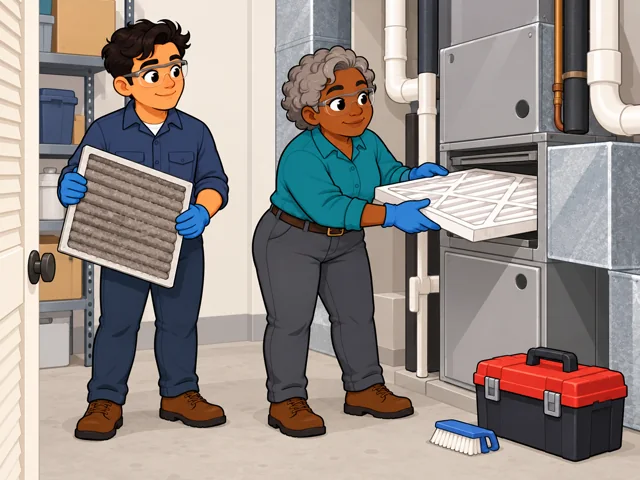
Clean the unit, change filters, check levels and connections, tune controls, and confirm everything runs as it should.
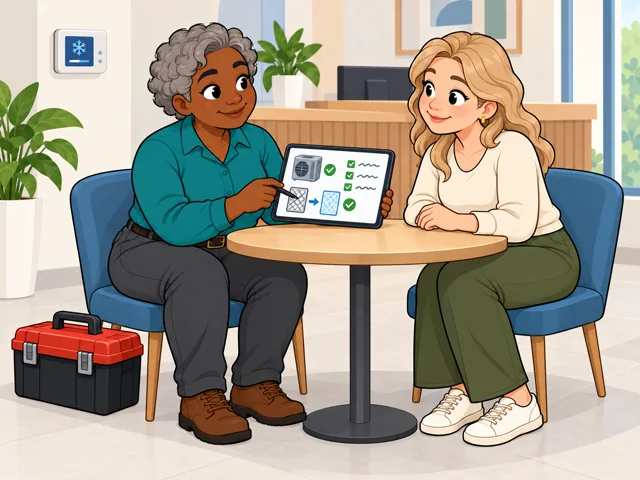
Note the faults, parts, hours, and fixes, then explain what you changed and what upkeep may come later.
United States
United States · May 2025
United States · 2025–2035
Quick orientation
This is the typical entry-level education, though some employers consider high-school graduates. Long-term training on the job is also typical.
National median wage for heating, air-conditioning, and refrigeration mechanics and installers; this is a midpoint, not a starting salary.
BLS projects 2025–2035 employment growth of 11%, with about 40,600 openings per year on average, including replacement needs.
Building-automation, data-logging, maintenance-management, and work-order software can organize alarms, readings, service histories, and records.
A technician still has to inspect the actual site, choose useful tests, handle components safely, judge the cause, and verify that the repair worked.
How widely these tools will spread—and what they will mean for staffing, beginner tasks, or pay—is uncertain.
Pay in context
Use the national median as orientation, then check local employee wages and the exact schedule attached to a job.
The May 2025 median was $61,010 a year, or $29.33 an hour. Half of workers in the occupation earned more and half earned less; this is not an entry-level figure.
In May 2025, the 10th-percentile annual wage was $40,050 and the 90th-percentile wage was $95,210. These are wage percentiles, not starting and senior salaries.
BLS notes that earnings vary with experience, responsibility, performance, tenure, and geographic area. Those factors do not form a guaranteed pay ladder.
Entry can begin in a classroom, in supervised employment, or through an apprenticeship. Every route still involves learning on real equipment.
After entry
This starts where the entry routes leave off: early work, growing capability, and advancement or specialization. This path also has a credential or licensing boundary; see the requirements and limits.
Start with basic work beside experienced technicians. For covered refrigerant work, pass the appropriate EPA-approved Section 608 test unless you are an apprentice working under the close and continual supervision of a certified technician.
Take on electrical checks, pipe work, component replacement, control adjustments, and diagnoses that require several clues instead of one obvious fault.
Build depth in service, installation, computerized controls, testing and balancing, radiant heating, or commercial refrigeration.
Travel among customer sites, diagnose systems where they are installed, and work indoors, outdoors, or in uncomfortable spaces when heating or cooling is down.
Work may center on one building or campus, with recurring maintenance and repairs across its heating, cooling, ventilation, and control equipment.
Grocery stores, hotels, restaurants, and similar businesses are common sites; these roles may focus more on refrigeration equipment than on comfort heating and cooling.
Try it
Observe one ordinary heating or cooling cycle: compare the thermostat reading with how the room feels, listen for startup sounds, and note airflow at accessible vents. Notice whether you enjoy turning those observations into a testable next question.
Stay safe: Use only accessible room controls and vents; do not open or touch the equipment.