
Work through a pending motion
Go through a motion, a request for the court to decide something, and check each side's legal basis.
Career profile
Judges hear both sides, apply the law, and explain the reasoning behind each decision.
An attorney objects, and the judge decides whether the witness may answer the question. Outside court, judges weigh the arguments and reason out each decision.
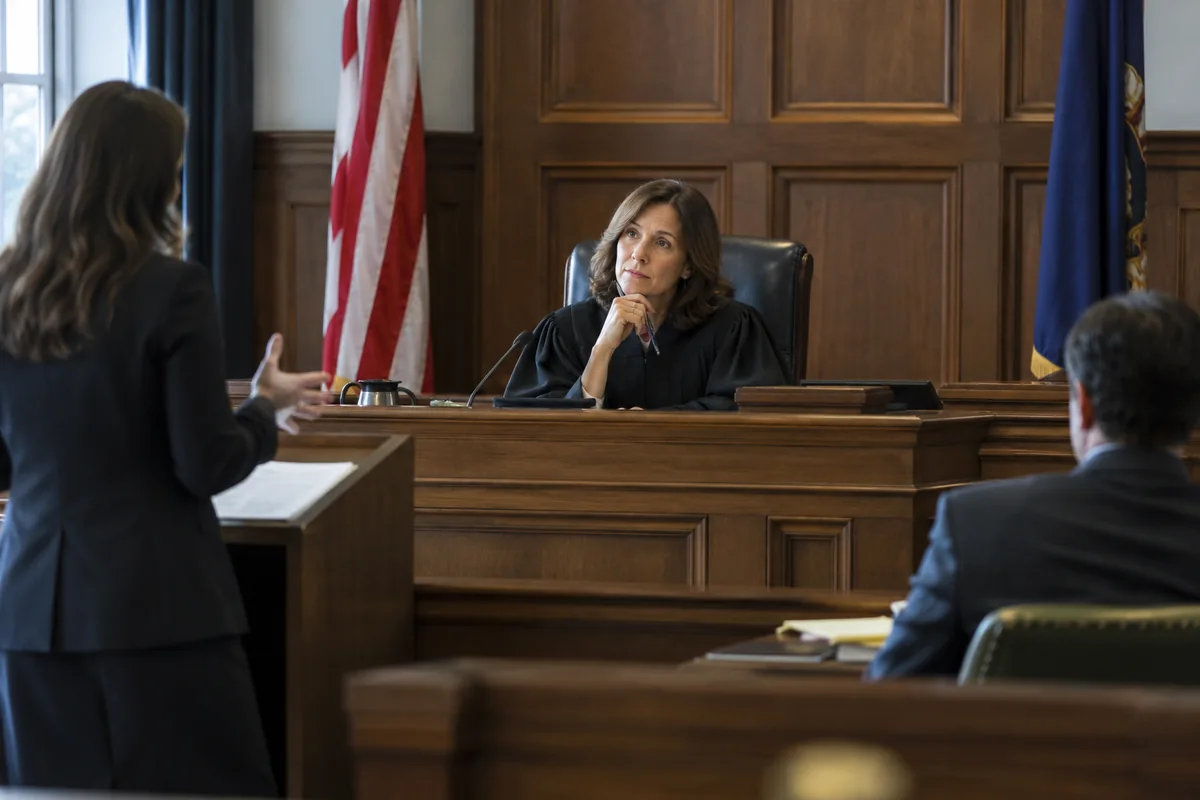
Go through a motion, a request for the court to decide something, and check each side's legal basis.
Hear why an attorney challenges a document or witness question, then decide whether that evidence can come in.
In jury trials, explain the law and the questions jurors must decide from the evidence.
Put the decision in writing, tying relevant facts to the law and showing each step to the outcome.
United States
United States · May 2025
United States · 2025–2035
Quick orientation
A professional law degree and work as a lawyer are typical; eligibility depends on the court.
Equivalent to $74.03 hourly for judges, magistrate judges, and magistrates combined.
About 800 openings annually for judges, magistrate judges, and magistrates combined.
Searchable legal databases help you find relevant cases. Tools that generate text—generative artificial intelligence (AI)—can also produce material for judicial work.
You remain responsible for the ruling. California's guidance tells judges using AI to check accuracy, address bias, and protect confidential information.
How much research and drafting AI will take over remains uncertain: useful output still has to withstand checking against the law and the case record.
Pay in context
Judge-only pay is not reported separately here. These national figures cover judges, magistrate judges, and magistrates together.
The median was $153,990 a year, equivalent to $74.03 an hour. The 10th-percentile annual wage was $46,950; the 90th was $221,710. These are points in the pay distribution, not starting and senior salaries.
For federal judges appointed under Article III of the Constitution, salary does not vary with location or years served. More experience therefore does not automatically mean a higher salary in the same judicial office.
Employment is projected to grow 2.8% from 2025 to 2035, with about 800 openings a year on average across the combined occupation. Openings include replacement needs as well as growth; they are not a count of vacancies today.
Judging usually follows years as a lawyer. Some jurisdictions allow nonlawyer judges in limited-jurisdiction courts; check the specific office's rules.
After entry
This starts where the entry routes leave off: early work, growing capability, and advancement or specialization.
Use new-judge training and mentoring, where offered, to learn courtroom procedures and judicial ethics.
Develop clearer instructions and steadier handling of hearings while keeping your legal knowledge current.
A later appointment or election to an appellate court can shift your work toward reviewing lower-court decisions. It is a separate selection, not an automatic promotion.
You hear witnesses and respond to objections as the evidence unfolds. Jury trials also require instructions that help jurors apply the law.
You usually work with two other judges, reviewing the existing record and legal arguments. There is no jury or new witness testimony.
Try it
With a friend, invent a short library borrowing rule and a disputed late return. Have each person write one side's argument, then write a ruling tied to the rule. Notice whether you enjoy considering both sides and explaining a decision someone may dislike.