
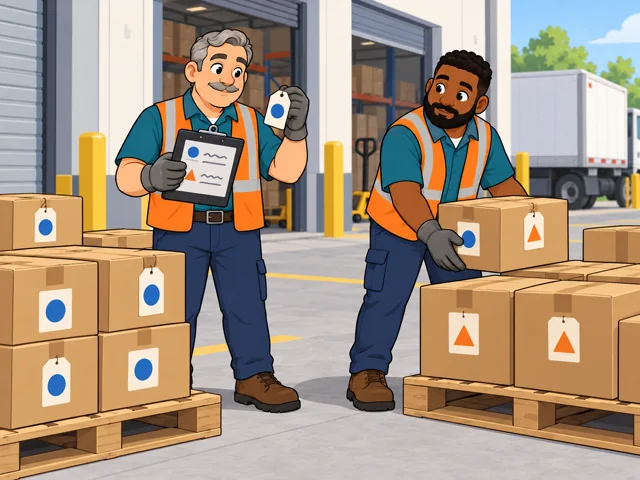
Sort the next load
Read the work order and group cargo before loading. Check identifying tags so items go together correctly.
Career profile
Move freight between trucks, loading docks and storage areas.
You use your hands, check labels and protect loads. If you like physical work with a visible result, picture getting a shipment ready to leave.

Read the work order and group cargo before loading. Check identifying tags so items go together correctly.
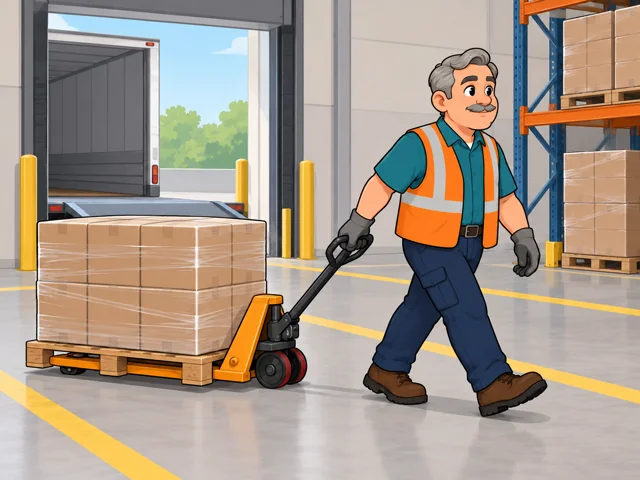
Carry materials or use moving equipment to transfer them from the loading dock to storage.
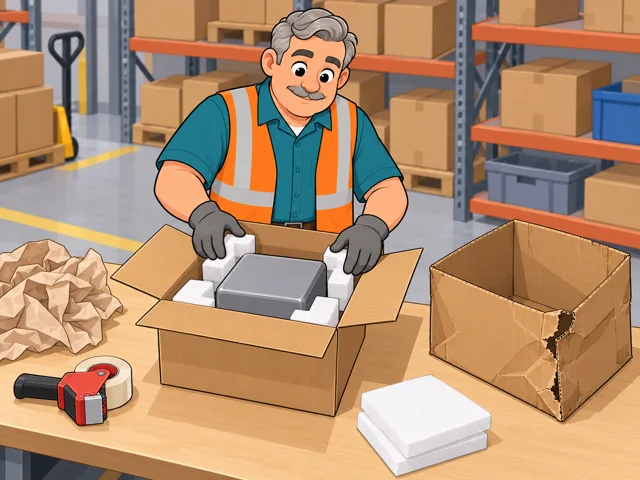
Inspect freight for damage. Repack a damaged container and use padding or straps to protect the load.
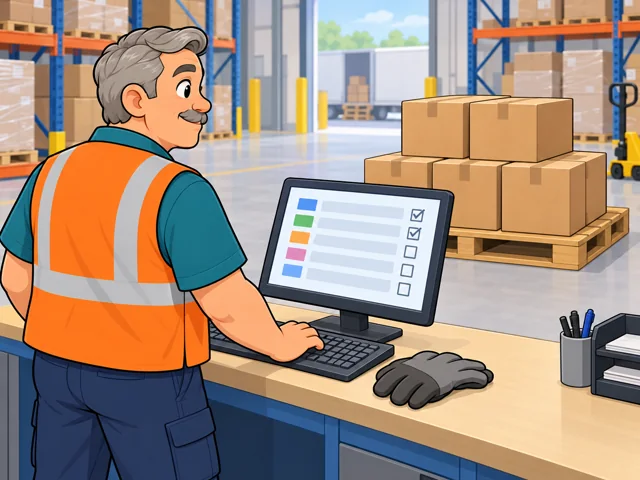
Enter quantities on a work ticket or in an inventory system so the movement has a record.
United States · 2025
United States · May 2025
United States · 2025–2035
Quick orientation
Typically no formal education credential or related experience is required; employers provide short-term training.
National median, equivalent to $19.35 an hour.
About 340,500 openings a year are projected nationally, including replacement openings.
In some warehouses, powered conveyors and sorting systems move freight through the building with less manual handling.
People still inspect damaged freight and protect loads.
How much handling becomes automated will vary by workplace; equipment can change both the tasks left to you and the pace of work.
Pay in context
These national figures cover hand laborers and freight, stock and material movers across employers, rather than a starting offer.
The median was $40,240 a year, or $19.35 an hour. The lowest-paid 10% earned $31,270 or less; the highest-paid 10% earned $55,140 or more. Those are wage percentiles, not beginner and experienced pay levels.
In warehousing and storage, the median for this occupation was $45,880 a year, or $22.06 an hour—above the $40,240 median across industries. A particular warehouse may pay differently.
Employment is projected to grow 1.8% over the decade, with about 340,500 openings annually. Openings include replacing workers who leave the occupation; they are not all newly created jobs.
You can usually apply directly to employers and learn at work. Check each opening’s education, age and physical requirements.
After entry
This starts where the entry routes leave off: early work, growing capability, and advancement or specialization.
After starting, focus on safe equipment use and getting routine moves right. Ask an experienced coworker to check unfamiliar tasks.
In household moving, build your skill with furniture wrapping, box placement and loading. Work on the parts your trainer identifies as needing practice.
Some moving companies offer trainer roles. Once you handle the work consistently, explore teaching new movers how to prepare and move loads.
You work with a crew around conveyor belts and large machinery. The pace is brisk, temperatures can change within the building, and shifts may run outside daytime hours.
Your workplace changes with the customer. You walk through the home, protect belongings and load the moving truck with coworkers; talking with customers is part of the day.
Try it
Label a few small empty boxes with different destinations. Make a shipment list, sort the boxes, then ask someone to change one label. Recheck and record your counts. Notice whether you enjoy catching the mismatch while keeping the work organized.
Stay safe: Keep this on a tabletop with empty boxes; it tests attention, not lifting strength.