
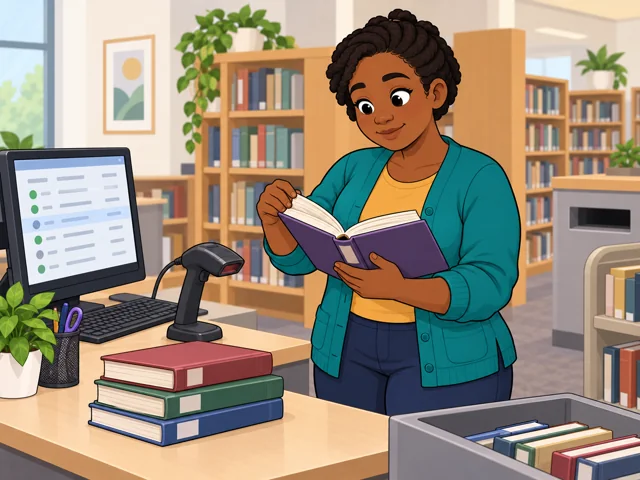
Check in returned books
Close out each loan in the records and check every book for damage before it goes out again.
Career profile
Library assistants keep books moving between borrowers, the circulation desk and the right shelf spot.
A returned book, someone's first library card and a title a reader cannot find all call for careful records and face-to-face help.
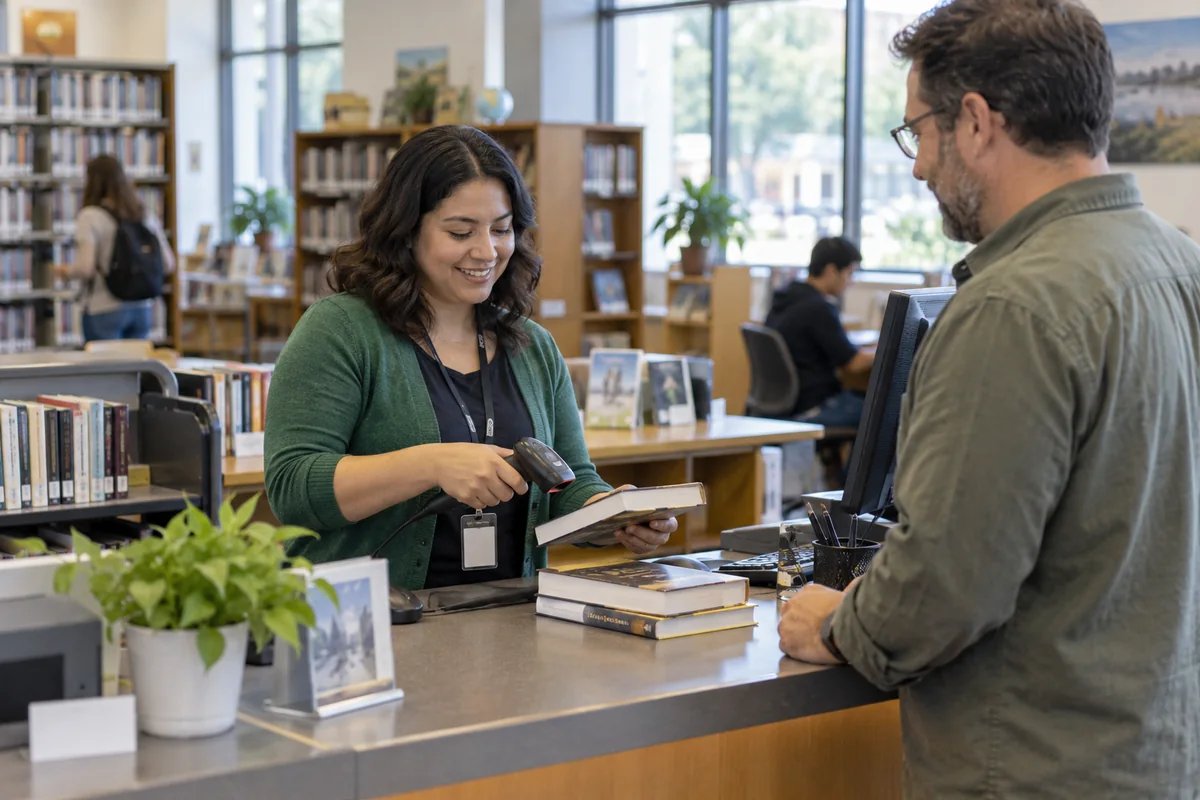
Close out each loan in the records and check every book for damage before it goes out again.
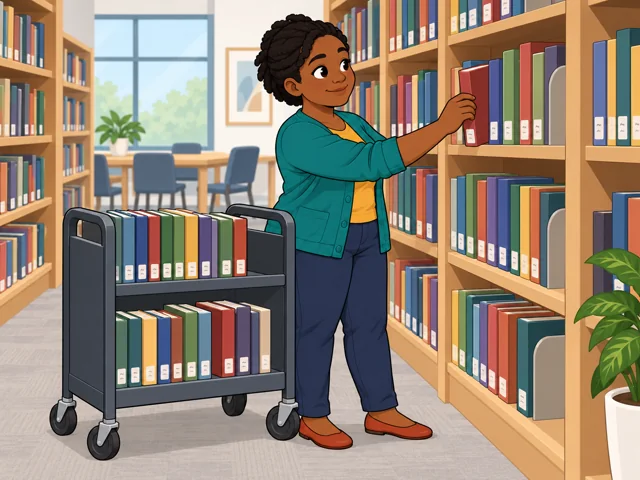
Sort the returns by their labels first, then shelve each book where the next borrower will find it.
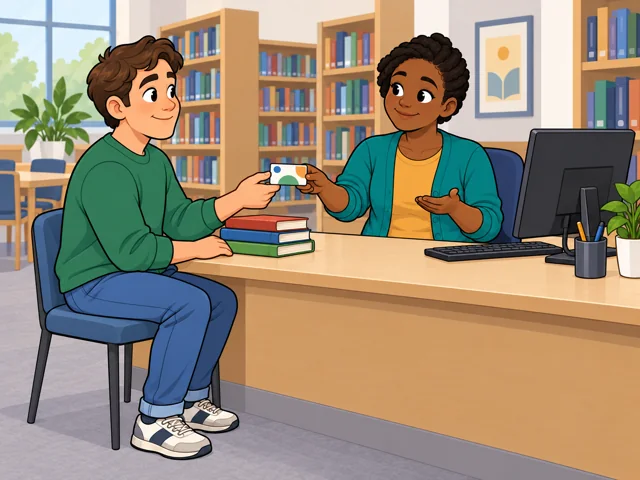
You enter the person's details, hand over a new card and explain how the borrowing rules work.
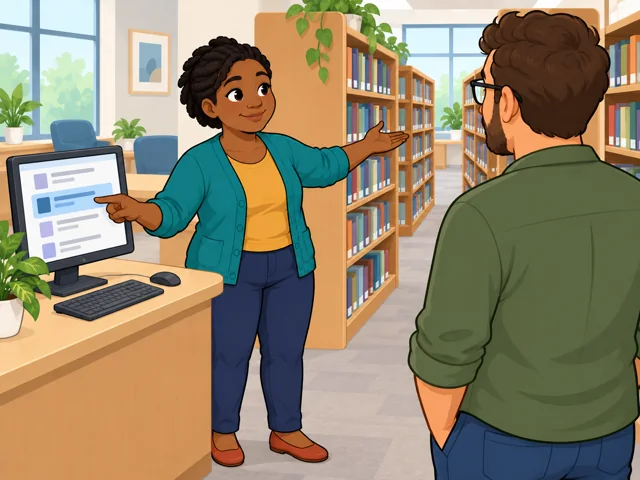
Look up the title, point to where it belongs and sometimes demonstrate a library scanner or computer.
United States · 2025
United States · May 2025
United States · 2025–2035
Quick orientation
A diploma or equivalent and short-term on-the-job training are typical.
National median for clerical library assistants; $36,910 annual equivalent.
Employment is projected to shrink, with 12,300 openings per year on average.
Some libraries let borrowers check out books through a kiosk or phone app, reducing routine desk transactions.
When self-check rejects a card, circulation staff help resolve the problem. You also explain equipment and handle physical materials.
How much checkout work moves to self-service depends on the library's tools and how often borrowers need help.
Pay in context
Compare the hourly rate and weekly hours together. Many library assistants work part time.
In May 2025, the median was $17.74 an hour, or $36,910 annually. Annual wage equivalents ran from $27,730 at the 10th percentile to $55,310 at the 90th. These are wage positions, not starting and senior salaries.
A May 2023 comparison put annual mean pay at $35,440 in local government, excluding schools and hospitals, and $39,430 in colleges, universities, and professional schools. These older averages are separate from the 2025 median.
Clerical library-assistant employment is projected to fall 6.4% during 2025–2035, with 12,300 openings annually on average. Openings include replacement needs; they are not all newly created jobs.
A high school diploma or equivalent is the usual starting point. Check each opening's experience requirements.
After entry
This starts where the entry routes leave off: early work, growing capability, and advancement or specialization.
Learn the circulation system and borrowing rules until routine transactions feel familiar.
Learn to process loans between libraries or prepare new materials for borrowing.
An experienced assistant may move into an Assistant II role with broader duties and oversight of other workers. Promotion depends on the employer.
You help community borrowers find reading material and use library resources. Evening and weekend shifts may be part of the schedule.
Requests often connect to coursework or research. You might staff a reserve-materials desk or help students use library resources.
Try it
At a library, copy the shelf labels from ten neighboring books onto slips of paper. Shuffle them, then rebuild the order and compare it with the shelf. Notice whether careful sorting holds your attention.
Stay safe: Leave the books in place.