
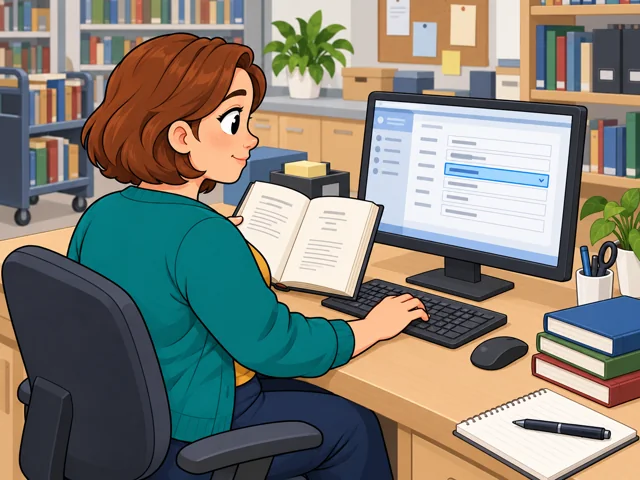
Match a book to its record
Set the book beside its computer record, then fix any author, publication date or edition detail that differs.
Career profile
Library technicians keep a library's collection findable, usable and ready for borrowers to check out.
Your day mixes catalog checks, book care and helping people find information, and one small record fix can let someone locate a hard-to-find item.

Set the book beside its computer record, then fix any author, publication date or edition detail that differs.
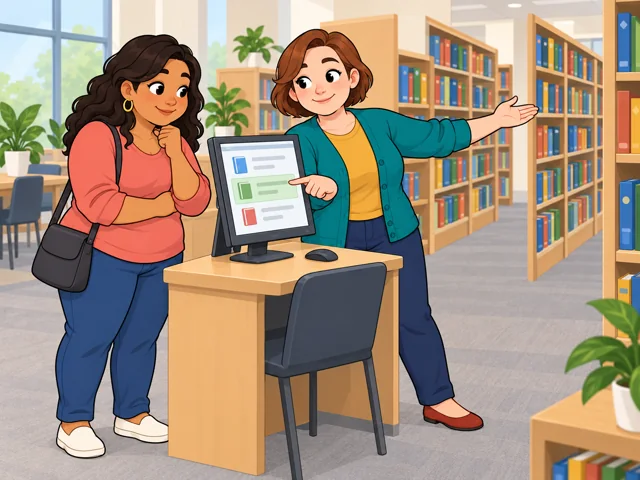
Run a catalog or database search with a patron, then show them how to get the item.
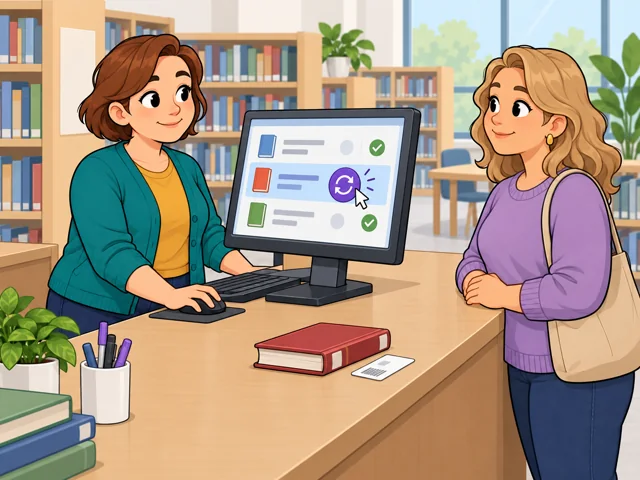
Open the library's circulation system, extend an item's loan and change its borrowing record to match.
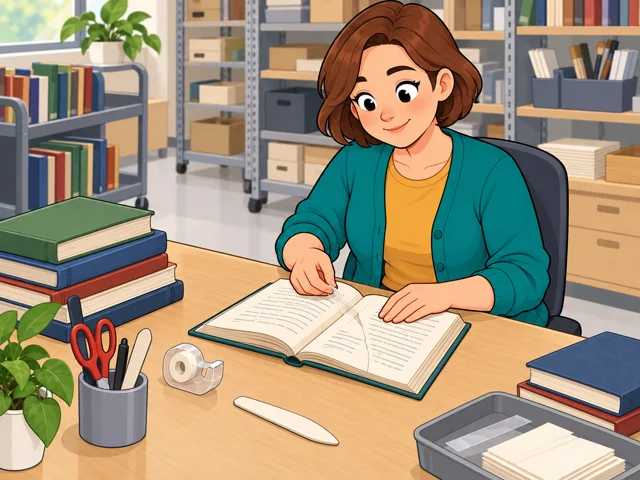
Look over items borrowers return and repair any that need it, so you can lend them again.
United States · 2025
United States · May 2025
United States · 2025–2035
Quick orientation
A college certificate in library technology is typical preparation.
National median: $44,580 annually for library technicians.
About 10,800 technician openings per year are projected despite shrinking employment.
Computerized library systems help manage borrowing and catalog records, making software fluency part of the work.
You help someone understand a search result, explain a service, and recognize when a question needs referral.
How much record handling software will take over—and how much checking and reader help will remain—is still uncertain.
Pay in context
Check weekly hours as well as the wage: part-time work is common.
In May 2025, the lowest-paid 10% earned under $14.09 an hour; the highest-paid 10% earned over $30.33. These are wage percentiles, not beginner and experienced pay rates.
May 2023 annual mean wages were $40,650 in local government, excluding schools and hospitals, and $47,220 in colleges, universities, and professional schools. These older averages are separate from the 2025 national median.
The projected 10,800 annual openings for 2025–2035 do not mean 10,800 new jobs. Employment is projected to fall 6.4%, while employers still need replacements for departing workers.
Prepare for a support role generally supervised by a librarian. Compare the education requirements in jobs near you before choosing a program.
After entry
This starts where the entry routes leave off: early work, growing capability, and advancement or specialization.
Learn your library’s borrowing rules, catalog, and referral procedures so you can handle routine questions reliably.
Deepen your cataloging and materials-management skills, including how items are classified and prepared for use.
With experience, you may supervise staff and oversee daily library operations.
Serve community readers and help with activities such as story times. Evening and weekend shifts are possible.
Help students find resources, maintain textbooks, and support teachers’ lessons. Work generally follows school hours.
Try it
Pick two books you own and find their records in a public library’s online catalog. Compare author, edition, publisher, and date. Note any differences: do you enjoy figuring out whether a record describes the exact book in your hands?