
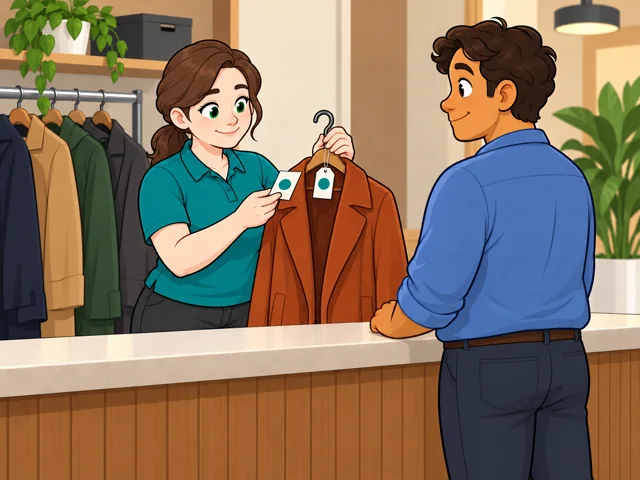
Check coats and return them
Store a visitor's coat, give them a claim check, and match the two before handing it back.
Career profile
Locker and coatroom attendants look after visitors' belongings or keep locker rooms stocked and ready.
Someone hands over a claim ticket, and finding the right coat quickly takes a tidy system and a careful check, especially with a line waiting.
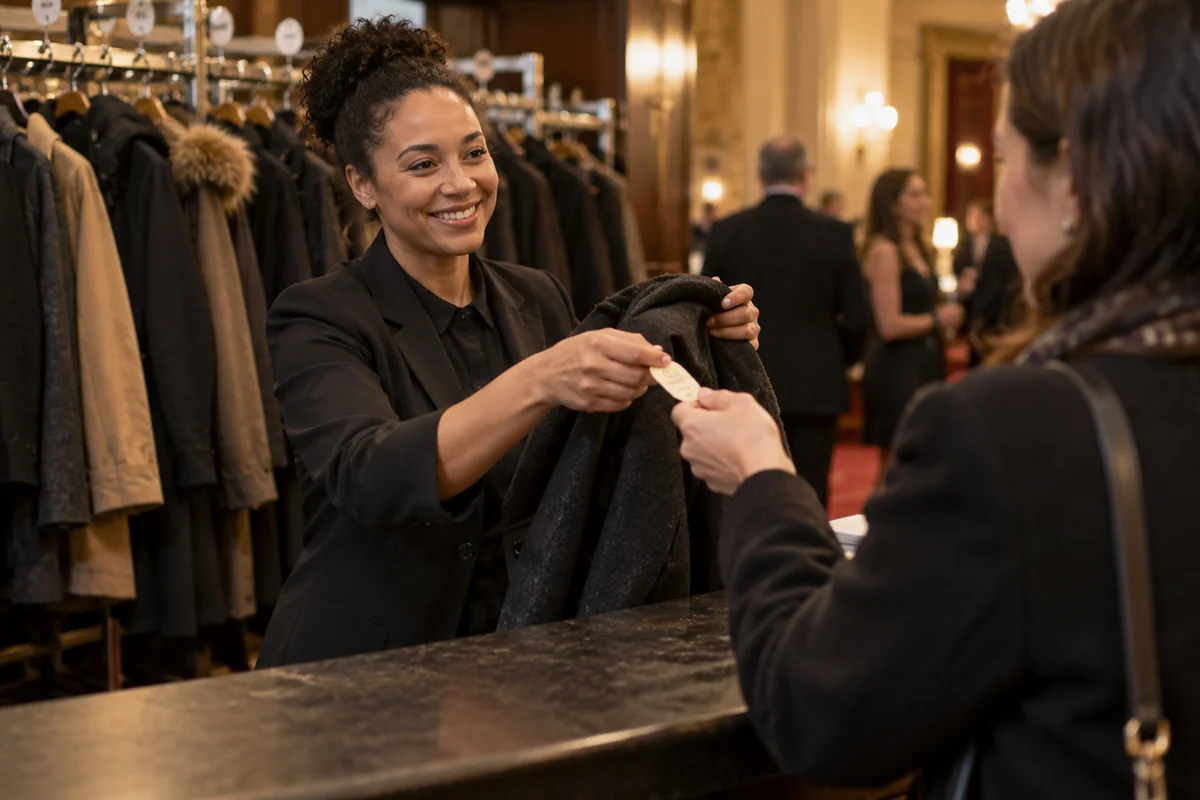
Store a visitor's coat, give them a claim check, and match the two before handing it back.
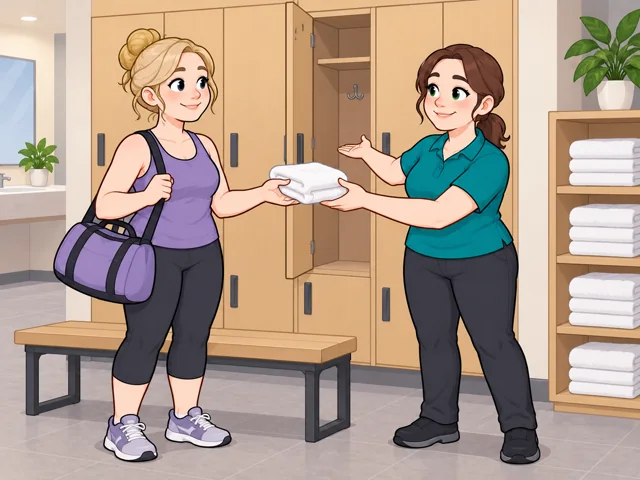
Where you work in a locker room, give each visitor fresh towels and a spot for their things.
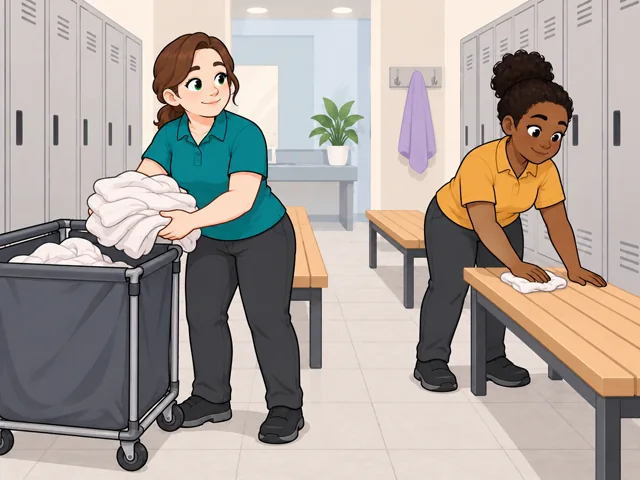
Gather the linens people have finished with and clean the locker room so later visitors can use it.
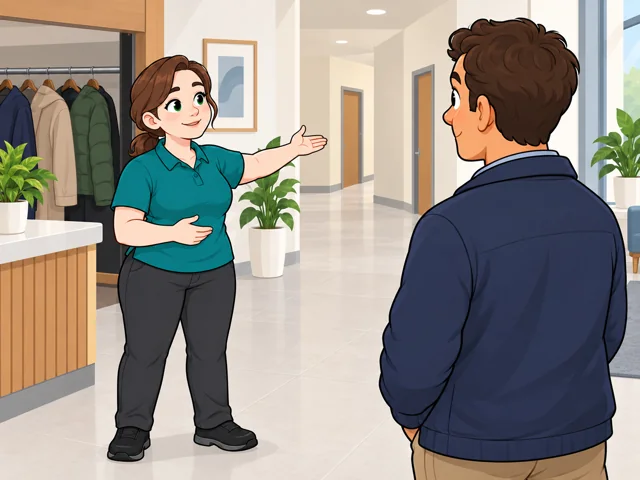
You answer visitors' questions and point the way, for example from coat check to the restrooms.
United States · 2025
United States · 2025
United States · 2025–2035
Quick orientation
Typical preparation is a high school diploma or equivalent and short-term training at work; employer requirements vary.
About $17.45 an hour nationally, including locker-room, coatroom, and dressing-room attendants.
About 4,000 openings a year nationally across the same occupation group.
Inventory software can help keep track of supplies and checked-out items.
You still handle belongings, check the handoff, and speak with guests.
How much tracking becomes automatic—and how that changes time spent at the counter—will vary by workplace.
Pay in context
National pay figures cover locker-room, coatroom, and dressing-room attendants together.
The 2025 median was $36,300 a year, or $17.45 an hour. The lowest-paid 10% earned $26,590 or less annually; the highest-paid 10% earned $54,260 or more. These are wage percentiles, not starting and promotion rates.
Posted coat-check rates include $16.20 an hour at a Chicago concert hall and $20 plus pooled tips at a San Francisco performance venue with variable event hours. These are individual rates, not averages for either setting. Ask about weekly hours and how tips are shared.
Employment is projected to grow 6.4% from 2025 to 2035, with about 4,000 openings annually from growth and replacing workers who leave the occupation. That is a national forecast, not a count of jobs available nearby.
Applying directly is a typical route. Some employers also look for customer-service experience.
After entry
This starts where the entry routes leave off: early work, growing capability, and advancement or specialization.
Learn the storage layout and make accurate check-in and return routines a habit.
In a locker room, learn to anticipate towel and toiletry needs and coordinate laundry before supplies run short.
With hospitality experience and leadership skills, you could pursue locker-room supervisor work: training attendants, overseeing supplies, and checking service standards.
Work follows the event schedule, with concentrated arrivals and departures. Some coat checks also sell merchandise, adding payments and stock counts to the shift.
You serve returning members and learn their preferences. The room connects with laundry, housekeeping, and golf operations; service can include toiletries and shoe care.
Try it
Make a mock coat check with six jackets or other household items and matching numbered paper tickets. Have someone request them in a mixed order while asking you a question. Notice whether you enjoy keeping the conversation friendly without losing your place.
Stay safe: Use your own items or get permission to borrow them.