
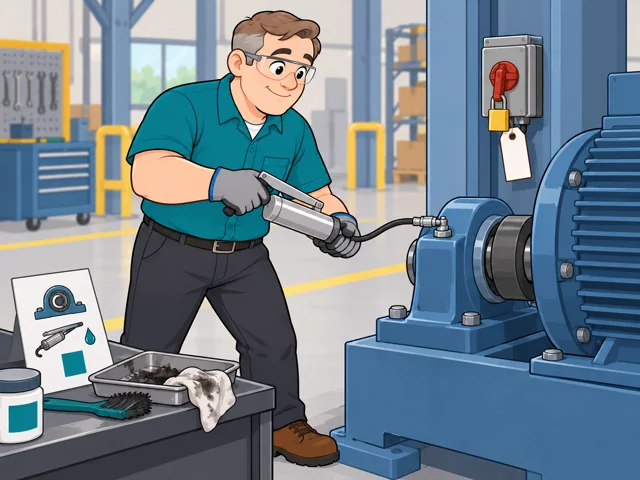
Clean off buildup, then lubricate
Wipe away the buildup first, then apply the exact lubricant the maintenance instructions call for.
Career profile
Machinery maintenance workers keep equipment running by cleaning, lubricating and replacing parts on a schedule.
Enjoy hands-on work with a clear task list? Consider a role built from small upkeep jobs that get machines ready for the following shift.
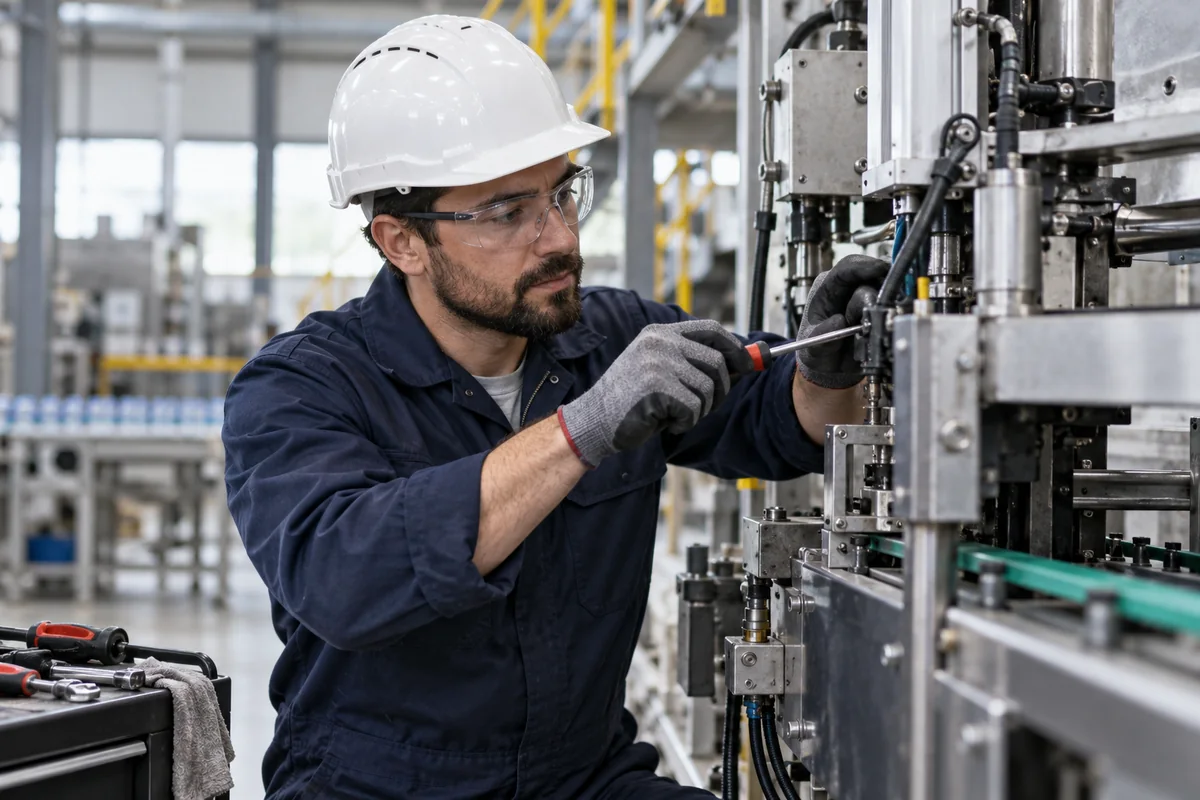
Wipe away the buildup first, then apply the exact lubricant the maintenance instructions call for.
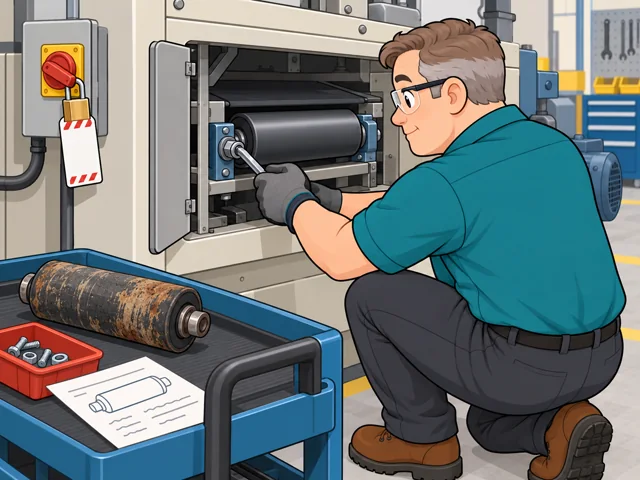
Read the work order first, then take off the old part using hand tools and install the replacement.
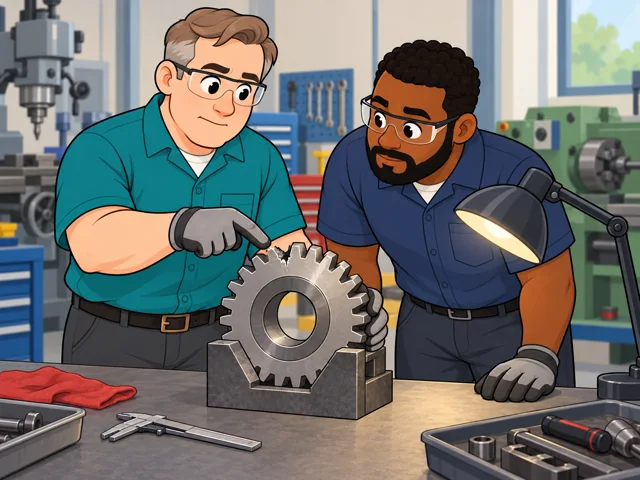
You examine a damaged part and show your supervisor exactly where it's worn or faulty.
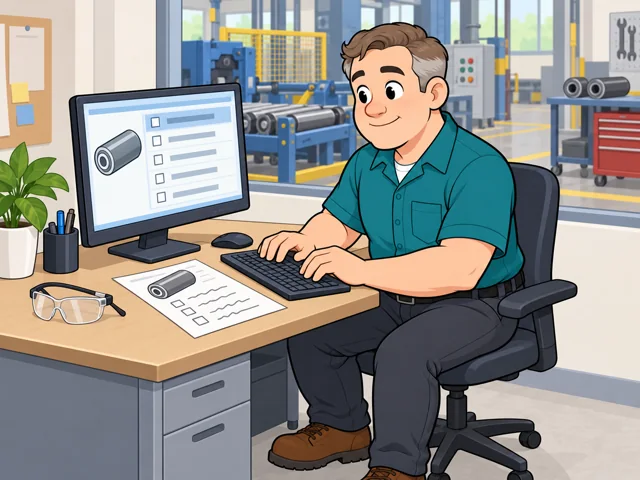
Enter the upkeep you finished and each part you replaced into that machine's repair record.
United States · 2025
United States · May 2025
United States · 2025–2035
Quick orientation
A diploma or equivalent is typical, followed by long-term training on the job.
National median, equivalent to $29.25 an hour.
Employment is projected to shrink slightly, with about 4,400 openings a year on average.
Software can organize maintenance records. Predictive maintenance uses equipment-condition information to help decide when work is needed.
You still handle parts, clean equipment, and check its physical condition.
The balance between scheduled upkeep and condition-triggered work may shift. Some employers may also give more routine maintenance to industrial machinery mechanics.
Pay in context
Use these figures to compare offers, then ask what the actual hours and duties include.
The median was $60,850 a year, or $29.25 an hour. Half of workers earned more and half earned less; this is not a starting salary.
The lowest-paid 10% earned $42,000 or less, and the highest-paid 10% earned $88,550 or more annually. These are wage percentiles, not beginner and expert pay grades.
In May 2023, average annual pay was $58,540 in motor vehicle parts manufacturing and $56,020 in warehousing and storage. These older industry averages provide context, not current offers.
About 4,400 openings are projected annually during 2025–2035, even as employment falls 1.9%. Openings include replacing people who leave the occupation.
A high school diploma or equivalent is the usual starting point. Employers differ in how much practical preparation they expect.
After entry
This starts where the entry routes leave off: early work, growing capability, and advancement or specialization.
Learn the care routines for your site's machines, including cleaning, lubrication, and safe tool use.
Become reliable at parts changes and inspections, and recognize wear that keeps returning.
Further training in electrical systems and troubleshooting can help you work toward industrial machinery mechanic roles.
Routine care sits alongside breakdown work on production equipment. You share machine-condition records with coworkers, and some plants staff maintenance at night.
You work on customers' conveyor systems, combining scheduled care with unexpected repair calls. Some mining-related service jobs take the crew underground.
Try it
Find a maintenance manual for a machine that interests you. Turn one page into a checklist showing what gets inspected, cleaned, or replaced and when. Notice whether you enjoy turning detailed instructions into a repeatable routine.
Stay safe: Keep this a paper exercise; do not open or service powered machinery.