
Turn a question into a study
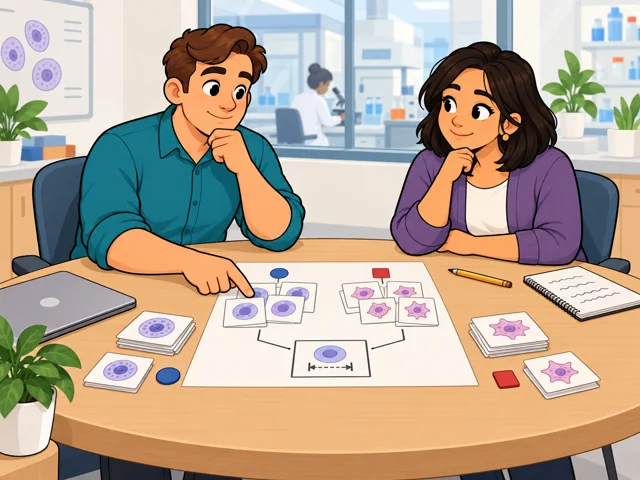
Starting from a question about an illness, choose what to measure and which sample groups to compare.
Career profile
Medical scientists plan studies to learn how diseases work and to test possible treatments.
Did a result surprise you? Then your next move is picking a study that might explain it.
Starting from a question about an illness, choose what to measure and which sample groups to compare.
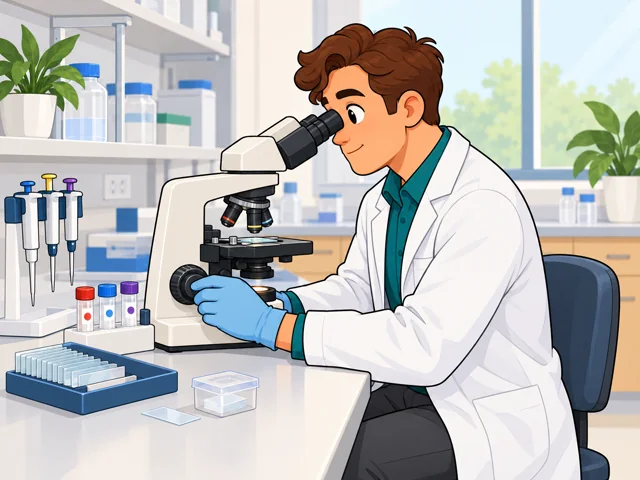
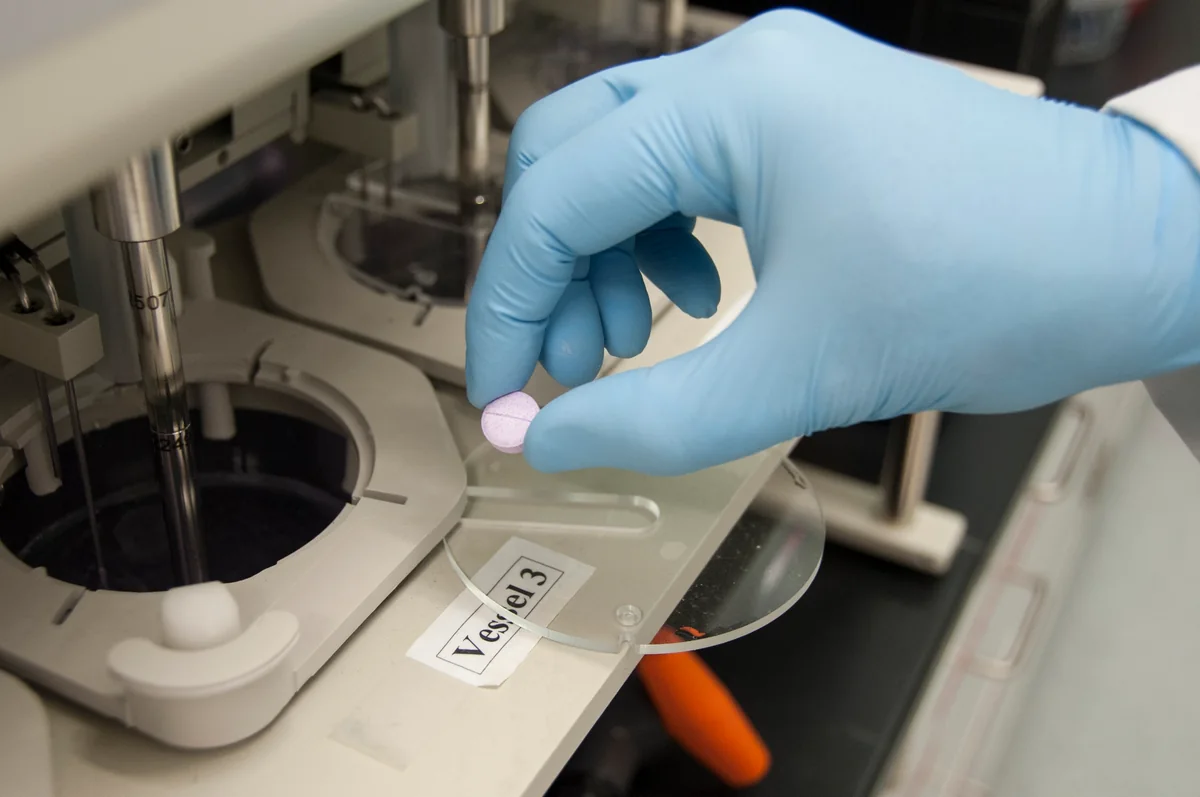
In lab-based jobs, you prepare samples and examine how cells are built under a microscope.

Graph the data in statistics software, and check sample records before reading meaning into any odd result.

With fellow researchers, you write a first draft explaining your methods and which conclusions the data support.
United States
United States · May 2025
United States · 2025–2035
Quick orientation
Typically a Doctor of Philosophy (Ph.D.) in a life science or a medical degree.
National median; about $49.72 per hour. Covers medical scientists except epidemiologists.
About 10,500 openings annually, including replacements.
In some cancer research, artificial intelligence (AI) predicts drug responses from individual tumor-cell data. These experimental tools help researchers examine patterns.
You still choose the research question, design comparisons, and judge whether the evidence supports a conclusion.
How much prediction tools can take over depends partly on the data available and whether predictions hold up in new cases.
Pay in context
The U.S. median was $103,410 a year in May 2025, equivalent to $49.72 an hour. Half earned more and half less; this is not a starting salary.
The 10th-percentile wage was $64,800; the 90th was $177,780. These describe the wage distribution, not beginner and senior pay grades.
Annual medians were $125,700 in scientific research and development, $106,800 in pharmaceutical manufacturing, $98,620 in hospitals, $81,910 in medical and diagnostic labs, and $74,970 at state colleges and universities.
Doctoral training is typical; some positions accept a master's degree plus experience.
After entry
This starts where the entry routes leave off: early work, growing capability, and advancement or specialization.
In a first research role or postdoctoral appointment, learn a lab's methods and build reliable experimental skills.
Develop greater independence in planning experiments, interpreting results, and publishing your work.
Work toward becoming a principal investigator: the scientist who leads a laboratory or project and hires its researchers.
Work alongside graduate students, technicians, and postdoctoral researchers. Leading a lab brings grant applications and may include teaching.
Join scientists developing treatments. Company research priorities shape the questions your team pursues and how projects receive funding.
Try it
Read a public summary of a treatment study. Write its question, what was compared, and one alternative explanation for the result. Sketch a follow-up study that could separate the explanations. Notice whether designing that test interests you.
Stay safe: Keep this a paper exercise; do not test treatments on yourself or others.