
Career profile

Microbiologist

Microbiologists grow cultures, compare samples and design experiments to study bacteria, fungi and other microbes.

Why does a microbe thrive under some conditions and struggle under others? Answering that means building an experiment around the question.
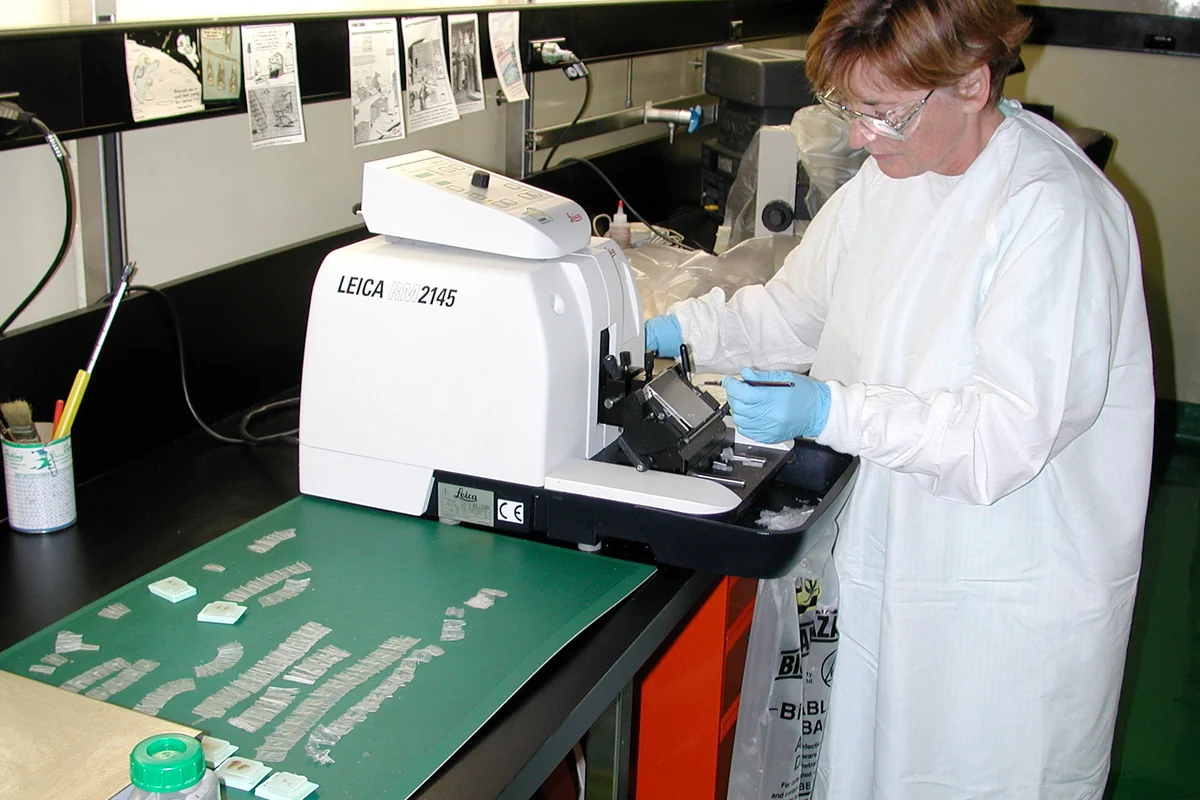
Microbiologist examines a sample using a laboratory microscope.
Livestock Industries, CSIRO / Wikimedia Commons, CC BY 3.0

A day in the life

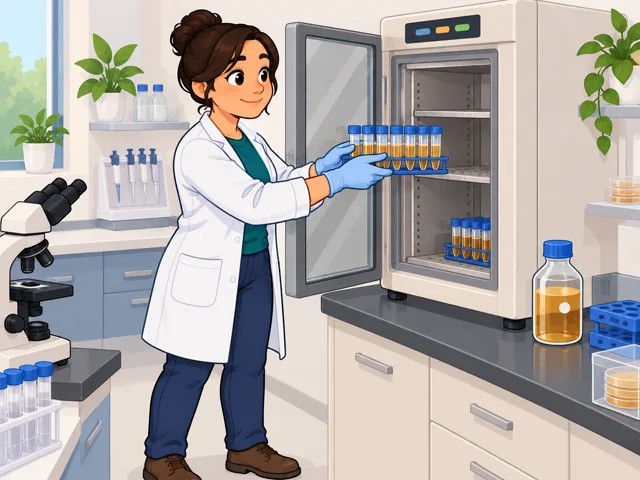
1A microbiologist carefully places capped tubes of growth medium into a laboratory incubator.

Keep cultures alive and growing

Keep microorganisms alive in their growth medium by controlling temperature, moisture and the nutrients they get.
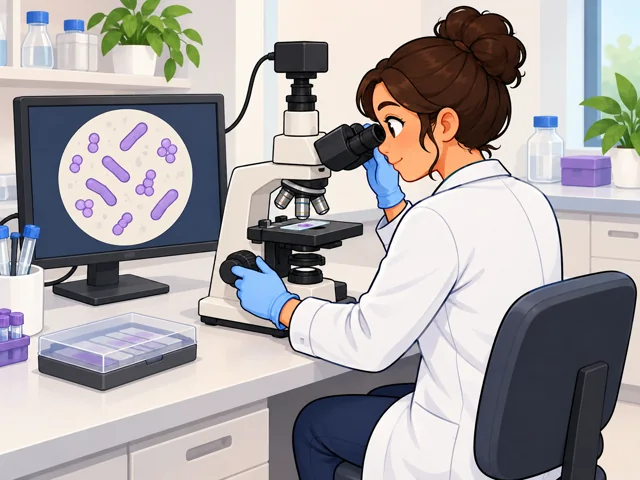
2A microbiologist adjusts a microscope while a connected screen displays cell shapes from the sample.

Compare cells under the microscope

Through the microscope, you compare cell shapes and other traits that help identify the microorganism.
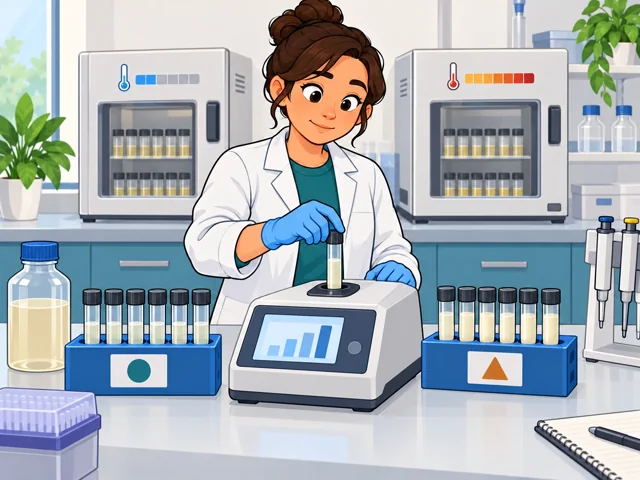
3A microbiologist measures culture growth while comparing matched samples incubated at different temperatures.

Change one factor at a time

For food safety studies, alter one environmental factor, hold the rest steady, and measure how microbial growth responds.

4A microbiologist discusses a possible cluster of similar bacterial results with a woman epidemiologist at a shared computer.

Flag possible outbreaks for public health

Match bacterial results in a shared database, then talk through a cluster with the epidemiologist tracing the illnesses.

Quick facts

Preparation

Bachelor's degree

United States · 2025

Pay

$87,990/year

United States · May 2025

Outlook

6.2% projected growth

United States · 2025–2035

Quick orientation

Preparation, pay & outlook

Preparation

Bachelor's degree

Typical education needed to enter the occupation.

Geography
United States
Period
2025

Pay

$87,990/year

National median employee wage; about $42.30/hour on a 2,080-hour basis.

Geography
United States
Period
May 2025

Outlook

6.2% projected growth

About 1,500 openings per year on average, including replacement needs.

Geography
United States
Period
2025–2035

Fit, tradeoffs & changing tools

Things to weigh

  • Bench work can be repetitive, and handling potentially harmful organisms requires protective equipment and careful procedures.
  • In grant-supported research, uncertain funding can add stress.

Where AI may help

In foodborne disease laboratories, machines read a bacterium's genetic code through whole genome sequencing. Software compares those readings to help find related samples.

What people still lead

Scientists prepare samples and interpret results with outbreak investigators. A genetic match needs context from the investigation.

What we can’t predict yet

How much comparison work software will take over remains uncertain. New tools also change the sample preparation, data skills, and interpretation the job requires.

Pay in context

Earnings

Workplace type helps explain the wide pay spread.

The national midpoint

The median was $87,990 a year, equivalent to about $42.30 an hour over 2,080 hours. Half earned more and half less; this is not a starting salary.

Geography
United States
Period
May 2025
Pay basis
Annual employee wages; calculated hourly equivalent

The spread

The lowest-paid 10% earned below $54,670; the highest-paid 10% earned above $150,000. These are wage percentiles, not career stages.

Geography
United States
Period
May 2025
Pay basis
Annual employee wage thresholds

Compare workplaces

Annual medians were $105,110 in scientific research and development, $83,770 in pharmaceutical manufacturing, and $59,470 in testing laboratories and services.

Geography
United States
Period
May 2025
Pay basis
Industry median annual wages for microbiologists

Openings include replacements

Employment is projected to grow 6.2% from 2025 to 2035. The roughly 1,500 annual openings include replacing workers who leave, not just newly created jobs.

Geography
United States
Period
2025–2035
Pay basis
Employment projection; annual average occupational openings

Getting started

Earn a relevant bachelor's degree

What the route involves
Study microbiology or a related field, with laboratory courses and practical experience.
What it can lead to
This is the usual preparation for entry-level microbiologist jobs.
What to check
Some positions require or prefer a master's degree or Doctor of Philosophy (Ph.D.).

Combine coursework and experience for federal roles

What the route involves
Complete coursework equivalent to a microbiology, biology, chemistry, or basic medical science major, plus appropriate experience or additional education.
What it can lead to
This can meet the federal microbiologist series' basic qualification requirement through its combined education-and-experience route.
What to check
The coursework must include 20 semester hours in microbiology and related subjects and 20 in physical and mathematical sciences, covering organic chemistry or biochemistry, physics, and college algebra or equivalents. Vacancy-specific requirements still apply.

Build science knowledge alongside laboratory experience.

After entry

Career paths

This starts where the entry routes leave off: early work, growing capability, and advancement or specialization.

  1. Get established

    Make culture handling and experiment records dependable enough for colleagues to use your results.

  2. Develop a specialty

    Learn to improve a testing method—for example, finding a more reliable way to detect harmful microbes in food.

  3. Lead people and projects

    With experience, pursue laboratory leadership or natural sciences management.

Where you can work

Public health laboratories

Your results feed outbreak investigations. You coordinate testing priorities with epidemiologists and environmental health staff, especially when many samples arrive, and share findings across laboratories.

  • Indoors
  • Lab

Federal food safety research

You may recreate growing conditions in a controlled laboratory or study microbes around crop-growing areas. Findings help improve detection methods and inform advice about preventing contamination.

  • Lab
  • Field work

Try it

See whether the job clicks before you commit to the path.

On paper, design a test of whether temperature changes a microbe's growth. Name what you would change, keep constant, and measure. Then explain what result would challenge your prediction. Notice whether designing a fair comparison interests you.

Stay safe: Keep this a paper exercise; do not collect or grow unknown microorganisms.

Explore more careers

Sources

  1. O*NET OnLine. 19-1022.00 — Microbiologists. Accessed 2026-10-04.
  2. U.S. Bureau of Labor Statistics. Occupational projections and worker characteristics, 2025–2035. Accessed 2026-10-04.
  3. U.S. Bureau of Labor Statistics. Microbiologists — Occupational Outlook Handbook. Accessed 2026-10-04.
  4. U.S. Office of Personnel Management. Microbiology Series 0403. Accessed 2026-10-04.
  5. Centers for Disease Control and Prevention. About Whole Genome Sequencing. Accessed 2026-10-04.
  6. Centers for Disease Control and Prevention. Model Practice: Laboratory Timeliness and Completeness. Accessed 2026-10-04.
  7. U.S. Food and Drug Administration. Microbiology Research (Food). Accessed 2026-10-04.

Your message goes to the Great Jobs team. How we use your information