
Career profile

Microsystems Engineer

Microsystems engineers design tiny mechanical parts and electronic circuits that work together on one chip.

Some microphones hold a moving part invisible without magnification. MEMS (microelectromechanical systems) engineers shape it, simulate it and check the built device works as planned.

Microsystems engineer examines a sensor chip under a microscope.

A day in the life

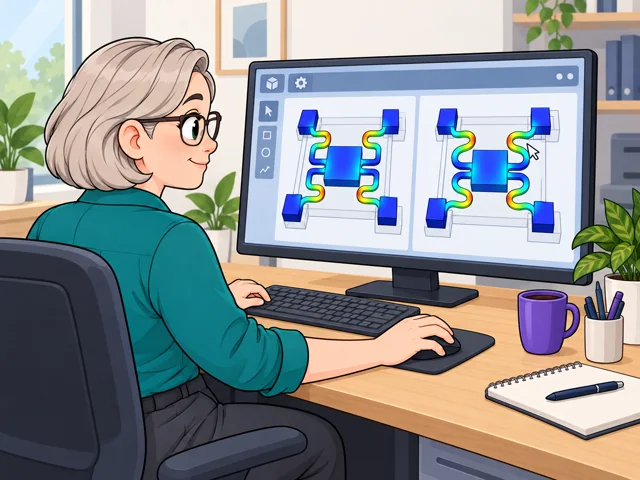
1A very light-skinned woman engineer adjusts a tiny sensor's flexure on screen and compares two simulated deformation results.

Simulate a sensor design

Simulate how a sensor's tiny structure responds, tweak its geometry and compare results before building a prototype.
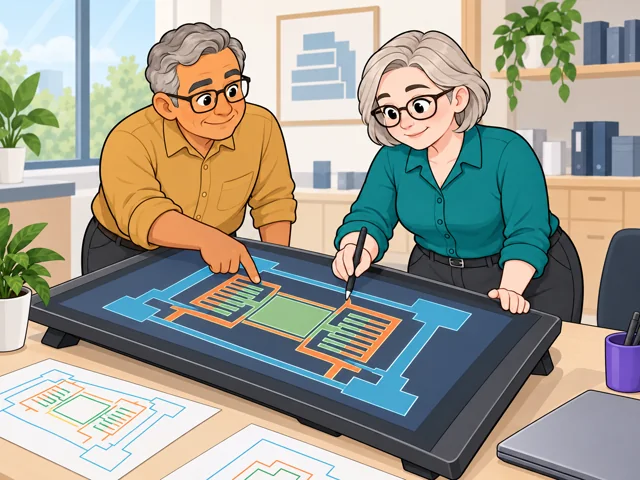
2The engineer draws aligned fabrication mask patterns while an older male coworker points out space needed around the moving part.

Draw fabrication masks

You draw one mask per fabrication step, and together the layers must free the part to move.
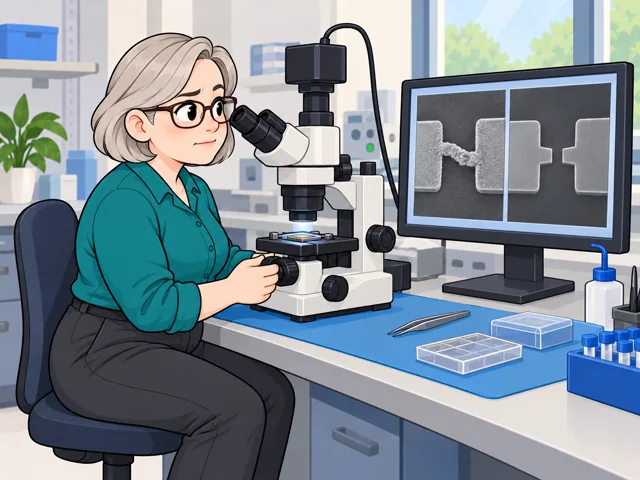
3The engineer focuses a microscope and compares a test chip with its drawing, investigating an irregular bridge across a gap.

Find why a prototype underperformed

Under a microscope, match the structure to its drawing and probe flaws that might explain weak results.
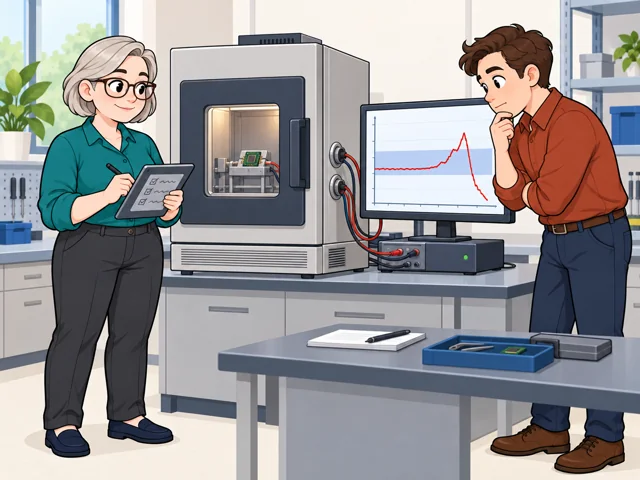
4The engineer records a device's response falling outside an acceptance band during a chamber test while a younger male coworker reviews the measurements.

See if the device holds up

Put a device through environmental stress or aging tests, then note where readings fall below acceptance limits.

Quick facts

Preparation

Engineering degree + specialized labs

United States

Pay

Not displayed

Pay depends on the role and location; see the salary ranges below.

Outlook

Not displayed

A national growth rate for this specialty is unavailable.

Quick orientation

Preparation, pay & outlook

Preparation

Engineering degree + specialized labs

Build a foundation in engineering, then develop device-design and fabrication skills. Graduate study offers a route into deeper specialization.

Geography
United States
Period
Not applicable

Pay

Not displayed

Pay depends on the role and location; see the salary ranges below.

Geography
United States
Period
Not applicable

Outlook

Not displayed

A national growth rate for this specialty is unavailable.

Geography
United States
Period
Not applicable

Fit, tradeoffs & changing tools

Things to weigh

  • Fabrication-focused jobs can require regular on-site cleanroom and laboratory work.
  • Some consumer-device roles include travel to work with suppliers.

Where AI may help

Simulation software helps predict interacting mechanical, electrical, and thermal behavior before fabrication.

What people still lead

You choose assumptions and experiments, then investigate why real measurements disagree with predictions.

What we can’t predict yet

Artificial intelligence is being explored for microsystems design. How much of the design-and-test cycle it will take over remains uncertain.

Pay in context

Earnings

The national figures below give broader engineering context. The workplace salary ranges describe specific experienced MEMS roles, so neither is a starting-pay expectation.

National pay context

For the broader Engineers, All Other group, the 2025 U.S. median was $122,930 a year, or $59.10 an hour. The lowest-paid 10% earned $66,810 or less annually; the highest-paid 10% earned $189,950 or more. These figures cover multiple engineering specialties, and the percentiles are not career stages.

Geography
United States
Period
2025
Pay basis
Annual and hourly median wages; annual 10th and 90th wage percentiles for Engineers, All Other

National job prospects

For the same broader Engineers, All Other group, employment is projected to grow 1%–2% over 2024–2034, with about 9,300 openings annually from growth and replacement. These are not forecasts for microsystems engineers alone.

Geography
United States
Period
2024–2034
Pay basis
Employment projections, not compensation

Consumer electronics: device design

An experienced MEMS design role in Boulder advertises $128,300–$193,200 in annual base pay. Skills, qualifications, experience, and location affect the offer; stock programs and benefits are separate.

Geography
Boulder, Colorado, United States
Period
Posted June 17, 2025; accessed October 4, 2026
Pay basis
Advertised annual base salary for an experienced role

Biological sensing: senior development

A senior MEMS development role in Cambridge advertises $108,000–$176,000 annually and requires at least five years of relevant experience. Incentives and benefits are additional. Different locations and responsibilities prevent a direct industry-pay comparison.

Geography
Cambridge, Massachusetts, United States
Period
Accessed October 4, 2026; posting date unspecified
Pay basis
Advertised annual salary; incentive program and benefits listed separately

Getting started

Build device skills during a bachelor's degree

What the route involves
Study engineering fundamentals alongside fabrication and testing. Rochester Institute of Technology's microelectronic engineering Bachelor of Science includes cleanroom labs, MEMS electives, and cooperative work experience.
What it can lead to
You develop a foundation for device-building and testing work, with projects and workplace experience to bring to applications.
What to check
Choose electives and projects deliberately: a microelectronics degree covers more than MEMS.

Specialize through graduate study

What the route involves
After a related bachelor's degree, pursue advanced device coursework and research. A Master of Science in electrical engineering can offer a MEMS focus.
What it can lead to
You build deeper preparation for specialized engineering problems and, if desired, doctoral research.
What to check
Programs set their own admission requirements; changing from another engineering field may require prerequisite courses.

Look for engineering programs where you can design, fabricate, and measure small devices. Two education routes build toward this work.

After entry

Career paths

This starts where the entry routes leave off: early work, growing capability, and advancement or specialization.

  1. Get established

    Learn the device's test methods and records. Make your measurements repeatable before interpreting unexpected results.

  2. Connect design with fabrication

    Take responsibility for a device change, working through how its layer patterns and fabrication process constrain the final structure.

  3. Lead a device into production

    Advance toward technical leadership: guide a sensor from concept through fabrication and help transfer the process to a manufacturing partner.

Where you can work

Consumer-device design teams

Work with acoustics, electronics, and mechanical specialists. Supplier discussions connect your models to components intended for finished products.

  • Office
  • Lab

Biological-sensor startups

Move between cleanroom fabrication and lab measurements, working with bioengineers to connect tiny silicon structures with biological samples.

  • Indoors
  • Lab

National-laboratory research facilities

Develop custom microsystems in facilities combining offices, labs, and cleanrooms. Small batches of experimental devices and demanding reliability problems can shape the work.

  • Office
  • Lab

Try it

See whether the job clicks before you commit to the path.

On paper, sketch a tiny bridge held at both ends above a surface. Draw separate layer views showing its supports, bridge, and the space beneath it. Explain how removing a temporary layer could leave the bridge free. Notice whether reasoning from flat patterns to a moving structure interests you.

Stay safe: Keep this a drawing exercise; actual microfabrication requires specialized facilities and training.

Explore more careers

Sources

  1. O*NET OnLine. Microsystems Engineers — 17-2199.06. Accessed 2026-10-04.
  2. Apple. MEMS Design Engineer — Boulder, Colorado. Accessed 2026-10-04.
  3. Flagship Pioneering / Tilde Bio. Senior Hardware Engineer, Nanofabrication and MEMS Development. Accessed 2026-10-04.
  4. Rochester Institute of Technology. Microelectronic Engineering Bachelor of Science Degree. Accessed 2026-10-04.
  5. Rochester Institute of Technology. Electrical Engineering Master of Science Degree. Accessed 2026-10-04.
  6. Rochester Institute of Technology. Microsystems Engineering Doctor of Philosophy Degree. Accessed 2026-10-04.
  7. Sandia National Laboratories. Fabrication, Testing and Validation Capabilities. Accessed 2026-10-04.
  8. Sandia National Laboratories. Nanodevices and Microsystems. Accessed 2026-10-04.
  9. O*NET OnLine. Texas Wages: Microsystems Engineers — national Engineers, All Other wage table. Accessed 2026-10-04.

Your message goes to the Great Jobs team. How we use your information