

Career profile

Mixing and Blending Machine Operator

Mixing machine operators run large factory mixers that blend weighed or measured materials evenly.

Each batch begins with confirming every input, then watching the mixer while it runs. It suits people who like both machines and exact formulas.
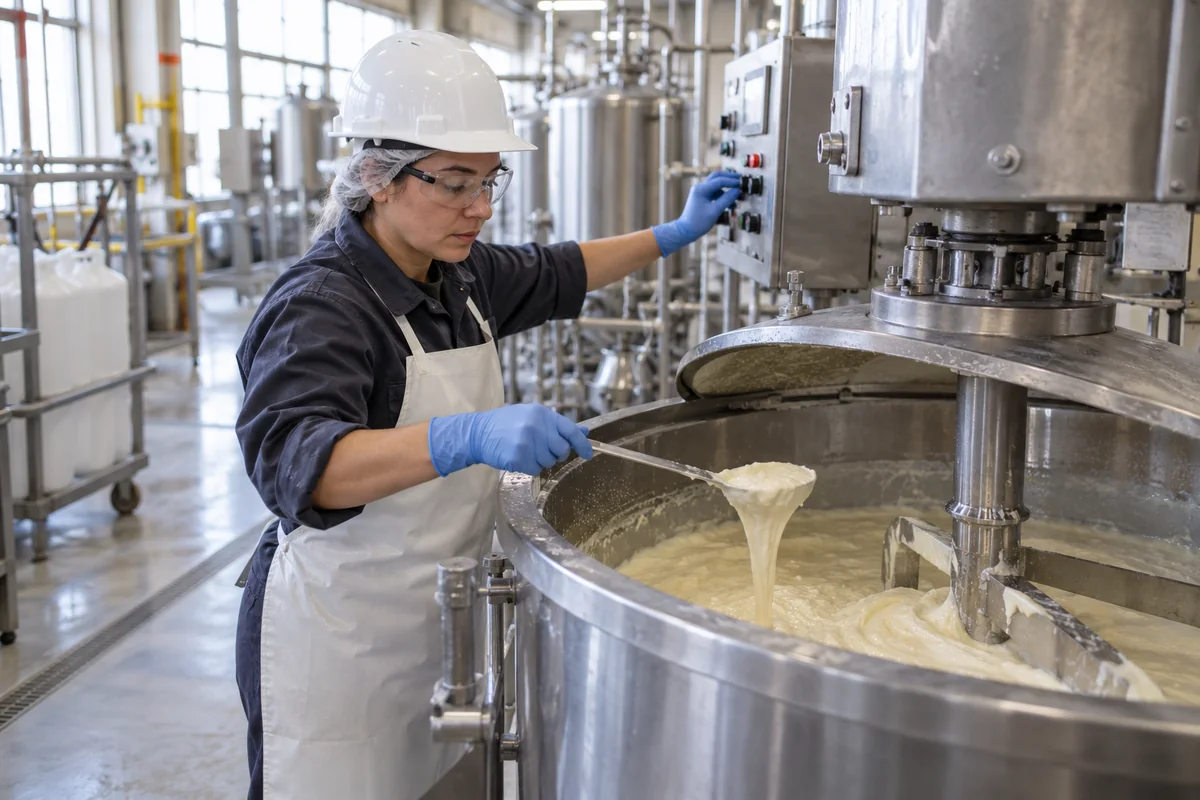
An adult mixing and blending machine operator adjusting a commercial mixing machine and checking the mixture at a safe industrial processing plant.

A day in the life

1A mixing operator compares a weighed ingredient with the batch sheet before loading the blender.

Match ingredients to the batch sheet

Compare each ingredient and its amount with the batch sheet before anything goes into the blender.
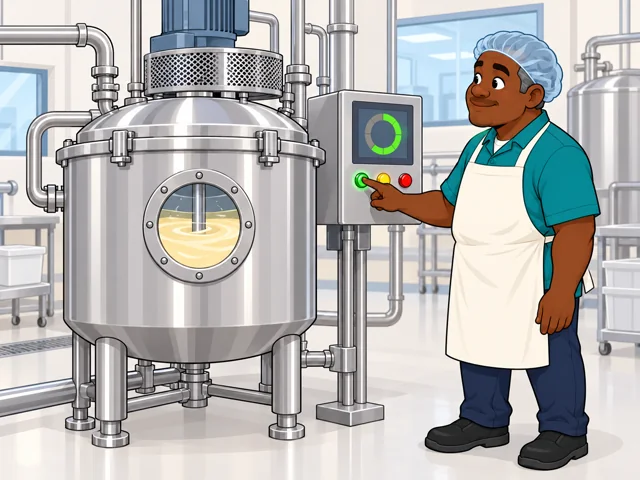
2The operator starts the enclosed mixer and monitors its cycle timer and inspection window.

Start and time the mix

Switch on the mixer, time it for the set run, and watch the machine the whole time.

3The operator collects a blend sample and flags uneven consistency to a supervisor while a quality coworker examines another sample.

Pull a sample from the blend

If testing shows a quality problem, tell the production supervisor and work with quality staff to fix it.
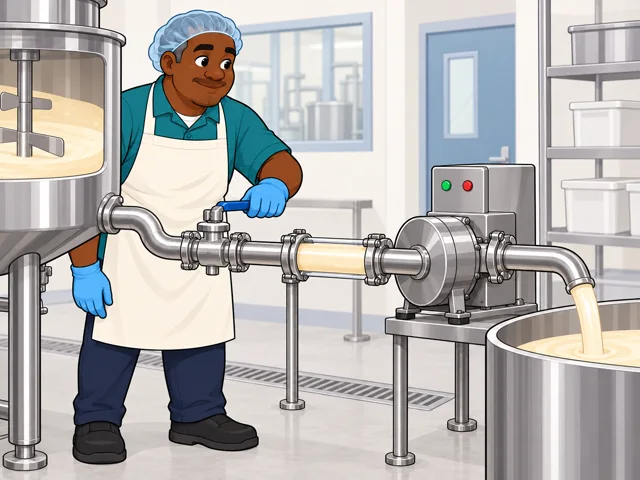
4The operator opens a valve and monitors the pump as finished blend flows through enclosed piping to a receiving tank.

Pump liquid blends onward

In liquid-processing jobs, once the mixture hits the required state, you send it onward with pumps and valves.

5The operator monitors the blender's closed sanitizing cycle and updates the batch record for the next batch.

Sanitize and log the batch

At food plants, you sanitize the equipment using the plant's set cleaning steps and fill out batch records.

Quick facts

Preparation

High school + plant training

United States

Pay

$48,990/year

United States · 2025

Outlook

Declining employment; replacement openings

United States · 2025–2035

Quick orientation

Preparation, pay & outlook

Preparation

High school + plant training

Some employers accept beginners; others require manufacturing or equipment experience.

Geography
United States
Period
Not applicable

Pay

$48,990/year

National median in 2025, equivalent to $23.55/hour, for mixing and blending machine setters, operators, and tenders together.

Geography
United States
Period
2025

Outlook

Declining employment; replacement openings

For setters, operators, and tenders together, employment is projected to fall 6.1% from 2025 to 2035, with about 7,900 openings a year as workers leave the occupation.

Geography
United States
Period
2025–2035

Fit, tradeoffs & changing tools

Things to weigh

  • Expect standing, material handling, and noisy production areas.
  • Some plants run multiple shifts or require overtime, which can limit your evenings and free time.

Where AI may help

Some bakery mixers use automatic measuring systems to feed ingredients into the process.

What people still lead

Operators still check equipment, collect samples, and bring problems to maintenance or quality staff.

What we can’t predict yet

How much loading and checking becomes automatic will depend on the plant's equipment and products.

Pay in context

Earnings

These wage figures cover mixing and blending machine setters, operators, and tenders together.

Typical pay and the spread

The 2025 U.S. median was $48,990 a year, or $23.55 an hour. The lowest-paid 10% earned $36,790 or less annually; the highest-paid 10% earned $70,200 or more. These are wage percentiles, not starting and experienced-worker rates.

Geography
United States
Period
2025
Pay basis
National median annual and hourly wages; annual 10th and 90th percentiles

Pay differs by workplace

In May 2023, average hourly pay was $20.40 in animal food manufacturing and $26.36 in petroleum and coal products manufacturing. These older industry averages show differences between settings; they are not current offers or starting rates.

Geography
United States
Period
May 2023
Pay basis
Industry-specific hourly mean wages for the combined occupation

Getting started

Learn in a food-blending job

What the route involves
Learn the plant's recipes, loading sequence, cleaning procedures, and records with the production manager.
What it can lead to
Build the ability to run that plant's batches consistently.
What to check
Some roles require a high school diploma and accurate reading and recordkeeping without listing prior blending experience.

Bring manufacturing experience

What the route involves
Build experience with production equipment, mixing, and material handling before applying to chemical-blending roles.
What it can lead to
Meet experience expectations for jobs involving chemical batches and equipment troubleshooting.
What to check
Requirements vary: a chemical blender role may require forklift experience while only preferring several years in manufacturing.

Look at experience requirements before paying for a program. Entry expectations differ between food and chemical plants.

After entry

Career paths

This starts where the entry routes leave off: early work, growing capability, and advancement or specialization.

  1. Make repeatable batches

    Get reliable at ingredient checks, timing, and complete batch records.

  2. Learn to troubleshoot

    Recognize equipment problems and explain what happened to maintenance technicians.

  3. Become an operator trainer

    Ask about teaching new operators and coordinating work as your experience grows.

Where you can work

Dry food-blending plants

Warehouse-style production can put you beside ingredient supplies and batch blenders. Recipe accuracy and sanitation shape the routine.

  • Indoors
  • Physical demands

Agricultural chemical plants

Work can involve pumps, filters, and mixing vessels, plus hazardous-waste handling and close contact with quality staff.

  • Indoors
  • Safety-sensitive

Try it

See whether the job clicks before you commit to the path.

Make a paper batch sheet for a pretend 1,000-gram blend: 60% ingredient A, 25% B, and 15% C. Calculate each weight, then double the batch and check the total. Notice whether you enjoy the careful arithmetic and checking.

Stay safe: Keep this on paper; no chemicals or powered mixer are needed.

Explore more careers

Sources

  1. O*NET OnLine. Mixing and Blending Machine Setters, Operators, and Tenders. Accessed 2026-10-04.
  2. L.H. Hayward & Company. Gulf Coast Blenders: Blender Operator. Accessed 2026-10-03.
  3. BASF. Blender — St. Louis, Missouri — Job 128730. Accessed 2026-10-03.
  4. Conagra Brands. Mixer — All Shifts — Bakery Plant — Req-037023. Accessed 2026-10-03.
  5. The Coca-Cola Company. Freestyle Mixing Operator — 2nd Shift — R-137818. Accessed 2026-10-03.
  6. O*NET OnLine / U.S. Bureau of Labor Statistics. National Wages: Mixing and Blending Machine Setters, Operators, and Tenders. Accessed 2026-10-04.
  7. U.S. Bureau of Labor Statistics. Occupational projections and worker characteristics, 2025–2035. Accessed 2026-10-04.
  8. U.S. Bureau of Labor Statistics. May 2023 Occupational Employment and Wage Statistics: Mixing and Blending Machine Setters, Operators, and Tenders. Accessed 2026-10-04.

Your message goes to the Great Jobs team. How we use your information