
Career profile

Heavy Equipment Mechanic

Heavy equipment mechanics keep bulldozers and excavators running by fixing mechanical, hydraulic and electrical systems.

How a machine behaves tells you where the trouble starts. You take it apart, and afterward you test whether the fix really worked.
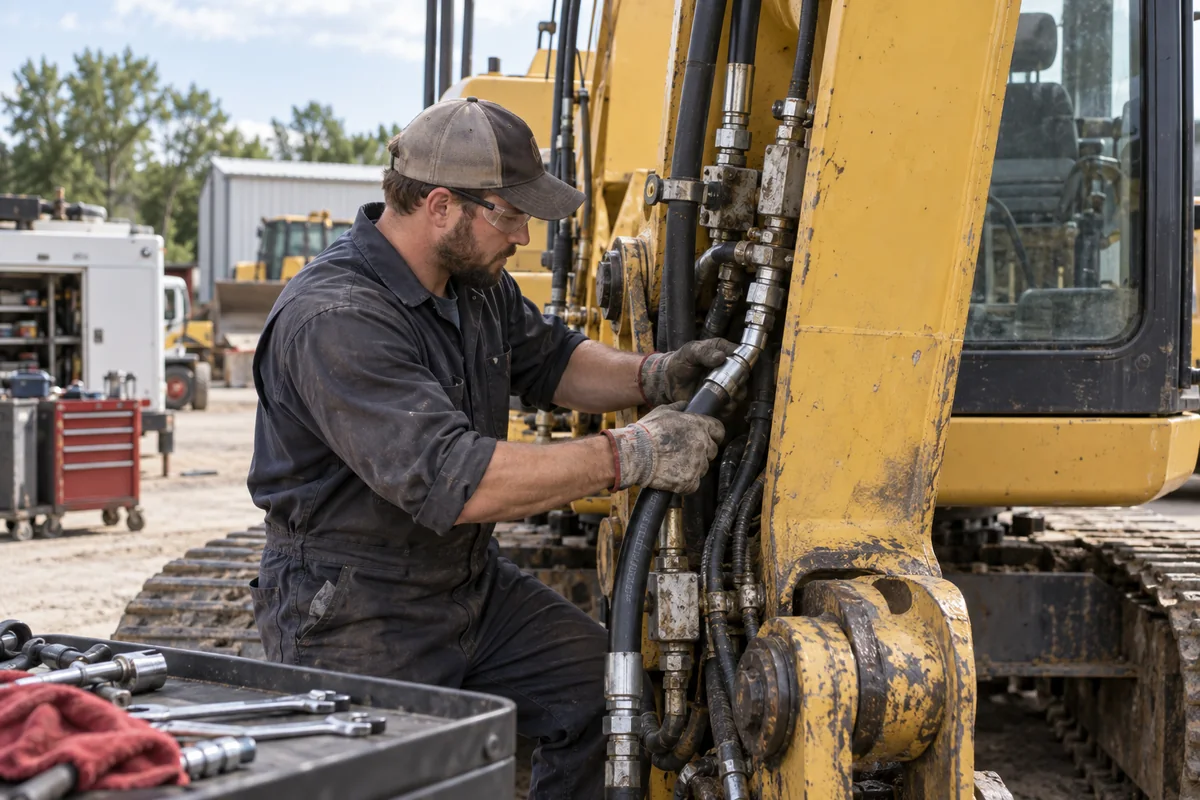
A heavy equipment mechanic replaces a hydraulic hose on a parked excavator.

A day in the life

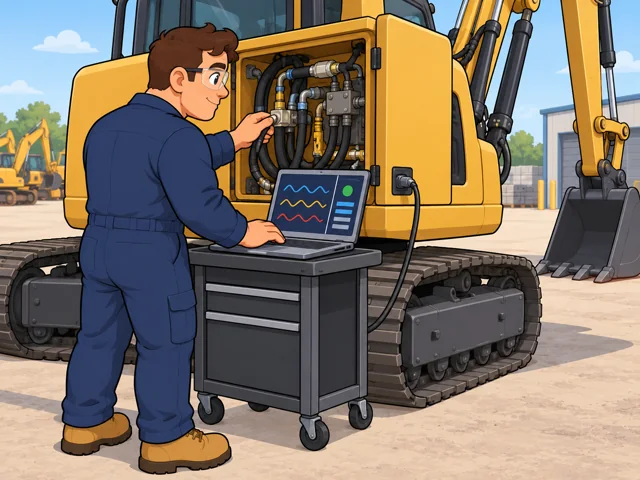
1A heavy equipment mechanic studies computerized diagnostic traces beside an excavator's open service compartment.

Narrow down a movement fault

You watch an excavator that is moving poorly and run computer diagnostic tests to narrow down the fault.

2The mechanic checks a removed bearing with a bore gauge beside a clean replacement bearing.

Measure wear and swap a bearing

Measure how worn a part is with a gauge first, then replace the damaged bearing or other part.
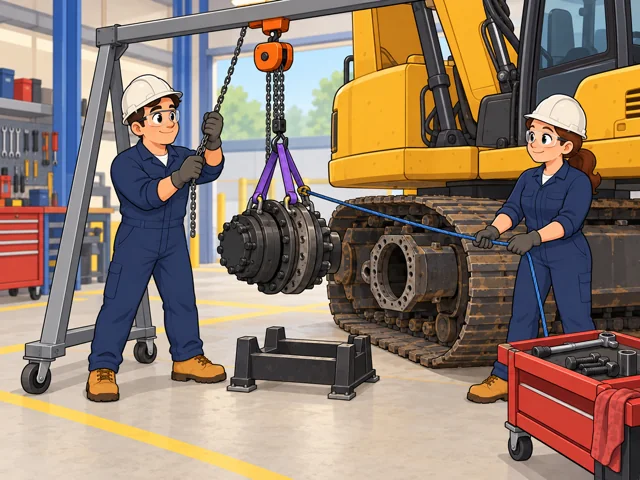
3The mechanic raises a disconnected excavator drive assembly with a chain hoist while a coworker steadies it using a tag line.

Lift heavy assemblies out

Take the equipment apart with hand tools and hoist heavy assemblies out to reach what needs fixing.
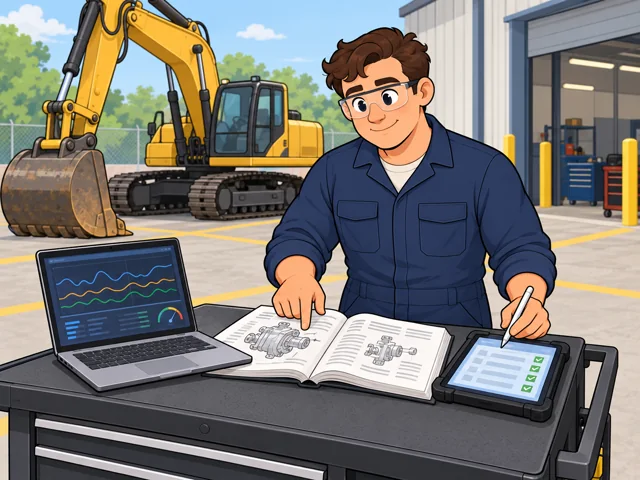
4The mechanic compares an excavator's test results with its service manual and records the completed repair on a tablet.

Prove the repair and log it

Test the machine's performance against the manual's specs, then log the job in its service record.

Quick facts

Preparation

High school + workplace training

United States · 2025

Pay

$65,510 a year

United States · May 2025

Outlook

6.7% projected growth

United States · 2025–2035

Quick orientation

Preparation, pay & outlook

Preparation

High school + workplace training

A diploma or equivalent is typical entry preparation; learning the repairs takes substantial on-the-job training.

Geography
United States
Period
2025

Pay

$65,510 a year

National median in May 2025, equivalent to $31.50 an hour.

Geography
United States
Period
May 2025

Outlook

6.7% projected growth

Employment is projected to grow nationally from 2025 to 2035.

Geography
United States
Period
2025–2035

Fit, tradeoffs & changing tools

Things to weigh

  • Heavy, greasy parts and awkward working positions can make the day physically tiring.
  • Some jobs include evenings, weekends, and overtime.

Where AI may help

On connected Cat equipment, technicians can run diagnostic tests remotely and prepare parts before traveling to the machine.

What people still lead

You interpret the fault information, decide what repair is needed, and carry out the physical work.

What we can’t predict yet

How much troubleshooting can move off-site will depend on the machine’s connection and whether its data can explain the fault.

Pay in context

Earnings

Use the national median as a reference when comparing an offer.

The middle of the pay distribution

The median was $65,510 a year, or $31.50 an hour. Half earned more and half less; this is not a starting rate.

Geography
United States
Period
May 2025
Pay basis
National median employee wages for mobile heavy equipment mechanics, except engines.

Openings over the decade

About 15,000 openings are projected annually, on average, during 2025–2035. These are projected opportunities across the country, not vacancies available today.

Geography
United States
Period
2025–2035
Pay basis
Employment projection; not a compensation measure.

How widely pay varies

The lowest-paid 10% earned $46,820 a year or less, while the highest-paid 10% earned $94,460 or more. These describe the wage spread, not starting pay and a promised later salary.

Geography
United States
Period
May 2025
Pay basis
National 10th- and 90th-percentile annual employee wages for mobile heavy equipment mechanics, except engines.

Compare rental-fleet and dealer-shop pay

For experienced mechanics, advertised pay includes $29–$36 an hour repairing a construction rental fleet in Chichester, New Hampshire, and $33–$40 in a dealership shop in Longview, Washington. These are local examples, not industry averages: location, experience, and qualifications differ, so they do not show that one setting always pays more.

Geography
Chichester, New Hampshire, and Longview, Washington, United States
Period
Listings retrieved October 2, 2026; Longview listing posted September 19, 2025
Pay basis
Advertised hourly pay for specific heavy-equipment roles, including engine work. Rental role requires hands-on experience; shop role requires a related associate degree and five years of experience, or equivalent education and experience. Benefits are separate.

Getting started

Start as a trainee

What the route involves
Enter with a high school diploma or equivalent and learn repairs alongside experienced technicians.
What it can lead to
Build competence for routine service, then more complex repairs.
What to check
Some employers prefer applicants who have completed technical school.

Combine college with a dealer internship

What the route involves
In ThinkBIG’s heavy-equipment track, alternate college classes with a paid Cat dealer internship.
What it can lead to
Earn an Associate of Applied Science degree and practical experience preparing for dealer technician work.
What to check
You need a high school diploma or equivalent and must apply through the college and sponsoring dealer. Requirements vary; budget for tuition, supplies, and housing.

Look for a route that gives you practice on heavy equipment.

After entry

Career paths

This starts where the entry routes leave off: early work, growing capability, and advancement or specialization.

  1. Get established

    Become dependable at routine service and minor repairs.

  2. Handle harder faults

    Use manufacturer training to learn particular machines and components.

  3. Move into field service

    With experience, specialize in repairing machines at worksites.

Where you can work

Repair shop

Work indoors around noisy repairs and heavy components.

  • Indoors
  • Physical demands
  • Safety-sensitive

Construction or mining worksite

Travel in a truck stocked with tools and parts. Outdoor repairs avoid transporting large machines to a shop.

  • Outdoors
  • Field work
  • Travel
  • Physical demands
  • Safety-sensitive

Try it

See whether the job clicks before you commit to the path.

Find a labeled excavator diagram. Trace how a hydraulic cylinder moves the boom, then write two questions you would ask if the boom stopped moving. Notice whether following the connections makes you curious.

Stay safe: Keep this a paper exercise; do not operate equipment or loosen hydraulic fittings.

Explore more careers

Sources

  1. O*NET OnLine. 49-3042.00 — Mobile Heavy Equipment Mechanics, Except Engines. Accessed 2026-10-02.
  2. U.S. Bureau of Labor Statistics. Occupational projections and worker characteristics. Accessed 2026-10-02.
  3. U.S. Bureau of Labor Statistics. Heavy Vehicle and Mobile Equipment Service Technicians. Accessed 2026-10-02.
  4. Caterpillar. ThinkBIG: Go Beyond the Classroom. Accessed 2026-10-02.
  5. Caterpillar. Cat Remote Troubleshooting. Accessed 2026-10-02.
  6. O*NET OnLine. National Wages: 49-3042.00 — Mobile Heavy Equipment Mechanics, Except Engines. Accessed 2026-10-02.
  7. Milton Rents / Milton CAT. Diesel Mechanic/Heavy Equipment — Chichester, New Hampshire, job 2026-6496. Accessed 2026-10-02.
  8. Peterson Cat via Caterpillar Dealer Technician Jobs. Shop Technician — Longview, Washington. Accessed 2026-10-02.

Your message goes to the Great Jobs team. How we use your information