

Verify MRI order, screen for metal
Ask about implants, devices, metal, pregnancy and other conditions needing review before anyone enters the magnet zone.
Career profile
MRI technologists run scanners for detailed diagnostic images, guiding patients through loud, tightly controlled exams.
Hands-on and in person: you safety-check every patient and object, position each body exactly, and make sure the images are usable before patients go home.
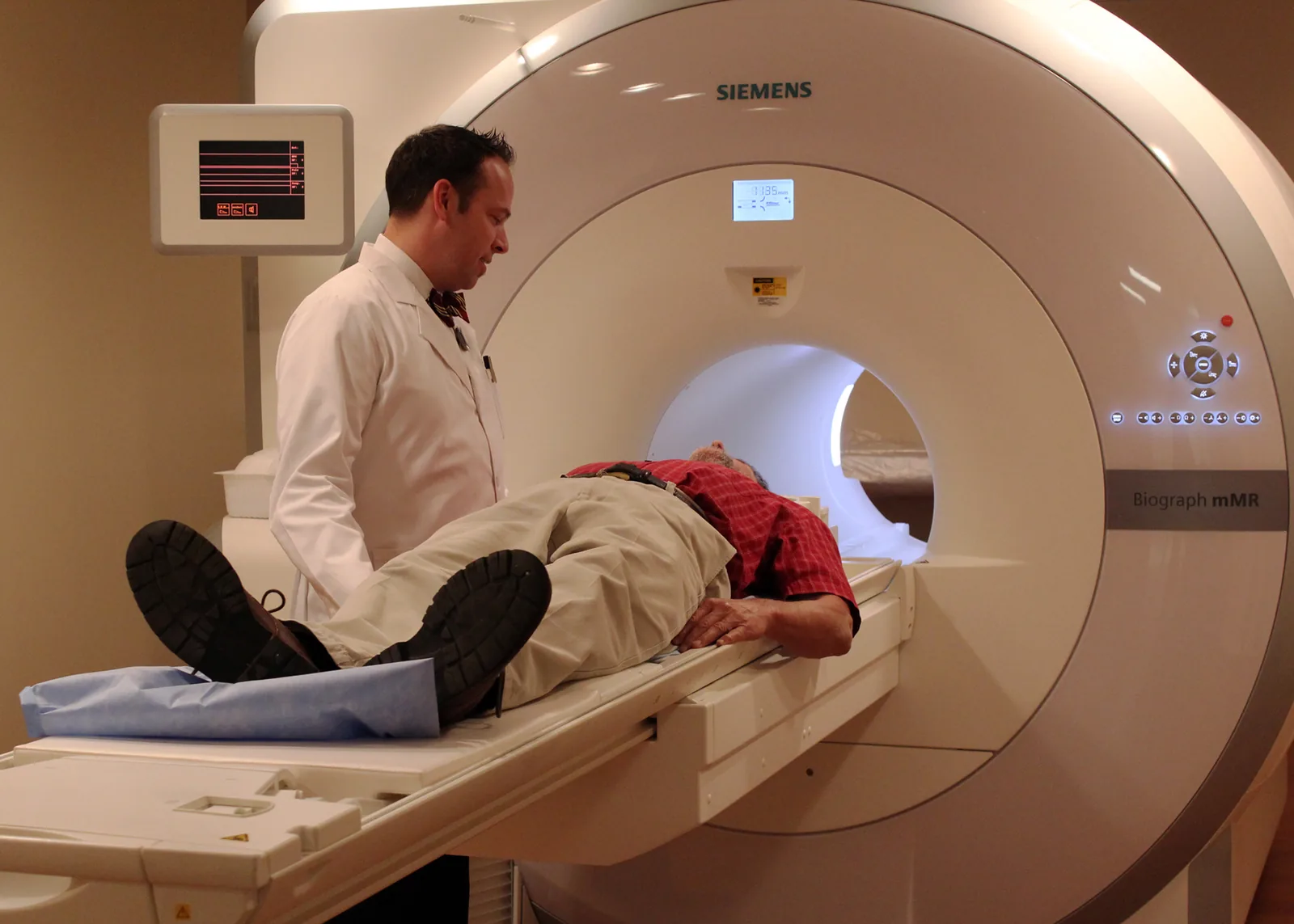
Ask about implants, devices, metal, pregnancy and other conditions needing review before anyone enters the magnet zone.
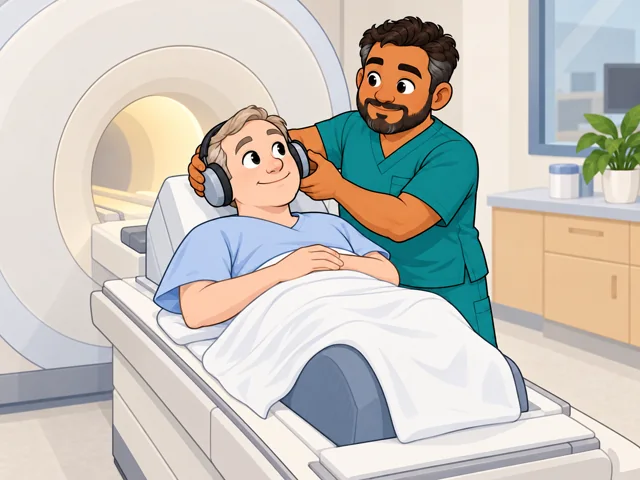
You ease worry or claustrophobia and help each patient hold the exact position the scan needs.
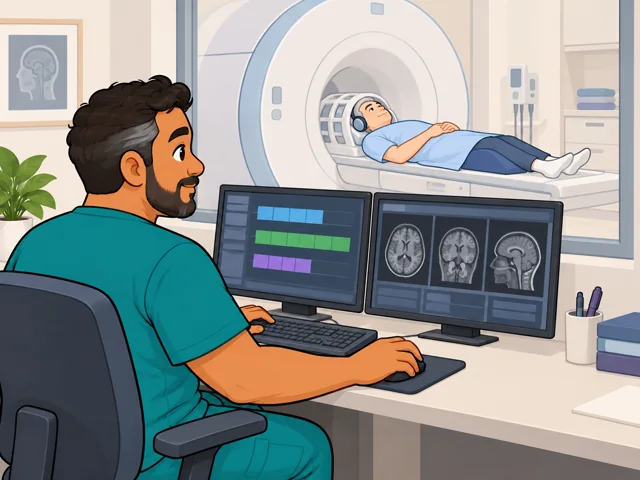
Pick coils and imaging techniques, position the patient and equipment, then run the scanner for the ordered views.
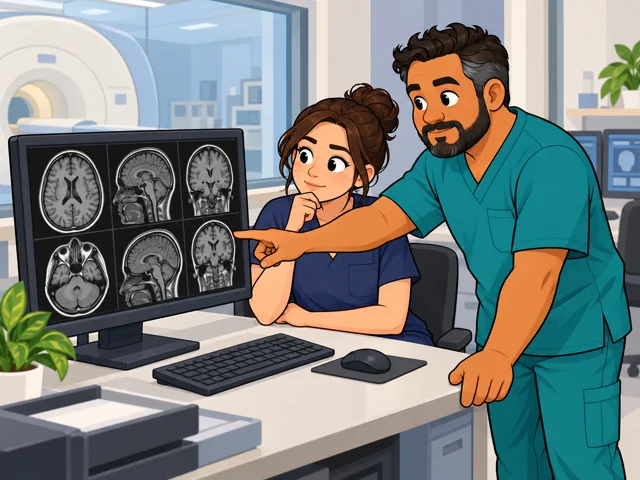
Inspect image quality, consulting a radiologist or other doctor if an extra sequence or view seems needed.
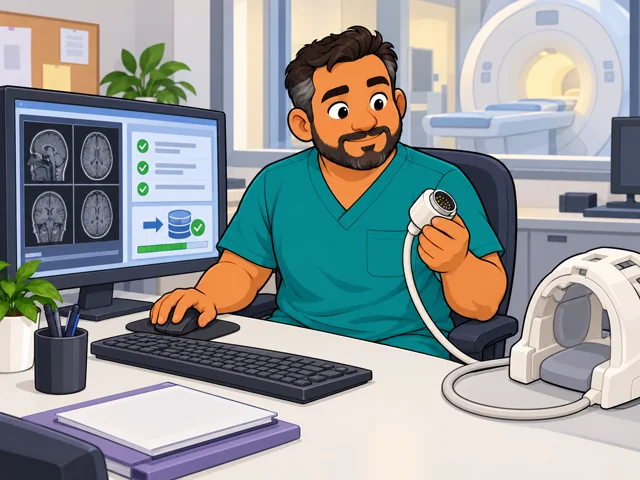
Save the images, test the equipment and fix coil or scanner problems as far as your role allows.
United States
United States · May 2025
United States · 2025–35
Quick orientation
MRI technologists typically need an associate degree. Some complete an approved MRI program directly; others enter after related imaging work, often radiography.
The U.S. median annual wage for MRI technologists was $95,480; a median is the midpoint, not a starting wage or guaranteed offer.
Projected U.S. employment growth for MRI technologists; a national projection does not guarantee local openings.
On certain MRI systems, optional deep-learning reconstruction can reduce image noise and support shorter scans or improved image quality.
Technologists still screen and position the patient, choose or adjust scan parameters, monitor the exam, and decide whether image quality is adequate for physician review.
Availability varies by scanner, software, protocol, and facility. Faster reconstruction does not mean every exam or staffing pattern will change.
Pay in context
Start with the national midpoint, then compare the employer, schedule, and full compensation behind any offer.
The median annual wage for MRI technologists was $95,480: half earned more and half earned less. It is not a starting wage or guaranteed offer. The median hourly wage was $45.91.
In May 2025, the 10th-percentile annual wage was $68,890 and the 90th-percentile wage was $127,670. These are wage percentiles, not starting and senior salaries.
Among major employing industries, reported medians ranged from $93,540 in medical and diagnostic laboratories to $140,390 in outpatient care centers. These are different worker groups, not steps on a pay ladder.
BLS projects MRI employment to rise from 43,900 jobs in 2025 to 47,300 in 2035, an 8% increase. That does not guarantee openings in a particular community.
Two established routes lead toward an MRI credential: study MRI directly, or add MRI after earning an accepted imaging credential.
After entry
This starts where the entry routes leave off: early work, growing capability, and advancement or specialization.
Learn the facility's screening, coil selection, equipment-check, documentation, and image-transfer procedures, then become reliable on routine examinations.
Handle more anatomy and exam types, adapt techniques and coils, troubleshoot image-quality problems, and communicate with patients who are anxious or in pain.
With experience, move toward complex work such as functional or dynamic MRI, teach procedures, or coordinate other workers.
Hospital MRI can include inpatients and time-sensitive studies. One current Northwestern Medicine role includes evening hours, weekends, and an on-call rotation; schedules differ by hospital.
One current RadNet role uses weekday afternoon and evening hours with a Saturday rotation and describes a fast-paced flow of incoming patients. Other centers set different hours and staffing.
One current Northwestern Medicine role supports three outpatient locations, coordinates the schedule, prioritizes urgent exams, and may cover weekends. Site coverage and hours are employer-specific.
Try it
Make a five-step plan for a fictional knee MRI: verify the order, screen for metal or implants, explain the noise and need to stay still, plan positioning, and check image quality. Mark the step you would most want to observe and the one you might find tedious; that contrast can reveal whether the mix of patient care, safety detail, and technical checking interests you.
Stay safe: Use a fictional patient with no real medical details. Do not enter an MRI area or handle imaging equipment unless facility staff invite and supervise you.