
Career profile

Neurologist

Neurologists diagnose nervous system disorders and treat them mostly with medicines and nonsurgical care.

A shift in someone's walk can shape your next question. Neurology joins what patients tell you with what their nervous system shows on exam.
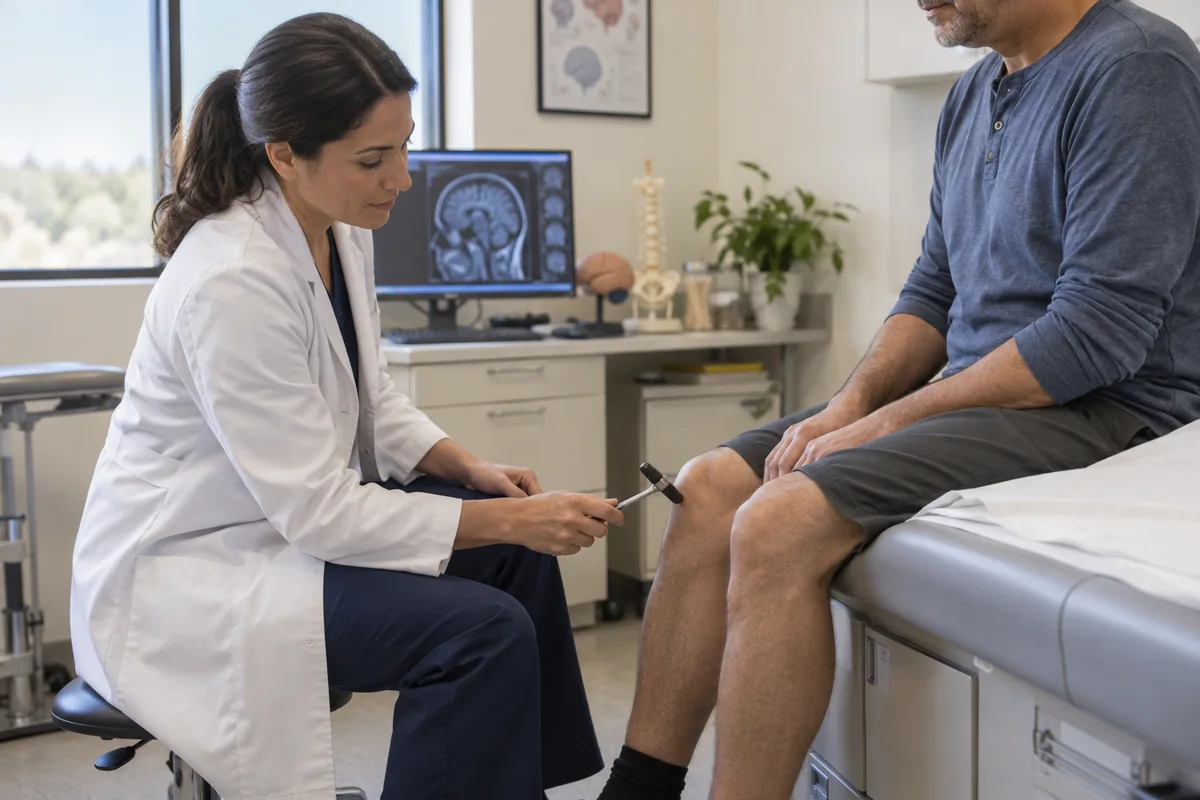
neurologist checking an adult patient’s reflexes during an examination.

A day in the life

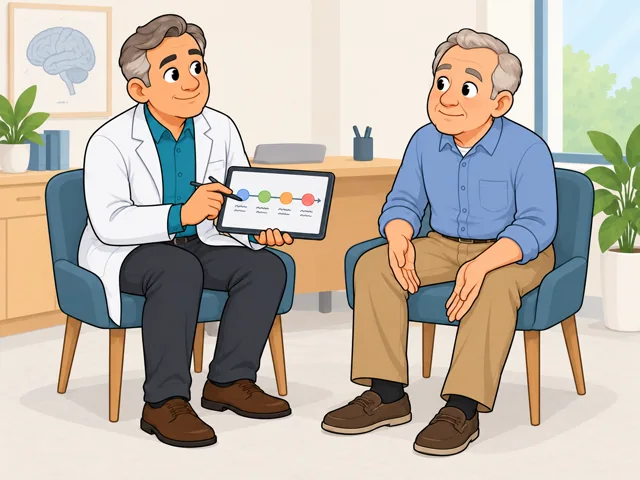
1A seated neurologist listens as an older male patient describes walking difficulties, recording the progression of symptoms on a tablet.

Trace when the trouble began

Ask when symptoms started, how they shifted, and what daily tasks got harder, to build a timeline.
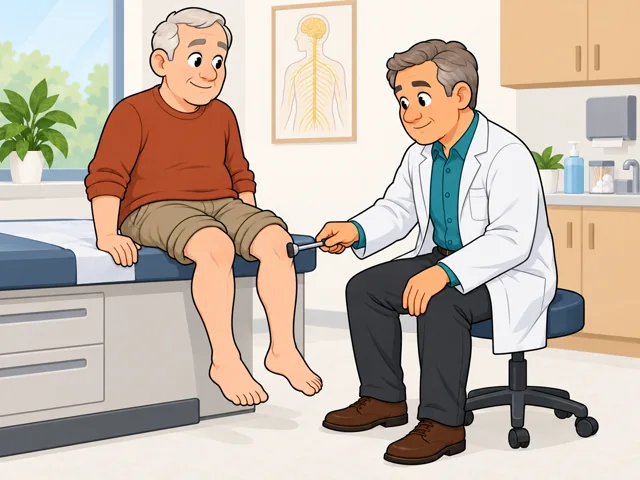
2A neurologist checks an older male patient's knee reflex with a rubber hammer while the patient's legs hang freely from an examination table.

Test reflexes and watch walking

You watch a patient walk, tap with a rubber reflex hammer, and pick exam parts that explain symptoms.
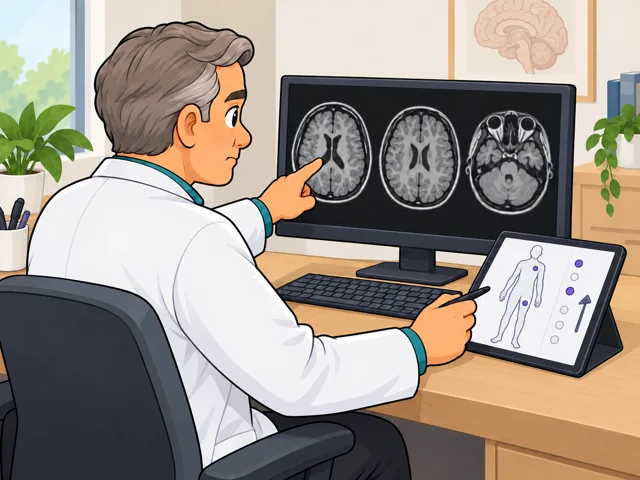
3A neurologist compares brain MRI images on a monitor with examination findings on a tablet.

Weigh scans against the exam

Put MRI scans beside your exam findings, judging which explanation fits best and whether more tests are worthwhile.
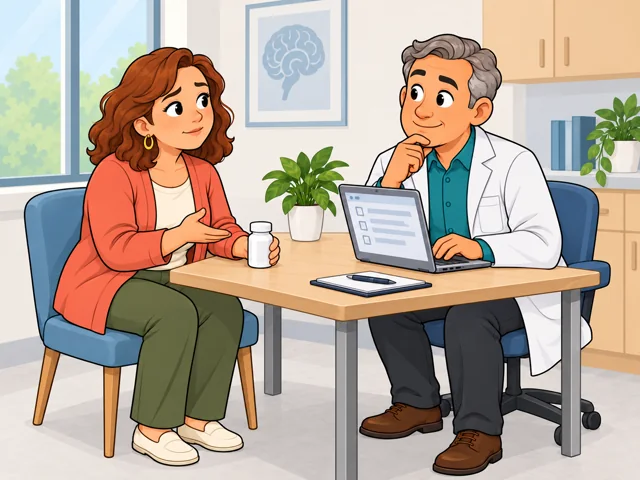
4A neurologist discusses a female patient's troublesome medication side effects while updating her treatment record on a laptop.

Hear out bothersome side effects

Weigh the drug's benefit against those side effects, discuss changes, and write the revised plan into treatment notes.

Quick facts

Preparation

Medical degree + residency

United States

Pay

$248,560/year

United States · May 2025

Outlook

6.4% projected growth

United States · 2025–2035

Quick orientation

Preparation, pay & outlook

Preparation

Medical degree + residency

Professional medical education followed by specialized clinical training.

Geography
United States
Period
Not applicable

Pay

$248,560/year

National median for neurologists; hourly equivalent $119.50.

Geography
United States
Period
May 2025

Outlook

6.4% projected growth

About 300 openings per year nationally, including replacement openings.

Geography
United States
Period
2025–2035

Fit, tradeoffs & changing tools

Things to weigh

  • Long workweeks are common. Hospital work can also bring nights and on-call interruptions.
  • The typical adult-neurology path takes about twelve years after high school, before any optional fellowship.

Where AI may help

Tools that draft visit notes or summarize patient records use artificial intelligence (AI) to help with paperwork. They may reduce some writing, but their output needs checking.

What people still lead

You remain responsible for deciding whether a summary fits the patient and for choosing and explaining care.

What we can’t predict yet

How much documentation these tools can safely handle remains unsettled, especially when rare neurological conditions or specialty details are involved.

Pay in context

Earnings

The national median is a useful reference, not a starting salary or a promised offer.

Median and national spread

In May 2025, neurologists had median wages of $248,560 a year, equivalent to $119.50 an hour. The 10th-to-90th-percentile span was $83,370–$450,780 annually. These percentiles describe the wage distribution, not beginner and experienced pay levels.

Geography
United States
Period
May 2025
Pay basis
BLS wage-and-salary estimates for neurologists, SOC 29-1217; not self-employed practice income

What changes an offer

Experience, location, specialty focus, and practice setting can affect physician earnings. Compare the actual responsibilities and compensation terms of each position.

Geography
United States
Period
Not stated
Pay basis
Qualitative physician earnings context; no quantified premium

Openings over the next decade

Neurologist employment is projected to grow 6.4% from 2025 to 2035, with about 300 openings annually from growth and replacement needs. Local opportunities will differ.

Geography
United States
Period
2025–2035
Pay basis
Employment projection, not compensation

Getting started

Earn a Doctor of Medicine degree

What the route involves
Complete medical-school prerequisites, gain admission, and study medicine through classroom work and clinical rotations for a Doctor of Medicine (MD) degree.
What it can lead to
An accredited MD degree meets the medical-degree requirement for the standard neurology certification pathway; qualifying residency training comes next.

Earn a Doctor of Osteopathic Medicine degree

What the route involves
Complete an osteopathic medical school's admission requirements and its science and clinical curriculum for a Doctor of Osteopathic Medicine (DO) degree, including additional training in the musculoskeletal system.
What it can lead to
An accredited DO degree also meets the medical-degree requirement for the standard neurology certification pathway and can lead into neurology residency.

Both medical-degree routes usually follow college and lead to supervised residency. Adult neurology generally requires an internship year plus three neurology years; child neurology has a different sequence. Medical school usually lasts four years. You must also pass licensing examinations and meet your state's medical-license requirements.

After entry

Career paths

This starts where the entry routes leave off: early work, growing capability, and advancement or specialization. This path also has a credential or licensing boundary; see the requirements and limits.

  1. Get established

    Build reliable habits for reviewing results, arranging follow-up, and keeping other clinicians informed about your patients.

  2. Improve your practice

    Use continuing education and a practice-improvement project to strengthen care. Maintaining board certification includes ongoing learning and assessment.

  3. Develop a specialty focus

    Pursue fellowship training in an area such as epilepsy or vascular neurology, which focuses on stroke and related blood-vessel disorders.

Where you can work

Outpatient neurology clinics

You see new patients and people returning for follow-up. General and specialty clinics let you track changes across visits, including whether a treatment is helping.

  • Indoors
  • Office

Teaching hospitals

You work with residents and other clinicians on hospitalized patients and urgent consultations. Stroke services can require rapid responses; teaching and overnight coverage are part of some roles.

  • Indoors
  • On call
  • Safety-sensitive

Try it

See whether the job clicks before you commit to the path.

Read Cleveland Clinic's “Neurological Exam” guide. Choose one observation, such as a change in walking, and write two questions you would want answered before interpreting it. Notice whether connecting observations with a person's story interests you.

Stay safe: Keep this a reading exercise; do not test or diagnose yourself or someone else.

Explore more careers

Sources

  1. O*NET OnLine. 29-1217.00 — Neurologists. Accessed 2026-10-09.
  2. U.S. Bureau of Labor Statistics. May 2025 Occupational Employment and Wage Statistics — national estimates, SOC 29-1217. Accessed 2026-09-29.
  3. U.S. Bureau of Labor Statistics. Employment Projections Table 1.2 — 2025–2035, SOC 29-1217. Accessed 2026-09-29.
  4. Cleveland Clinic. Neurological Exam. Accessed 2026-10-09.
  5. Cleveland Clinic. Neurologist. Accessed 2026-10-09.
  6. American Academy of Neurology. How to become a neurologist. Accessed 2026-10-09.
  7. U.S. Bureau of Labor Statistics. Physicians and Surgeons — Occupational Outlook Handbook. Accessed 2026-10-09.
  8. American Academy of Neurology. Response to the Health Technology Ecosystem Request for Information. Accessed 2026-10-09.
  9. American Board of Psychiatry and Neurology. Become Certified — General Requirements. Accessed 2026-10-09.
  10. American Board of Psychiatry and Neurology. Frequently Asked Questions about the Continuing Certification Program — April 2026. Accessed 2026-10-09.
  11. American Association of Colleges of Osteopathic Medicine. Osteopathic Medical Education and Accreditation. Accessed 2026-10-09.
  12. Federation of State Medical Boards. About Physician Licensure. Accessed 2026-10-09.
  13. University of Michigan Medical School. Neurology Clinical Rotations. Accessed 2026-10-09.

Your message goes to the Great Jobs team. How we use your information