
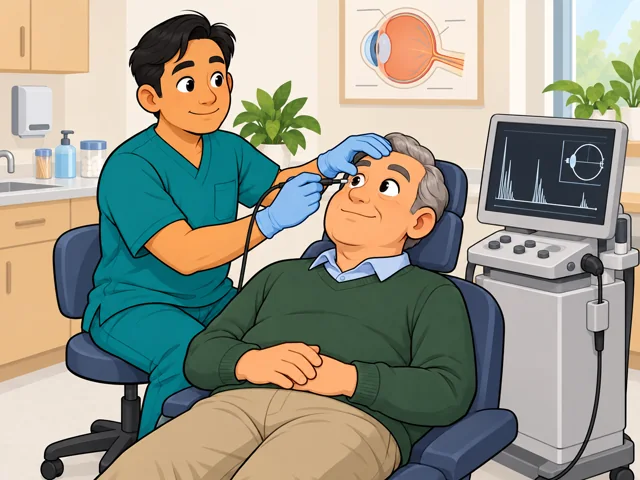
Measure eye length with ultrasound
You use an ultrasound device to find the eye's length and gather data for the ophthalmologist.
Career profile
Ophthalmic technologists measure and photograph eyes, assist with procedures and coach other eye-care staff.
Between a patient and a screen of eye images, you explain the test, collect usable results and leave the ophthalmologist a clear record.
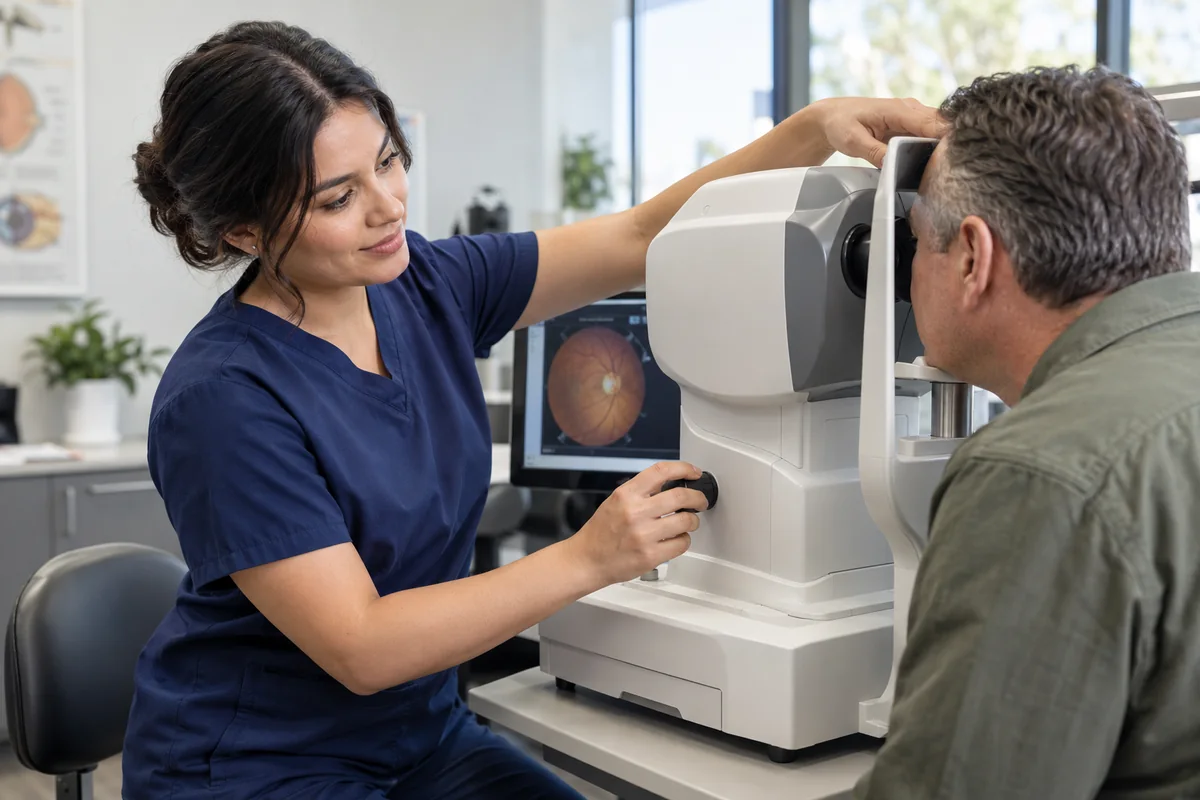
You use an ultrasound device to find the eye's length and gather data for the ophthalmologist.
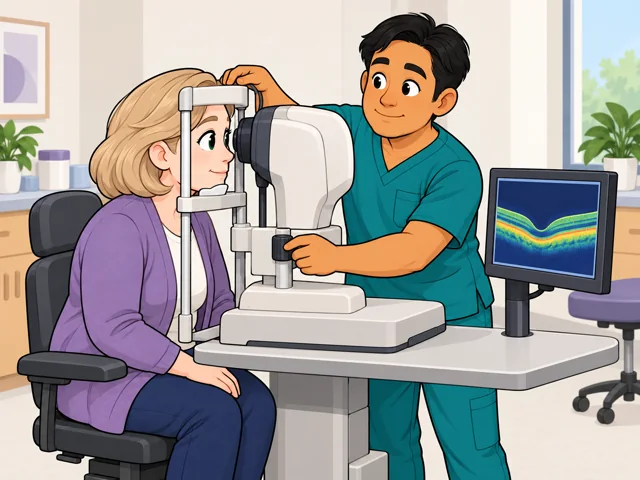
Guide the patient's gaze, steady them against the scanner's supports and change settings to rescan if they move.

Test how sharply a patient sees, measure eye pressure with a tonometer and chart the results.
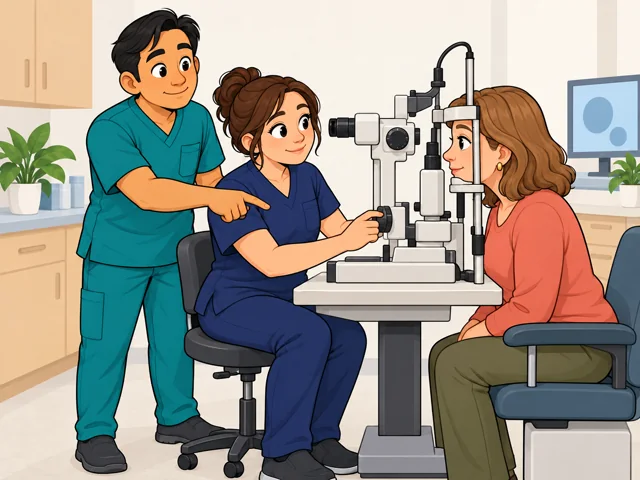
In roles that include teaching, you watch a coworker run tests and say what to fix.
United States · Requirements checked October 2026
A separate national pay estimate is not available for this specialty.
A separate national growth rate and annual openings estimate are not available for this specialty.
Quick orientation
Advanced certification has routes through accredited technologist training or experience as a certified technician.
A separate national pay estimate is not available for this specialty.
A separate national growth rate and annual openings estimate are not available for this specialty.
Some light-based eye scanners, called optical coherence tomography (OCT) systems, track eye movement and align repeat scans. These tools help reduce image distortion.
You explain the scan, position the patient and check whether the image is usable. An automatic capture still needs a quality check.
How much alignment and repeat scanning will become automatic remains uncertain, especially when a patient struggles to hold position or look steadily at a target.
Pay in context
A published university pay scale gives you a concrete comparison point when considering offers.
The University of Florida lists $53,000–$86,000 a year for its ophthalmic technologist grade—about $25.48–$41.35 an hour at 2,080 hours a year. This is an employer grade range, not a starting-pay promise or national median.
Two routes lead toward Certified Ophthalmic Medical Technologist (COMT) certification. Meeting eligibility requirements comes before earning the credential.
After entry
This starts where the entry routes leave off: early work, growing capability, and advancement or specialization. This path also has a credential or licensing boundary; see the requirements and limits.
Learn the clinic’s testing routines and chart system so your measurements and records are consistent.
Develop your ability to spot poor image quality and adjust patient positioning or instrument alignment.
Take on staff instruction or develop a specialty in ophthalmic ultrasound.
Move among eye scanners, cameras and visual-field instruments. Much of your attention goes to explaining tests and recording results across different devices.
Some roles combine testing with procedure support. You prepare instruments and assist the ophthalmologist, with careful attention to keeping the procedure area free from contamination.
Try it
Look at a public demonstration of an OCT eye scanner. Sketch the steps from seating the patient to checking the image, then write a plain-language explanation of where to look. Notice whether you enjoy both the equipment details and helping someone understand the test.
Stay safe: Keep this a paper exercise; do not test someone’s eyes or interpret a scan as a diagnosis.