
Look through a slit lamp
Examine the cornea and lens through a slit lamp, a microscope that shines a thin strip of light.
Career profile
Ophthalmologists diagnose eye diseases and treat them with medicine, procedures, or surgery.
Reading has become hard for a patient, so you find what is changing in the eye, say if surgery could help, and follow healing afterward.
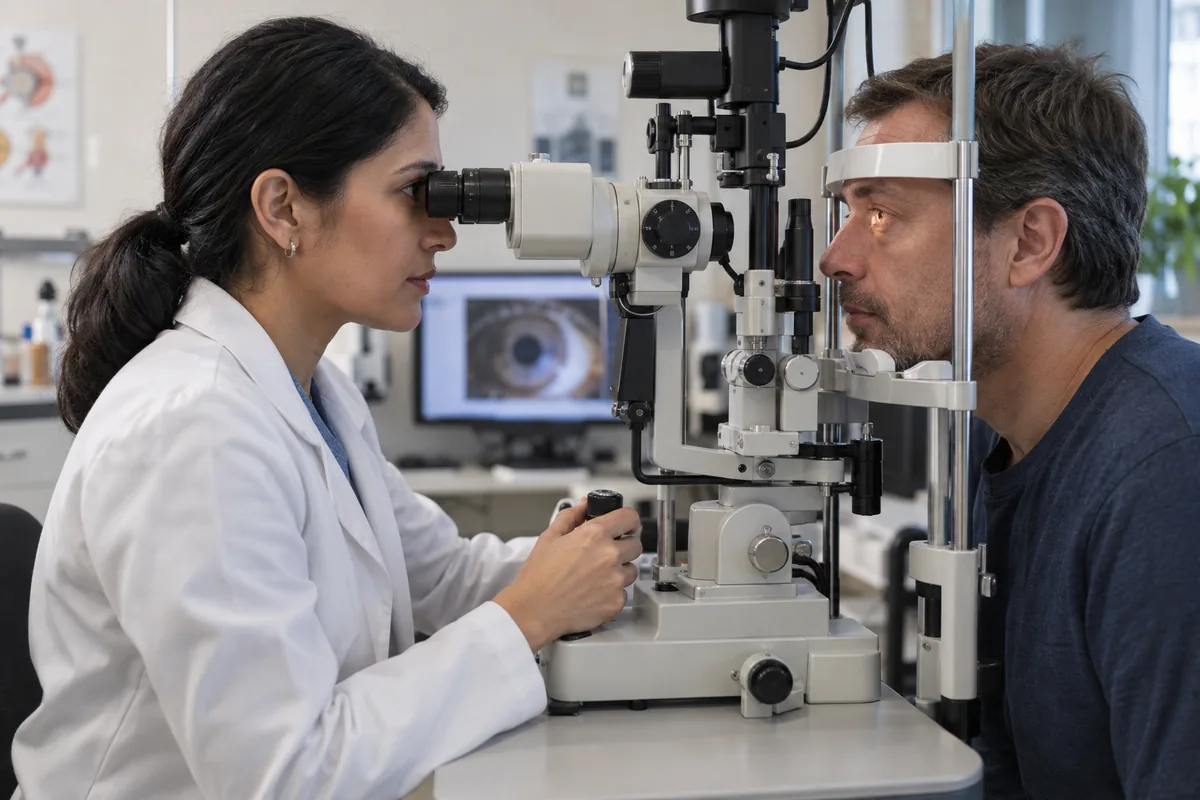
Examine the cornea and lens through a slit lamp, a microscope that shines a thin strip of light.
Explain likely benefits and risks before you and the patient choose medicine or a procedure.
In cataract surgery, remove the clouded natural lens and fit a tiny artificial one with precise, steady hands.
Examine the operated eye, ask if vision has changed, watch for complications, and decide whether to adjust medicine.
United States
United States · May 2025
United States · 2025–2035
Quick orientation
This physician specialty requires medical school followed by training in eye medicine and surgery.
National median employee wage, equivalent to $144.27/hour, for ophthalmologists except pediatric specialists.
About 200 openings a year nationwide, including replacement openings; excludes pediatric specialists.
Software can screen photographs of the retina for certain diabetes-related damage. One authorized system automatically detects more-than-mild disease in adults with diabetes who have not already been diagnosed with it.
You connect findings with symptoms and medical history, choose treatment with the patient, and perform surgery. A screening result does not provide that whole course of care.
How much image review shifts to software remains uncertain. Wider use could change which patients reach your clinic and how you divide time between screening and treatment.
Pay in context
The national figures below cover employed ophthalmologists except pediatric specialists. They describe wages, not the profits of owning a practice.
The May 2025 median was $300,080 a year, equivalent to $144.27 an hour. The 10th-to-90th-percentile span was $100,180–$489,710 annually. These are points in the wage distribution, not starting and senior salaries.
Employment is projected to grow 4.5% from 2025 to 2035, with about 200 openings annually from growth and replacement needs. That national estimate does not tell you how many positions a particular city will have.
The ordinary route has two linked steps: earn a medical degree, then train in ophthalmology. These are successive parts of the path.
After entry
This starts where the entry routes leave off: early work, growing capability, and advancement or specialization. This path also has a credential or licensing boundary; see the requirements and limits.
Build continuity with patients: see how their vision and recovery change after the treatment you chose together.
Become more confident about which cases you can manage and when a patient needs another specialist's expertise.
A fellowship can deepen your work in areas such as glaucoma, cornea, or retina, with concentrated experience in their medical and surgical treatment.
Your work centers on scheduled visits: new concerns, ongoing disease care, and checks after surgery. You see patients return and can compare today's findings with earlier visits.
Work can span specialty clinics, operating rooms, and emergency consultations. You may teach residents while caring for patients, and emergency coverage can add overnight responsibilities.
Try it
Read the National Eye Institute's patient explanation of cataract surgery. Using a simple eye diagram, explain why replacing the lens can help and why follow-up still matters. Notice whether you enjoy connecting anatomy, an operation, and a patient's questions.
Stay safe: Keep this a reading-and-explanation exercise; do not examine or give treatment advice to someone.