
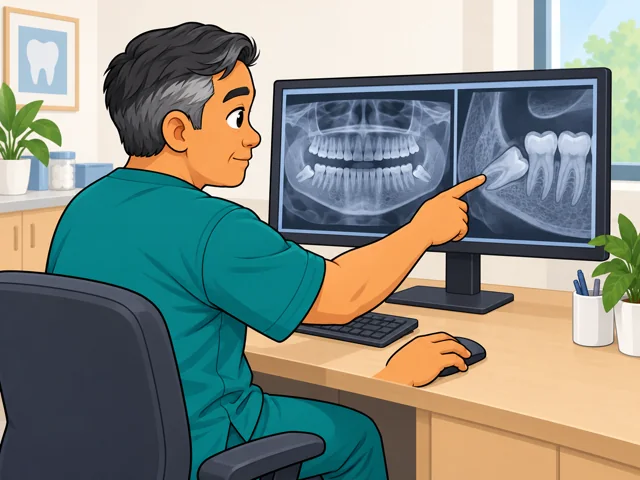
Judge a wisdom tooth's position
Scan jaw images for a wisdom tooth causing trouble now or likely later, and decide whether to treat.
Career profile
Oral surgeons, dental specialists, operate on jaws and faces, from impacted wisdom teeth to injuries.
A bad bite sometimes starts with where a whole jaw sits. Choosing which parts shift, planning with an orthodontist, then operating may make chewing easier.
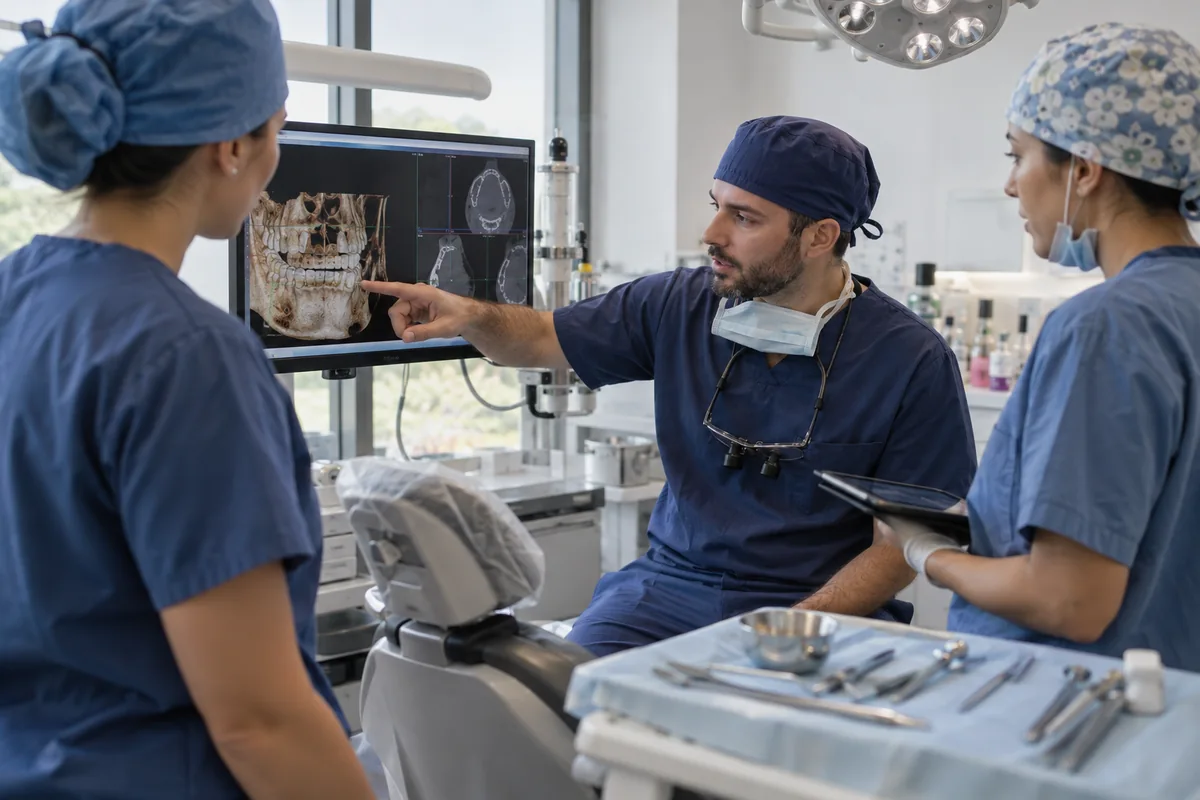
Scan jaw images for a wisdom tooth causing trouble now or likely later, and decide whether to treat.

With surgical tools, you take out a tooth that is stuck and cannot come in normally.
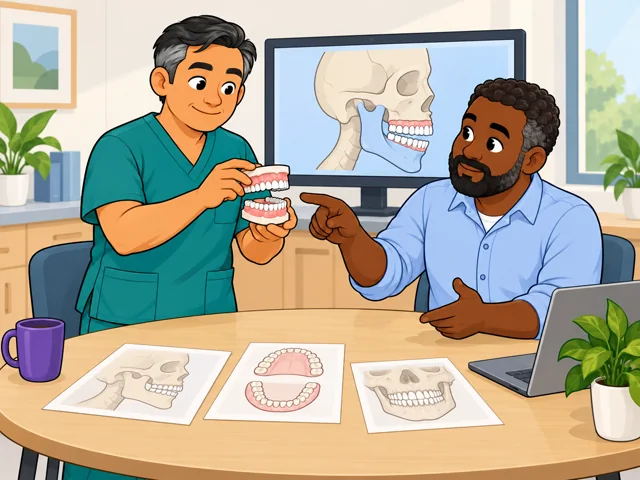
Set images beside tooth models with an orthodontist and pick a jaw position that lines up the bite.

You numb the site, sedate the patient or give general anesthesia, work that fills much of your training.
United States
United States · May 2025
United States · 2025–2035
Quick orientation
A professional dental degree is followed by a four- to six-year oral and maxillofacial surgery residency.
National median employee wage; the hourly equivalent is $169.34.
About 200 openings per year are projected nationally for oral and maxillofacial surgeons.
For some jaw operations, software lets you rehearse bone movements on a three-dimensional model. Printed guides help transfer that plan to surgery.
You still choose the treatment with the patient, coordinate with the orthodontist and carry out the operation.
How much of planning software will automate remains uncertain, especially when a patient’s anatomy requires changes to a proposed plan.
Pay in context
The national median is $352,220 a year, equivalent to $169.34 an hour. That describes employed surgeons across experience levels.
In May 2025, the 10th-percentile annual wage was $86,250 and the 90th-percentile wage was $622,640. These mark positions in the wage distribution, not starting and senior salaries.
Location, hours worked and years in practice can affect earnings. These employee wage figures exclude self-employed surgeons, so they do not describe a practice owner’s business income.
Employment is projected to grow 5.6% from 2025 to 2035, with about 200 openings annually on average. Openings include replacing people who leave the occupation, as well as growth.
Both routes begin with dental school, usually after a bachelor’s degree and required science courses. Earn a Doctor of Dental Surgery or Doctor of Dental Medicine degree, then enter surgical residency. Dental licensure requires the Integrated National Board Dental Examination and your state’s other requirements, including its clinical assessment pathway. Check the state dental board for specialty and anesthesia permissions.
After entry
This starts where the entry routes leave off: early work, growing capability, and advancement or specialization.
Build reliable treatment plans and clear communication with the dentists who refer patients to you.
Use continuing anesthesia education and simulation to sharpen how you respond when a procedure becomes complicated.
A fellowship after residency can deepen your skills in areas such as head and neck cancer surgery or surgery for children with cleft and facial conditions.
You can remove wisdom teeth and provide anesthesia in the office. The treatment space must support both the operation and the anesthesia care.
Corrective jaw operations bring you into an operating room, with some patients staying in the hospital afterward. Planning also connects your work with the patient’s orthodontist.
Try it
Use a labeled skull-and-teeth diagram to compare a trapped wisdom tooth with a misaligned jaw. Sketch which structures each problem involves, then write two questions you would ask the surgeon about planning treatment. Notice whether the spatial puzzle makes you curious.
Stay safe: Use an educational diagram; this is an anatomy exercise, not a way to diagnose yourself or someone else.