
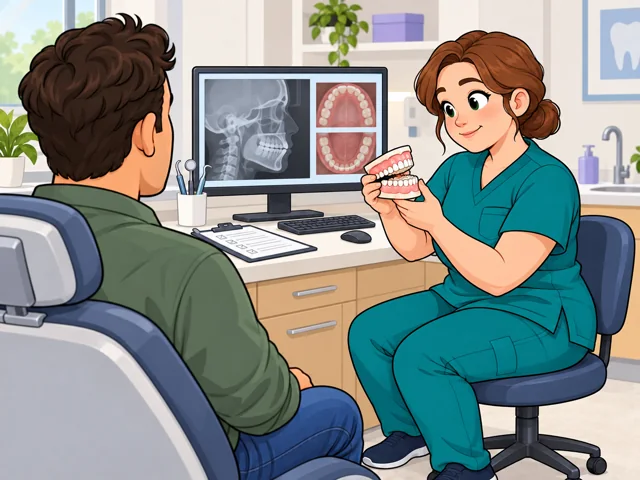
Diagnose what does not line up
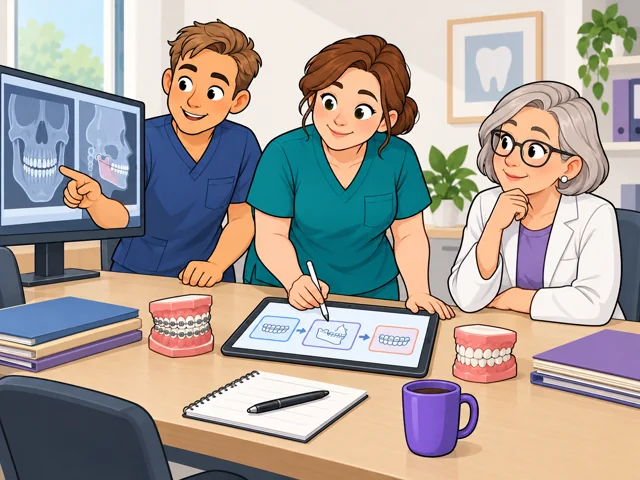
Examine teeth and jaw, then compare X-rays, photos, models and history to see why the bite is off.
Career profile
Orthodontists choose how to shift teeth so upper and lower rows fit together better.
Each plan starts with an exam, and follow-ups show whether it works. Expect precise handwork and choices you rethink as teeth shift and patients grow.
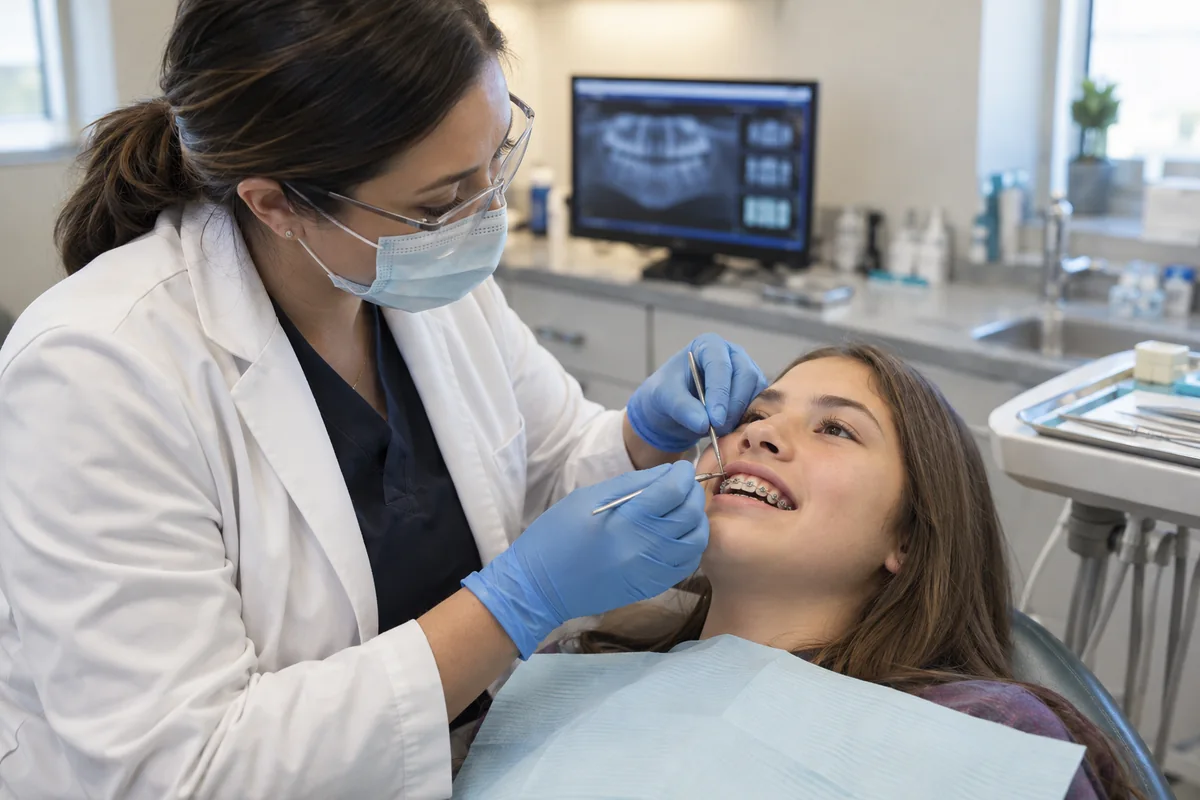
Examine teeth and jaw, then compare X-rays, photos, models and history to see why the bite is off.
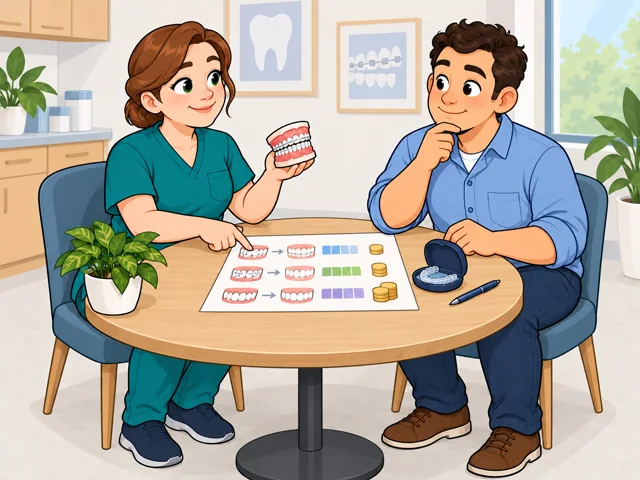
Map the needed tooth movement, then propose aligners or braces with a timeline and cost estimate.
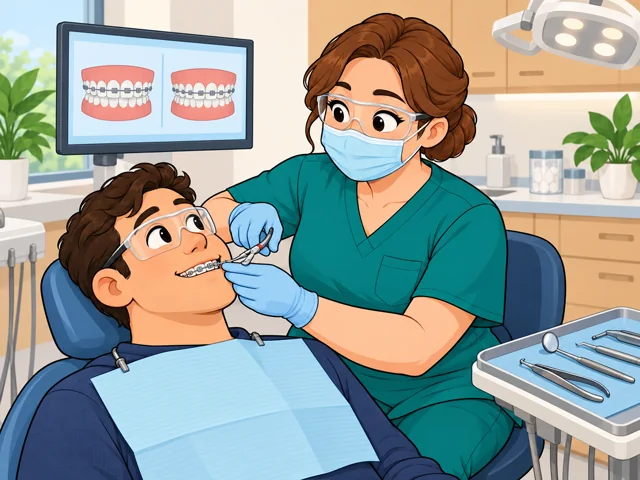
Compare the current bite with past records, tweak the appliance, and replan if teeth aren't moving as expected.

Ask what makes appliance care hard, hear the patient out, then explain how daily habits shape treatment.
If patients also need jaw surgery or restorative work, settle the order with that provider and record it.
United States
United States · May 2025
United States · 2025–2035
Quick orientation
Orthodontic residency usually adds two to three years after dental school.
National median for orthodontists; the hourly equivalent is $139.01.
About 200 openings per year nationally, including replacement needs.
Some tools use artificial intelligence (AI) to help plan tooth movement or review patient images between visits.
You check whether a computer's suggestion makes sense for this patient's teeth, health, and treatment goals, then decide what to change.
How much planning and monitoring can be automated safely remains unsettled, especially when a patient's condition differs from the cases used to develop the tool.
Pay in context
Orthodontist pay has a wide national spread; the median is not a starting salary.
The median was $289,140 a year, equivalent to $139.01 an hour. The 10th-percentile wage was $99,850 and the 90th-percentile wage was $416,000. These mark positions in the pay distribution, not beginner and experienced salaries.
These figures describe employee wages. A practice owner's patient revenue must also cover business expenses, so it is not directly comparable with a salary. Benefits are outside the wage figures.
Employment is projected to grow 6% from 2025 to 2035, with about 200 openings a year from growth and replacement needs. That national forecast does not tell you where a vacancy will be.
Both routes below follow dental school. Most dental schools require a bachelor's degree and science prerequisites; dental school usually takes four years and awards a Doctor of Dental Surgery (DDS) or Doctor of Dental Medicine (DMD). You then apply for orthodontic residency. State licensure also requires passing the Integrated National Board Dental Examination and meeting the state's clinical assessment and other licensing requirements.
After entry
This starts where the entry routes leave off: early work, growing capability, and advancement or specialization.
Build a reliable rhythm for reviewing records, explaining plans, and communicating the next steps to dental assistants.
Develop experience coordinating tooth movement with restorative dentistry or jaw surgery, where the order of treatment matters.
Practice ownership adds decisions about staffing, equipment, and finances to your clinical work.
You work with dental assistants and reception staff around patient appointments. As an owner, you also handle staffing and business decisions; an associate joins an established practice.
Faculty work with residents in a teaching clinic, explain treatment decisions, and teach clinical techniques. Some appointments also include research, so your time extends beyond your own patient visits.
Try it
Draw a simple upper and lower row of teeth on paper, including one crowded area. Mark what you would want to learn before planning movement: where space might come from and how the two rows meet. Notice whether those spatial questions make you curious.
Stay safe: Keep this a paper exercise; do not try to move teeth or adjust anyone's braces or aligners.