
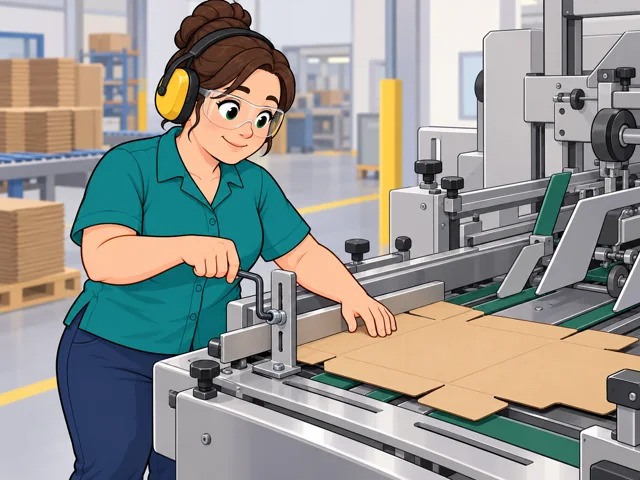
Set the folder guides
Use hand tools to set the folder's guides to the product's size so each fold lands in place.
Career profile
Paper goods machine operators run equipment that cuts, folds, and glues paperboard into usable products.
A carton shows up with a crooked fold, and the puzzle begins: which machine adjustment will make the following one come out right?
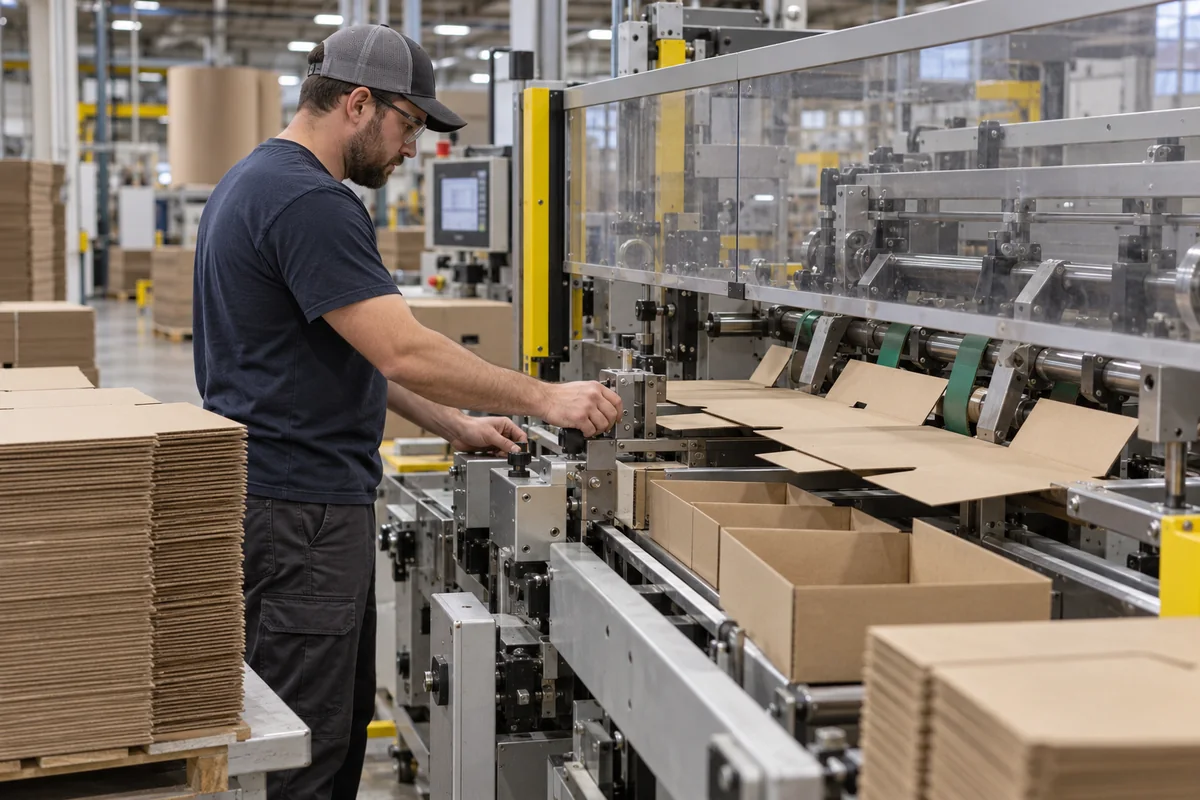
Use hand tools to set the folder's guides to the product's size so each fold lands in place.
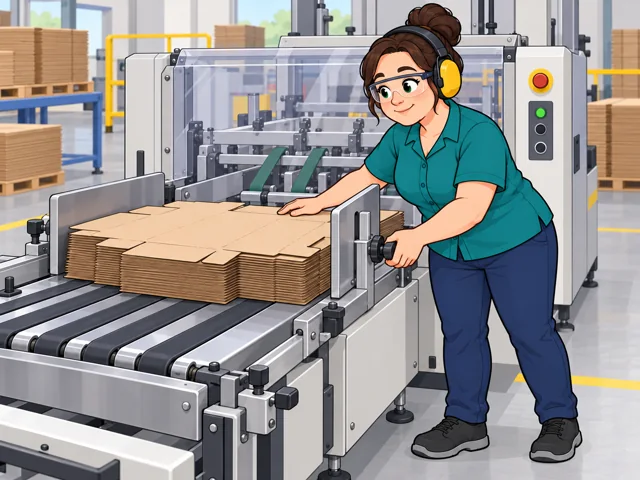
Whenever flat carton blanks enter crooked or misaligned, adjust the gluer's feeder so they move steadily.
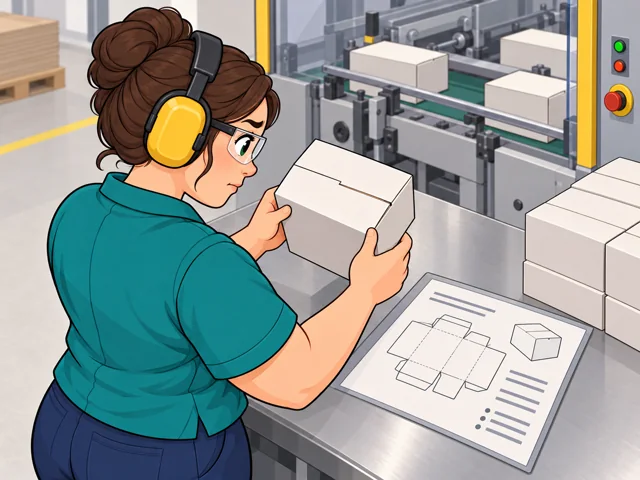
Compare seams and folds on finished cartons to the order specs, and change settings if faults appear.
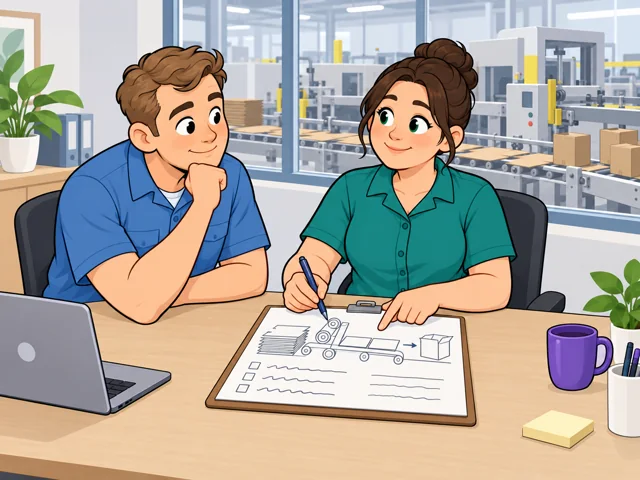
You log updates in the production records and tell the crew coming on about any machine trouble.
United States · 2025
United States · 2025
United States · 2025–2035
Quick orientation
A high school diploma or equivalent is typical, followed by training on the job.
The 2025 national median was $50,270 a year.
Employment is projected to fall 3.6% from 2025 to 2035, with openings still averaging 9,000 annually.
Some folding-carton lines use automatic inspection to spot printing defects and code errors while boxes move through the machine.
You still adjust feeding and folding, investigate defects, and coordinate the crew’s response.
As inspection improves, more checking may become automatic. How much troubleshooting moves into software will depend on the machine and the products it runs.
Pay in context
The 2025 U.S. median was $24.17 an hour, or $50,270 annually. It is a midpoint, not a starting offer.
In May 2025, the 10th-percentile wage was $17.93 an hour and the 90th-percentile wage was $33.81. These are wage percentiles, not starting and experienced pay rates.
In May 2023, this occupation averaged $22.19 an hour in converted paper product manufacturing and $28.43 in pulp, paper, and paperboard mills. These older industry averages are context, not current offers.
The 2025–35 projection combines a 3.6% employment decline with about 9,000 openings a year. Openings and net job growth measure different things; a shrinking occupation can still need replacement workers.
A degree is not the typical entry requirement. Employers commonly train new operators, though some openings require machine experience.
After entry
This starts where the entry routes leave off: early work, growing capability, and advancement or specialization.
Learn its controls and quality checks until you can recognize an acceptable run.
Develop skill in setting up the next order and finding what causes production problems.
An experienced operator may oversee helpers, train coworkers, and lead discussions about quality and output.
You work with printed carton blanks on folding and gluing equipment. Coordinating feeders and helpers matters because the finished package must meet the customer’s specifications.
Large rolls become sheets for printing. You coordinate with a roll tender and the press department, with roll stock and sheet quality shaping the work.
Try it
Unfold a clean, empty cereal box at its glued seam. Mark the cuts, folds, and glue area, then refold it. Identify two flaws you would check for as boxes left a machine. Notice whether tracing how the package takes shape interests you.
Stay safe: Use an existing box and your hands; this exercise needs no cutting tools or machinery.