
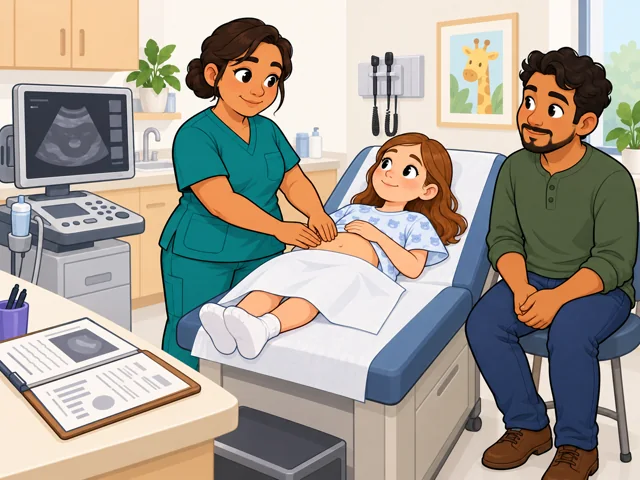
Decide whether surgery is needed
Examine the child and compare their history with imaging and lab results before you choose a surgical approach.
Career profile
Pediatric surgeons assess whether children need surgery, perform it, and stay involved through recovery.
Cases range from fixing babies' inborn gut defects to talking anxious parents through emergency appendectomies. It takes both steady, exact hands and patience with questions.

Examine the child and compare their history with imaging and lab results before you choose a surgical approach.
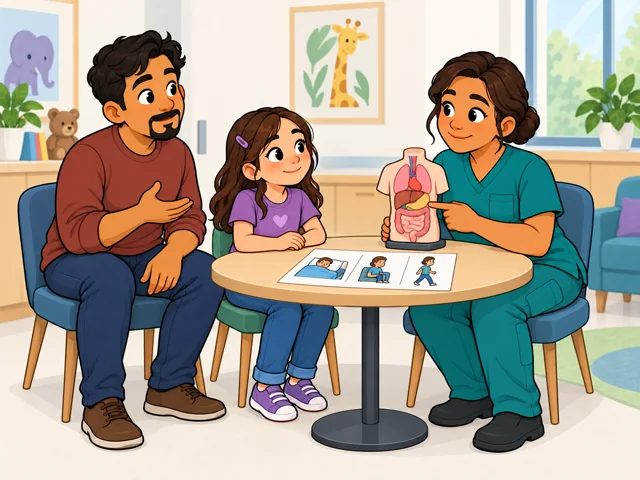
Walk the parents through surgery and recovery, then put it in words the child understands and invite questions.
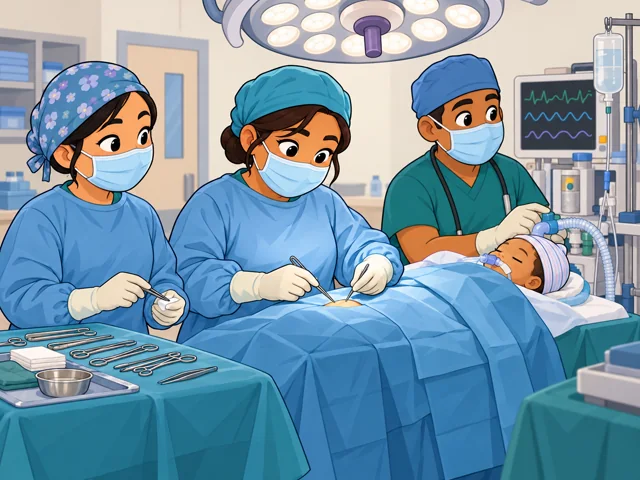
Operate with child-sized instruments, making exact movements in a tight space to fix a defect present since birth.

Examine the child, go through their lab results, and rethink the treatment plan if healing is off track.
United States · Current requirements accessed 2026-10-09
United States · May 2025
United States · 2025–2035
Quick orientation
The standard pediatric general surgery path includes medical school, at least five years of general surgery residency, and two years of pediatric surgery fellowship.
Annual national median across pediatric surgical specialties; the hourly equivalent is $268.76.
National employment growth across pediatric surgical specialties over the decade.
Some pediatric surgical programs use robotic systems that let surgeons move instruments through small incisions while viewing the operating area on a screen.
Current robotic systems require direct human control. You guide the instruments and remain responsible for surgical decisions.
How much future systems will automate remains uncertain; tools must work safely across different procedures and children's different body sizes.
Pay in context
These national wages cover pediatric surgical specialties together. They are not starting salaries or fellowship pay.
The median was $559,030 a year, with an hourly equivalent of $268.76. Half of workers earned more and half earned less.
The 10th-percentile wage was $215,410 and the 90th-percentile wage was $726,660 a year. These mark positions in the wage distribution, not a beginner-to-expert pay ladder.
Employment is projected to grow 2%. Average annual openings are reported as 0.0 thousand after rounding; that does not mean no surgeons will be hired.
For pediatric general surgery, these are successive parts of one training path. Other pediatric surgical specialties have different specialty training.
After entry
This starts where the entry routes leave off: early work, growing capability, and advancement or specialization. This path also has a credential or licensing boundary; see the requirements and limits.
Build a reliable rhythm between clinic, the operating room, and postoperative visits so care stays connected.
Develop a focus, such as complex intestinal conditions, and follow children over repeated visits as their needs change.
An academic career can add teaching residents and fellows or studying surgical outcomes alongside patient care.
Complex newborn cases and serious injuries bring several specialties together. You may also teach trainees and contribute to research, with hospital care extending beyond scheduled clinic hours.
Scheduled consultations, imaging, and same-day operations can share a campus. In centers linked to a children's hospital, inpatient care is available when a child needs a longer stay.
Try it
Read the American Academy of Pediatrics' [What Is a Pediatric Surgeon?](https://www.healthychildren.org/English/family-life/health-management/pediatric-specialists/Pages/what-is-a-pediatric-surgeon.aspx). Choose one condition it lists, explain the surgeon's role in plain language, and write two questions a parent might ask. Notice whether both the anatomy and the conversation interest you.
Stay safe: Keep this a reading exercise; it does not prepare you to assess symptoms or recommend treatment.