

Steady a patient through exercise
Demonstrate the therapist's planned movement, steady the patient against a fall, and change your instructions if they struggle.
Career profile
Physical therapist assistants teach and steady patients through movement, watching reactions, under a therapist's plan.
The physical therapist assesses the patient and owns the plan. You give the treatments it assigns and report any change to the therapist.
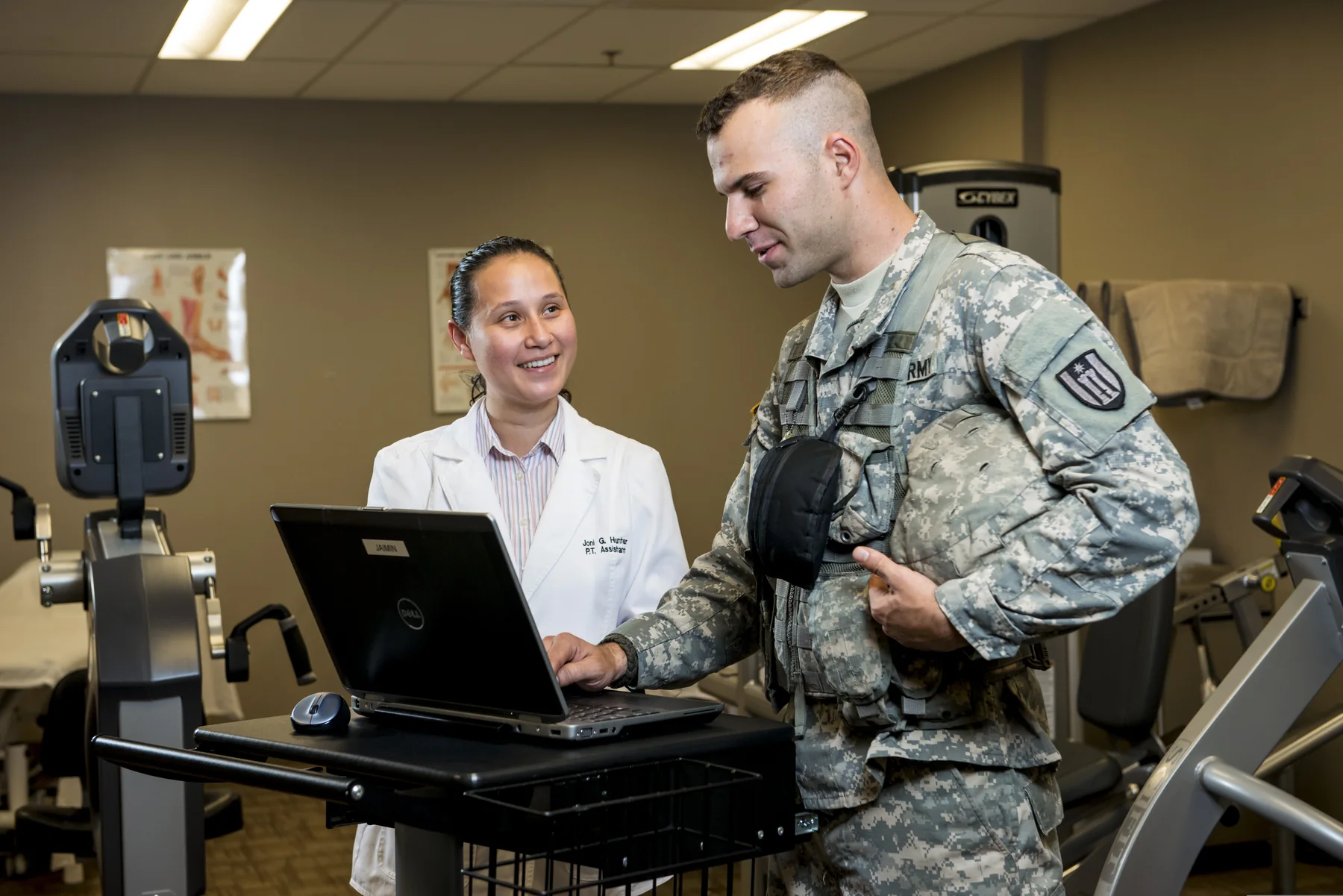
Demonstrate the therapist's planned movement, steady the patient against a fall, and change your instructions if they struggle.

Note pain, fatigue, unsteadiness, or other changes mid-session, and alert the therapist if the plan may need rethinking.
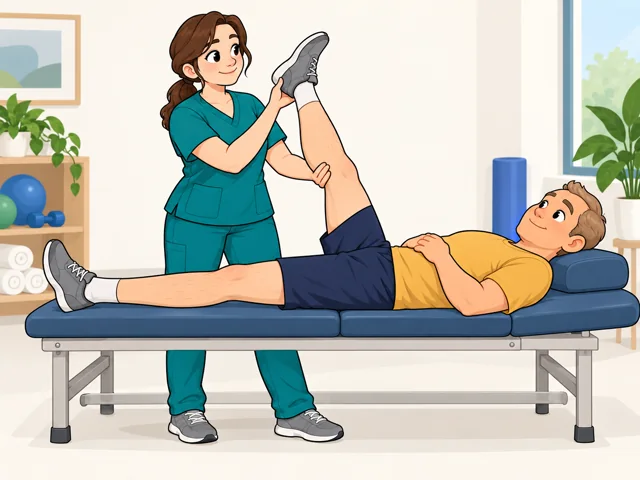
Depending on employer and local rules, you give stretches, massage, walking practice, balance drills, or approved device treatments.
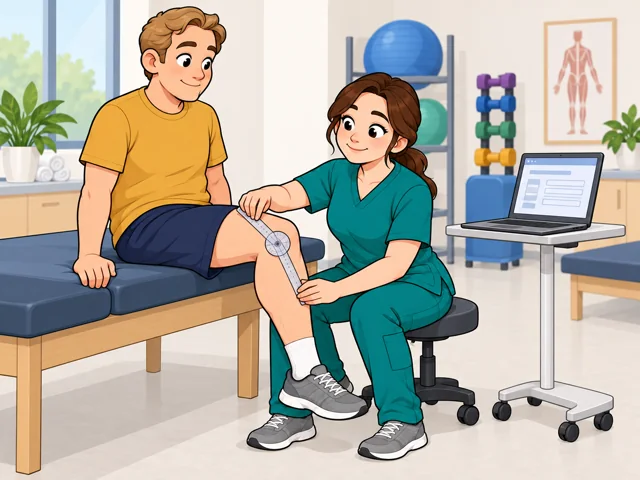
Take the assigned measurement, like joint motion or vitals, then chart the treatment and the patient's response.

Teach a patient or caregiver to use a walker or brace, then watch them do it back correctly.
United States
United States · May 2025
United States · 2025–2035
Quick orientation
PTA programs are accredited at the associate-degree level, usually take about two years, and include supervised clinical work. Practice also requires the credential issued by your jurisdiction.
National median annual wage for physical therapist assistants—not physical therapist aides—in May 2025.
Projected employment growth for physical therapist assistants—not aides—from 2025 to 2035. This national projection does not guarantee local openings.
Electronic health records, scheduling tools, and other medical software can organize appointments, measurements, and treatment notes.
The PTA still guards movement, delivers hands-on care, notices a patient’s immediate response, and communicates changes to the supervising physical therapist.
Software may reduce some typing or add movement measurements, but how much of that work it will automate is uncertain; live treatment still creates changes a worker must interpret and report.
Pay in context
Use the national median as a midpoint, not as a first-job promise. Setting, location, experience, schedule, and employer all affect an offer.
The median annual wage for physical therapist assistants was $68,380. Half earned more and half earned less. The median hourly wage was $32.88.
The lowest-paid 10 percent earned under $47,750, while the highest-paid 10 percent earned over $89,510. These percentiles are not career stages.
Industry medians were $80,050 in home healthcare services and $63,080 in offices of physical, occupational and speech therapists, and audiologists.
This is one regulated path with two major parts: qualifying education, then examination and authorization from the jurisdiction where you plan to work.
After entry
This starts where the entry routes leave off: early work, growing capability, and advancement or specialization. This path also has a credential or licensing boundary; see the requirements and limits.
Learn the employer’s workflow, deliver treatments from the established plan, write usable notes, and report patient responses reliably to the supervising physical therapist.
Develop skill with the patient groups, gait and balance work, assistive devices, manual techniques, and permitted equipment used in your setting—while escalating changes that may require a new plan.
A licensed PTA can pursue voluntary advanced proficiency in areas such as orthopedics, neurology, geriatrics, pediatrics, acute care, or wound management without becoming an independent practitioner.
This is the largest employer group for PTAs. Work centers on scheduled, face-to-face visits, and some clinics offer evening or weekend appointments.
Treat patients rebuilding mobility while coordinating with supervising PTs, nurses, aides, and other care-team members. A current inpatient-rehab example uses per-diem shifts lasting 8 to 10 hours.
Travel between homes for one-to-one visits, deliver delegated treatments in the patient’s everyday environment, document electronically, and communicate changes to the supervising PT.
Try it
Watch one public clinical demonstration led by a physical therapist assistant. Make three columns: the instruction given, the patient response you can observe, and what should be reported to the supervising PT. Notice whether coaching within an existing plan holds your attention.
Stay safe: Use observation only; do not practice transfers, manual treatments, or balance challenges on another person.