
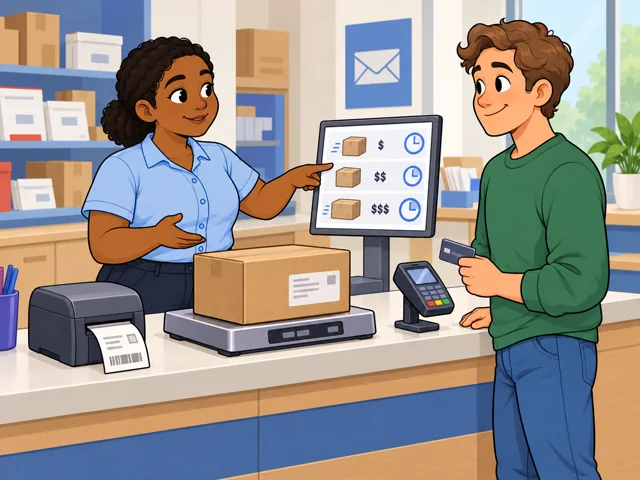
Weigh and price a parcel
Put the parcel on the scale, explain the shipping options, take payment, then apply the postage label.
Career profile
Postal service clerks help counter customers send mail, collect packages and choose the right service.
A customer's mailing question becomes your job until it ends in a finished sale or service, and you double-check details the whole way.
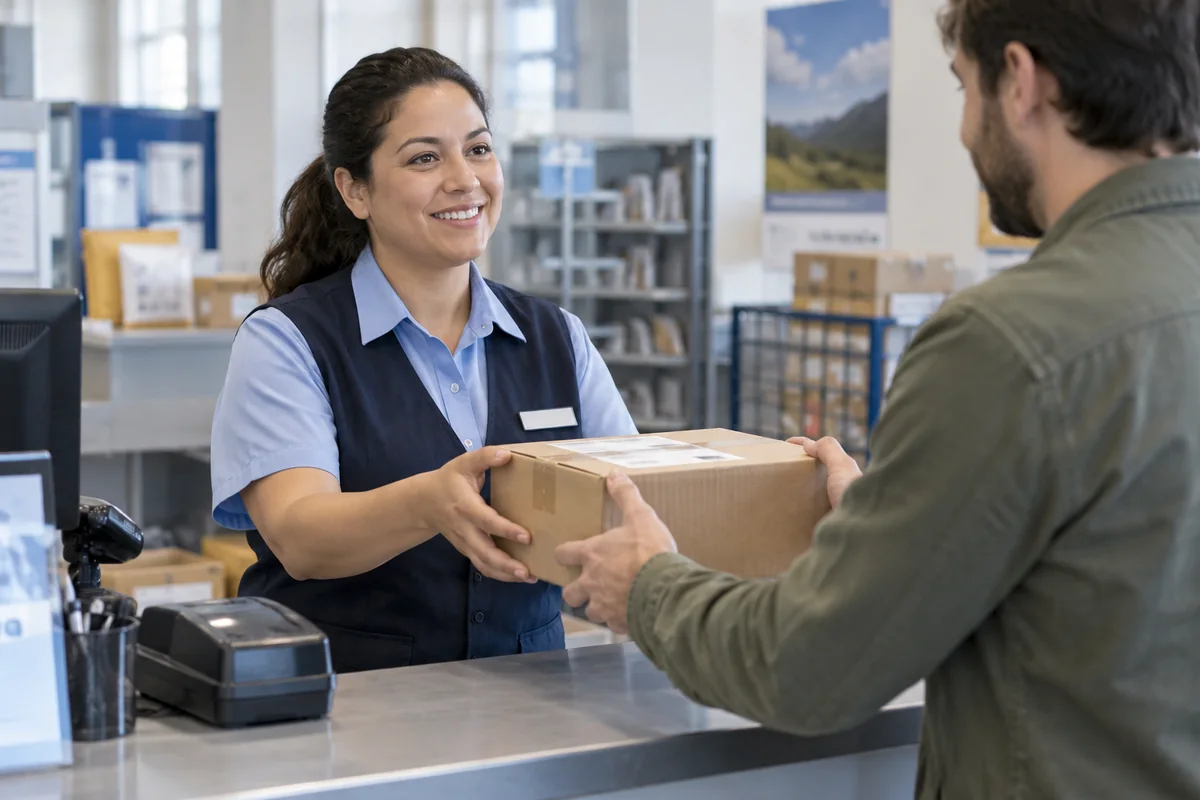
Put the parcel on the scale, explain the shipping options, take payment, then apply the postage label.
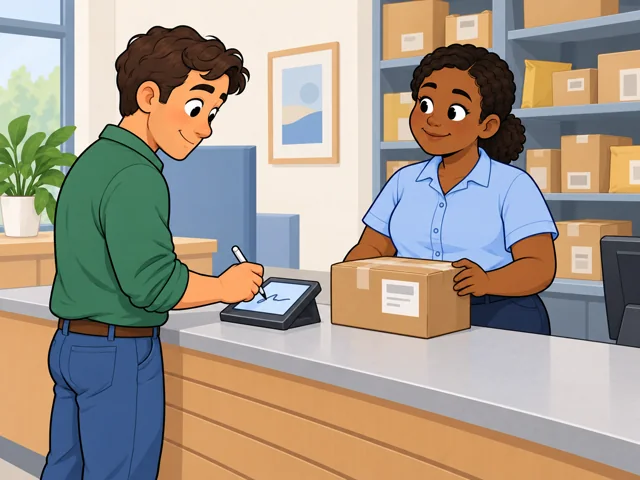
Find the held parcel and get the customer's signature, if required, before you hand it over.
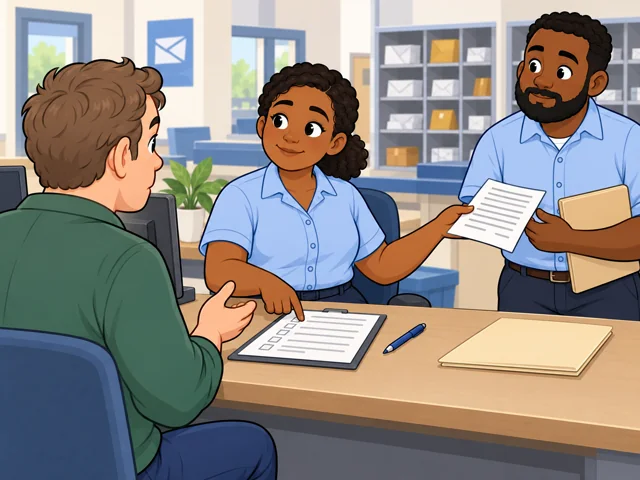
Listen to someone whose mail never arrived, walk them through claim forms, and forward the complaint for investigation.
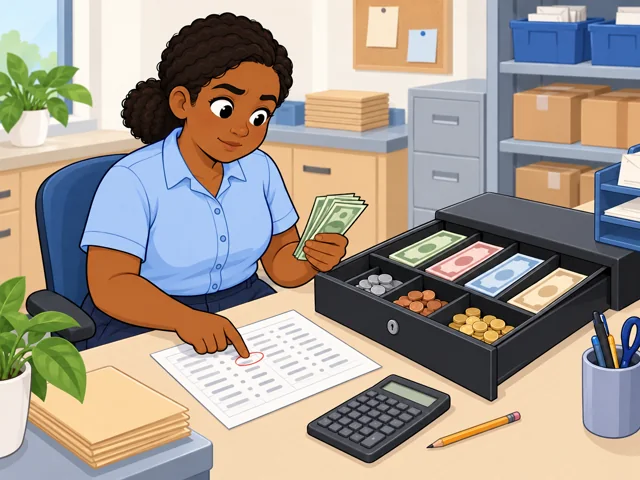
Count the cash against today's sales records and look into any gap before closing out the drawer.
United States · 2025
United States · May 2025
United States · 2025–2035
Quick orientation
No formal educational credential or related experience is typically required; employer hiring requirements still apply.
National median for postal service clerks, equivalent to a published hourly median of $29.87.
Postal clerk employment is projected to fall 0.3%, with about 5,300 openings annually.
Self-service kiosks can weigh packages, take payment and print postage, letting customers complete some transactions themselves.
You help customers choose services and work through mailing problems that need a conversation.
As more transactions move to self-service, the balance between routine sales and complicated customer questions may change.
Pay in context
The national median describes workers across the occupation, not a starting offer.
The median was $62,130 a year, or $29.87 an hour. The lowest-paid 10% earned $42,600 or less; the highest-paid 10% earned $75,030 or more. These are wage percentiles, not career stages.
United States Postal Service (USPS) career jobs have regular salary increases and may include overtime, night or Sunday premiums, depending on eligibility. A contract postal counter employs you through its operator, so check that employer's rate and benefits.
About 5,300 postal clerk openings are projected each year, even as total employment declines 0.3%. Openings include replacement needs; they do not mean the occupation is expanding.
You typically learn this work after hiring. A college degree is not the usual entry requirement.
After entry
This starts where the entry routes leave off: early work, growing capability, and advancement or specialization.
Use initial job training to learn routine sales, then practice completing transactions accurately while talking with customers.
Build confidence with insured and registered mail, claim forms and questions that need more than a price quote.
If you want to lead other workers, explore USPS supervisory opportunities and its leadership training. Advancement requires selection for a role.
You work at a public service window with postal coworkers. A position may combine counter sales with sorting mail and keeping the retail lobby ready.
You work inside an operator's business with its staff and managers. Mail leaves through scheduled collections, so the final collection time matters when explaining when a parcel will enter processing.
Try it
Use the USPS postage calculator to compare two services for one pretend parcel. Explain the price and delivery tradeoff to a friend, then change the package weight and check again. Notice whether you enjoy checking details while making the choice understandable.
Stay safe: Use made-up shipment details; you do not need to buy postage or send anything.