
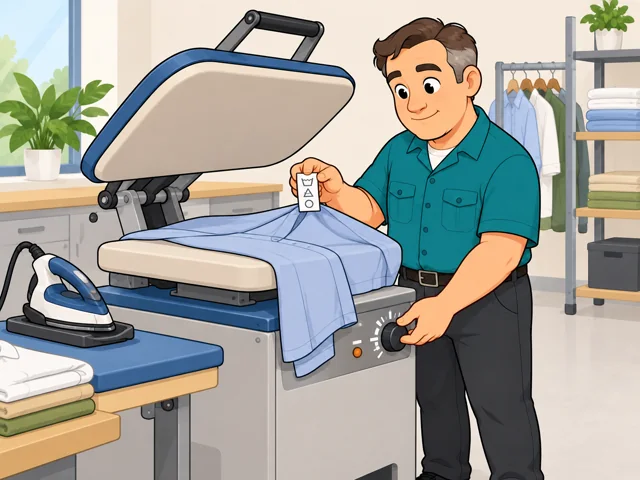
Match the press to fabric
Choose the press or iron and adjust its settings to suit how much heat the fabric can take.
Career profile
Pressers use steam, pressure and careful positioning to smooth wrinkles and restore a garment's shape.
Even cleaned clothes may still need more work: lining up fabric, setting creases, and finishing small spots a big pressing machine cannot reach.
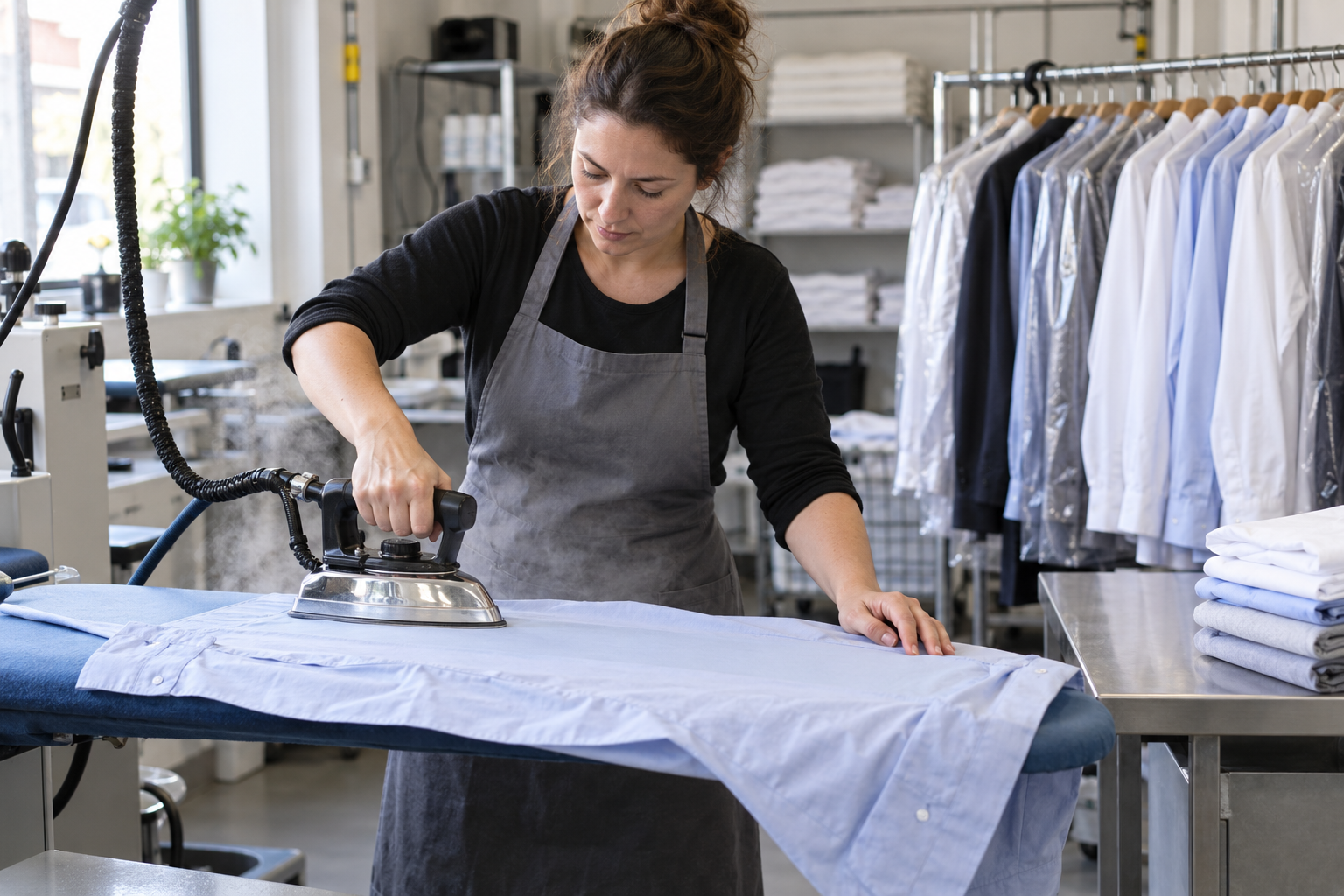
Choose the press or iron and adjust its settings to suit how much heat the fabric can take.
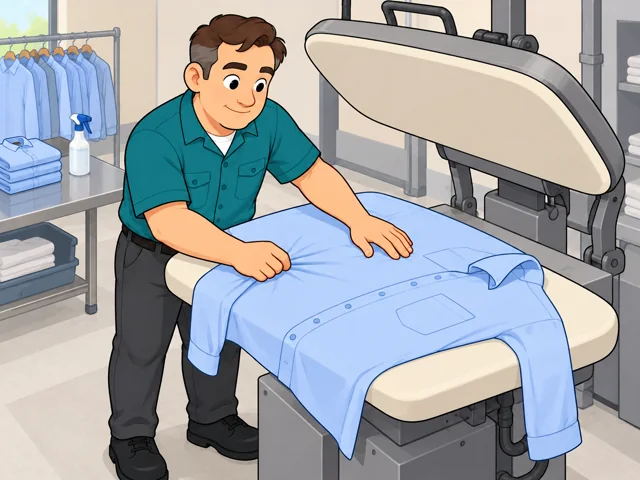
Spread the shirt evenly and straighten it so a wrinkle does not get pressed in as a fold.
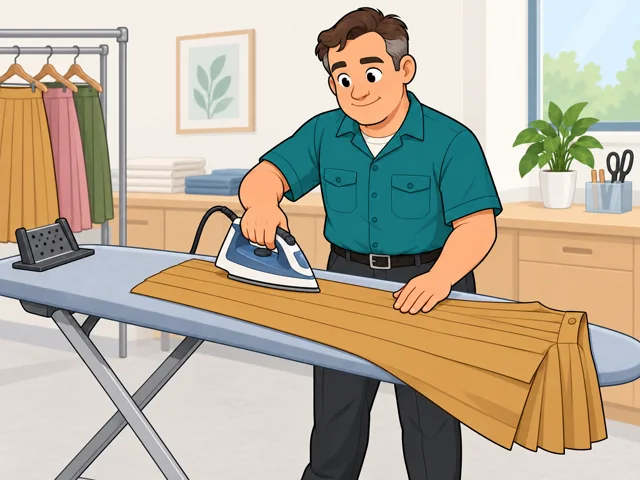
Trace an existing pleat with a hand iron or form one shaped as a work order specifies.

Scan the garment for missed stains and uneven spots in the finish before it goes on to inspection.
United States · 2025
United States · May 2025
United States · 2025–2035
Quick orientation
Typical entry involves short-term workplace training, with no formal educational credential required. Employer requirements vary.
National median, equivalent to $16.85 an hour, for textile, garment, and related-material pressers.
Employment is projected to shrink during 2025–35, with about 2,200 openings annually across textile, garment, and related-material pressing.
Some shirt-finishing machines remember settings for different fabrics and styles. Optional mechanisms remove finished shirts and place them on hangers.
You still position garments, select the appropriate program, and notice flaws before the clothes move on.
How much hand finishing remains will depend on the garments a shop handles and how well its machines finish the awkward details.
Pay in context
Use national figures as a reference when comparing an offer’s hourly rate and scheduled hours.
The May 2025 median was $35,060 annually, or $16.85 hourly. This covers textile, garment, and related-material pressers; it is not a starting-pay promise.
The lowest-paid 10% earned $27,180 or less annually ($13.07 hourly); the highest-paid 10% earned $43,050 or more ($20.70 hourly). These are wage percentiles, not beginner and experienced-worker rates.
For a historical comparison, May 2023 average hourly pay was $15.42 in drycleaning and laundry services and $15.57 in cut-and-sew clothing manufacturing. These industry averages are not current offers.
Employment is projected to fall 15.7% from 2025 to 2035. About 2,200 openings a year are still projected as workers leave the occupation; that does not guarantee openings near you.
You can enter through employer training. A degree is not the typical entry requirement; look for jobs that explicitly accept beginners and teach equipment use.
After entry
This starts where the entry routes leave off: early work, growing capability, and advancement or specialization.
Learn the station’s controls and finish expectations, then work toward meeting them reliably.
Learn how new fabrics and styles change the finishing method, and plan your work around special orders.
Develop hand-finishing skill for gowns, costumes, or pleated garments that need more individual attention.
Your garment mix changes with customers’ wardrobes. Special orders and same-day pickup requests shape the sequence of your work.
Pressing fits into a larger flow with folding, inspection, and packaging workers. Production goals and repeated equipment movements shape the shift.
Try it
Lay a clean shirt on a table without using heat. Line up its seams, smooth one section, and identify which details would be awkward to press flat. Notice whether this close attention feels satisfying or tedious.
Stay safe: Keep this exercise unheated; industrial pressing equipment requires workplace instruction.