
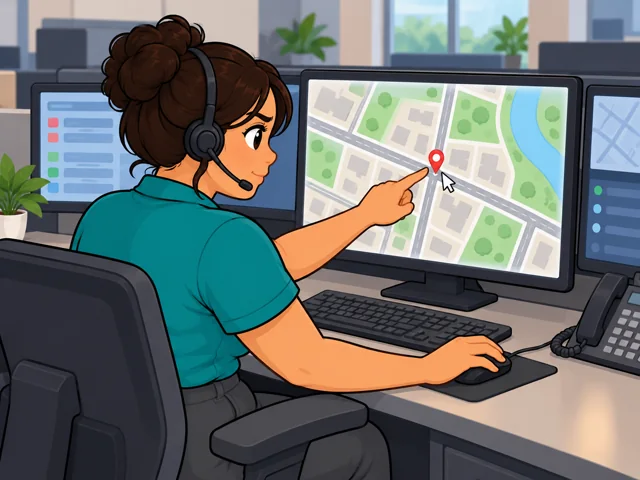
Find where the emergency is
Ask for a street address or nearby intersection, and use the map when the caller cannot say exactly.
Career profile
911 dispatchers take requests for emergency help and organize the police, fire, or ambulance response.
From a caller's account, you pull out three things: where the emergency is, how urgent it is, and what field crews can act on.
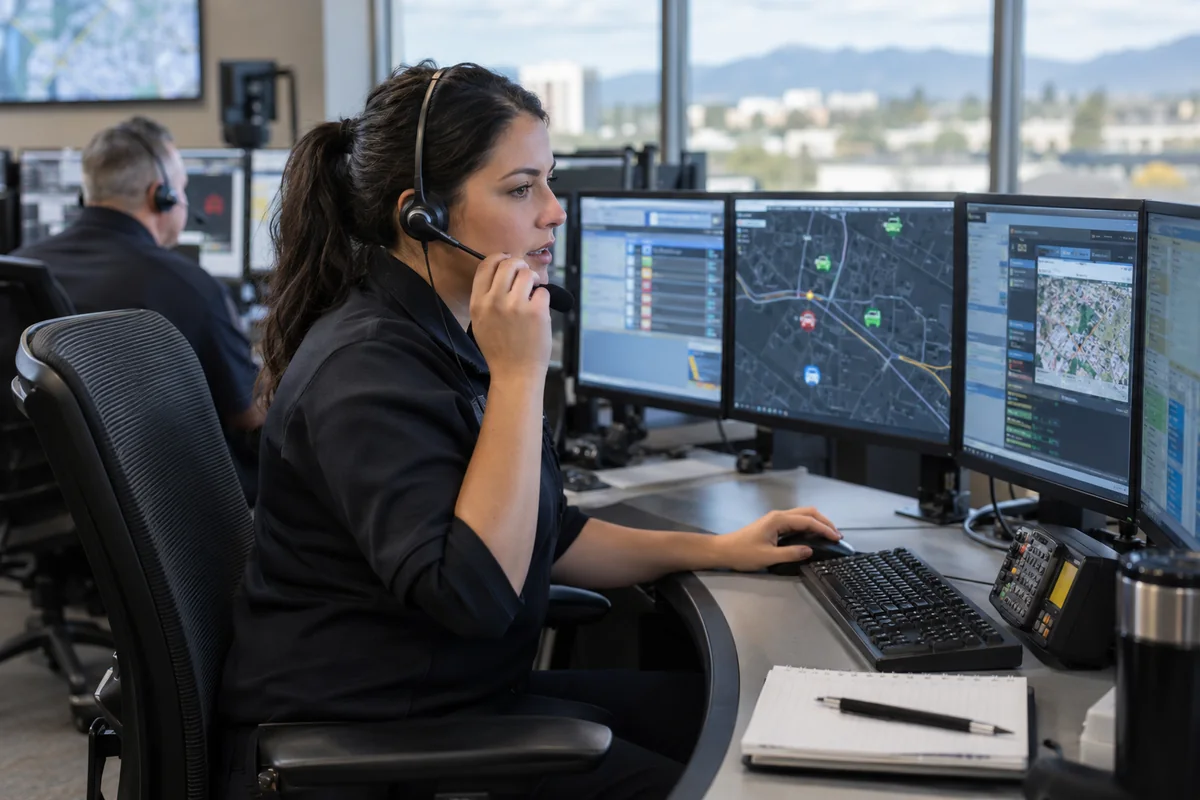
Ask for a street address or nearby intersection, and use the map when the caller cannot say exactly.
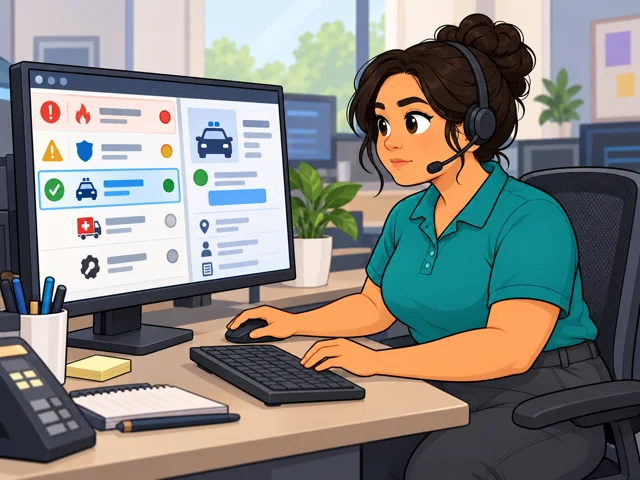
You look at the dispatch screen for unit status and follow set response priorities to send available help.
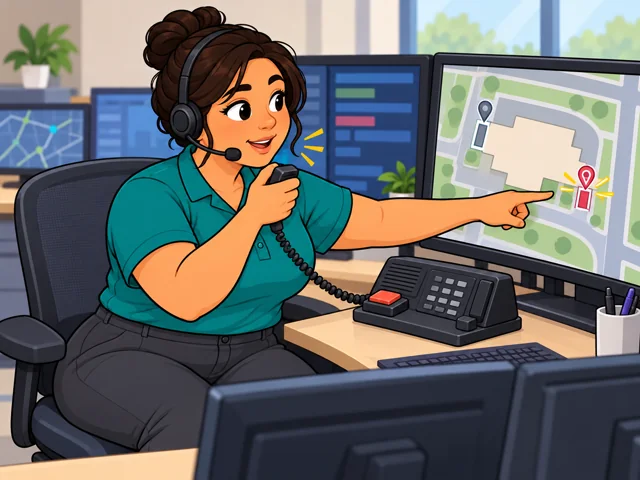
Radio crews any new information, such as another entrance the caller says to use.
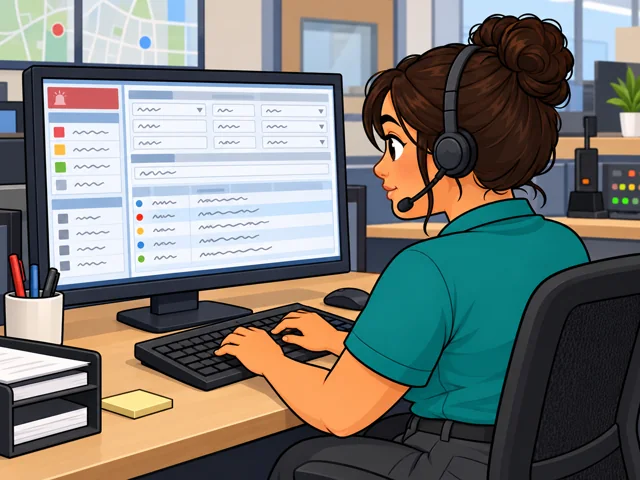
Type details about the caller, messages, and your dispatch actions into the computerized incident file.
United States
United States · May 2025
United States · 2025–2035
Quick orientation
A diploma or equivalent is the typical starting qualification.
Median across public safety dispatch work; $25.50 per hour.
About 9,000 openings annually across public safety telecommunicators.
Digital 911 networks can carry texts, photos, and video alongside voice calls. This transition is called Next Generation 911.
You still question callers, interpret incomplete information, and coordinate the response.
As centers add these capabilities, how much extra information you must review—and how it changes your workload—will depend on local systems and procedures.
Pay in context
The national median is $53,040 a year, or $25.50 an hour. These figures include police, fire, and ambulance dispatch work and are not starting-pay promises.
The lowest-paid 10% earned below $37,320; the highest-paid 10% earned above $79,830. These groups are not career stages.
Annual medians were $60,840 in state government, $54,280 in local government, $48,340 in hospitals, and $46,430 in ambulance services. Government figures exclude education and hospitals.
At California Highway Patrol, satisfactory performance brings progression through a salary range; applicable overtime, shift, and bilingual pay can add to earnings. Check each employer’s terms.
Employment is projected to grow 4% during 2025–2035, with about 9,000 openings a year on average. Openings include replacement hiring, not just added positions.
A degree is not typically required. Expect hiring tests, often including typing; training and certification rules depend on the state and agency.
After entry
This starts where the entry routes leave off: early work, growing capability, and advancement or specialization. This path also has a credential or licensing boundary; see the requirements and limits.
Learn local streets and landmarks, and use coaching to improve call accuracy.
Where call-taking and dispatch are separate, apply for radio-dispatch training when a position opens.
Experienced dispatchers can move into roles that coach trainees, evaluate their progress, and cover supervisory duties.
Some divide the work between call-takers and dispatchers focused on particular precincts. You work across that handoff while the center handles emergency calls, nonemergency calls, and texts.
Traffic incidents and motorists’ requests bring you into contact with patrol units and other law-enforcement agencies. Tracking field units and checking databases are part of the console work.
Try it
Ask a friend to describe a fictional stalled car near a familiar intersection. Write the location and problem, ask one clarifying question, then read back a brief message for a responder. Notice whether you enjoy turning spoken details into an accurate handoff.
Stay safe: Keep this as a tabletop exercise; do not call 911.