
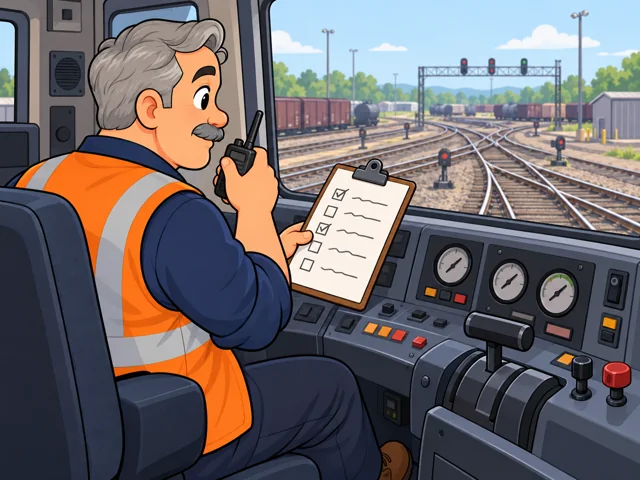
Agree on the switching plan
Study the car-sorting orders, then radio the conductor to agree on the planned move.
Career profile
Rail yard engineers drive locomotives short distances inside rail yards or engine maintenance shops.
Getting a rail car onto the right track takes careful control of the engine and clear talk with the people working near you.
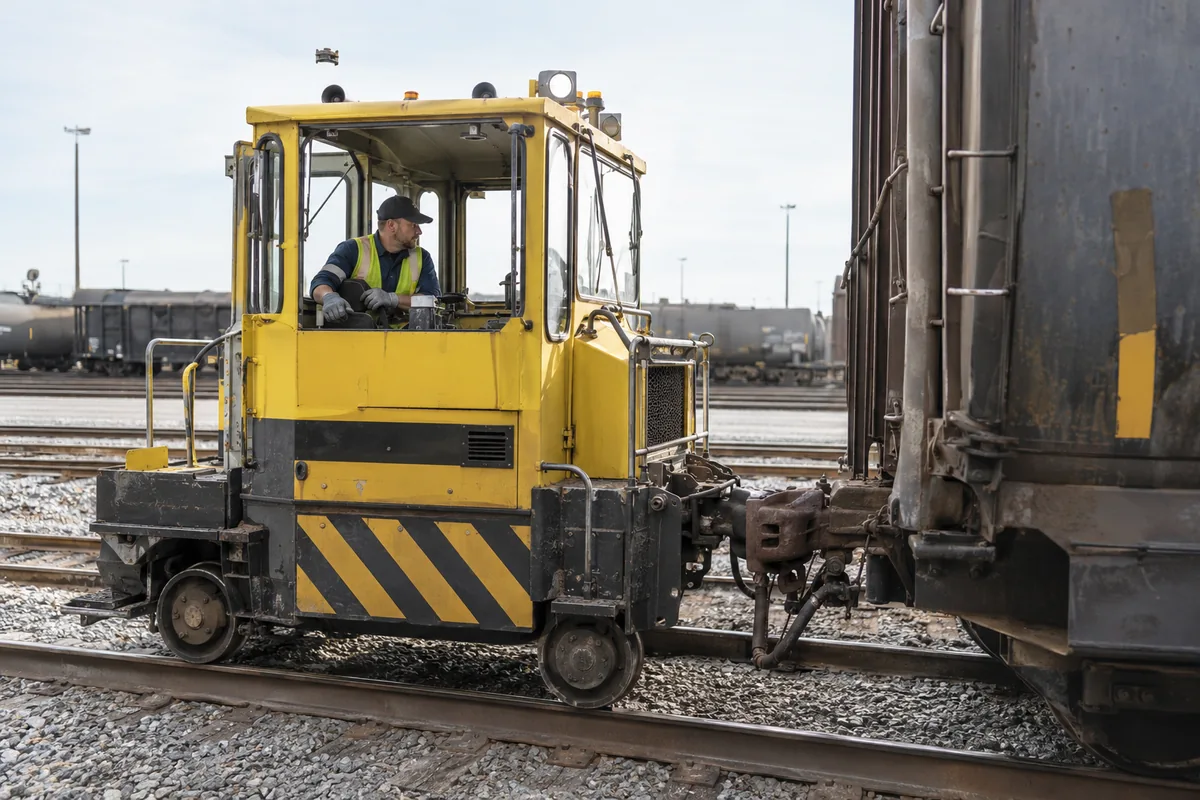
Study the car-sorting orders, then radio the conductor to agree on the planned move.
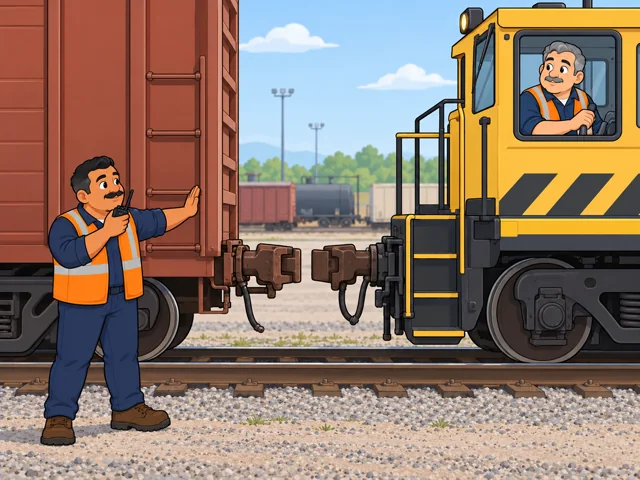
You drive the engine to couple cars, move them between tracks, or set one in place for loading.
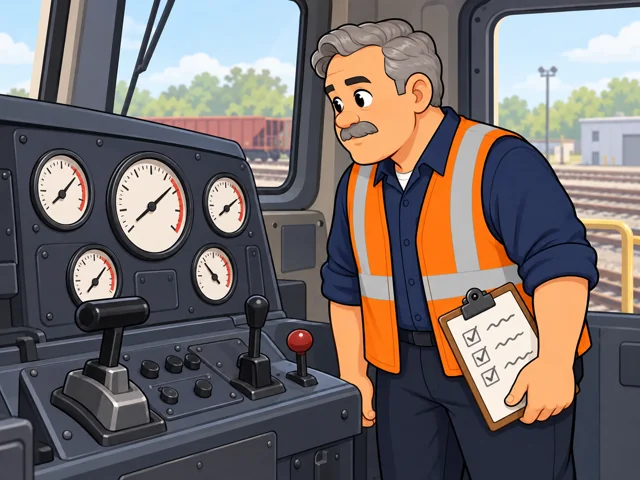
Look the locomotive over before you run it, and keep an eye on its pressure gauges for trouble.
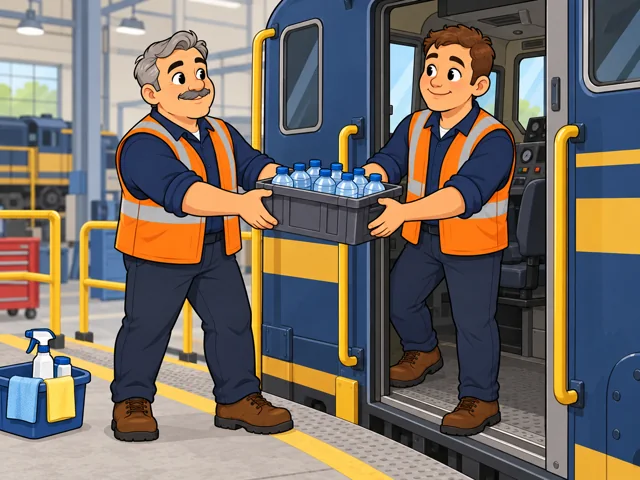
In shop roles, you move engines to service spots and help with fueling, cleaning and cab restocking.
United States · 2025–2035
United States · May 2025
United States · 2025–2035
Quick orientation
Expect company training in the equipment and operating rules.
National median, equivalent to $29.14/hour, for rail yard engineers, dinkey operators, and hostlers.
Employment is projected to change little, with about 300 openings a year across this occupation.
Some yards use wearable remote controls to move locomotives. Speed-control features can help maintain the operator’s selected speed.
You still watch the movement and clearances, coordinate with the crew, and stop when conditions are unclear.
How much more movement control becomes automated—and how that changes crew duties—will vary with the equipment and yard.
Pay in context
When comparing offers, ask about the base rate, expected paid hours, overtime rules, and any union pay schedule.
For rail yard engineers, dinkey operators, and hostlers, the median was $60,600 a year, or $29.14 an hour. The 10th-to-90th-percentile annual range was $44,540–$100,270. These are wage percentiles, not starting and promotion rates.
Employment in this occupation is projected to grow 0.8% over 2025–2035, with about 300 openings per year on average from growth and replacement needs. That is a national projection, not a count of nearby vacancies.
A high school diploma or equivalent is the usual starting point. Look for employer training tied to the kind of locomotive work you want.
After entry
This starts where the entry routes leave off: early work, growing capability, and advancement or specialization. This path also has a credential or licensing boundary; see the requirements and limits.
Learn the yard’s layout and make familiar movements consistently, with clear communication at each handoff.
Where available, train on remote-control equipment. Remote-control experience does not by itself qualify you to use the locomotive’s cab controls.
With experience and further training, you may advance to coordinating the yard’s workers and movement schedule as a yardmaster.
Your movements fit a yardmaster’s or conductor’s plan for arranging cars and keeping tracks available for arriving and departing trains.
The work centers on engines needing fuel, cleaning, inspection, or repair. Operating can alternate with hands-on servicing and shop cleanup; large facilities run around the clock.
Try it
Draw three connected yard tracks and make six paper railcars with different destinations. Plan how one locomotive would sort them, then explain each move to a friend who moves the pieces. Notice whether you enjoy sequencing moves and giving precise directions.
Stay safe: Keep this a tabletop exercise; it is not training for operating real rail equipment.