
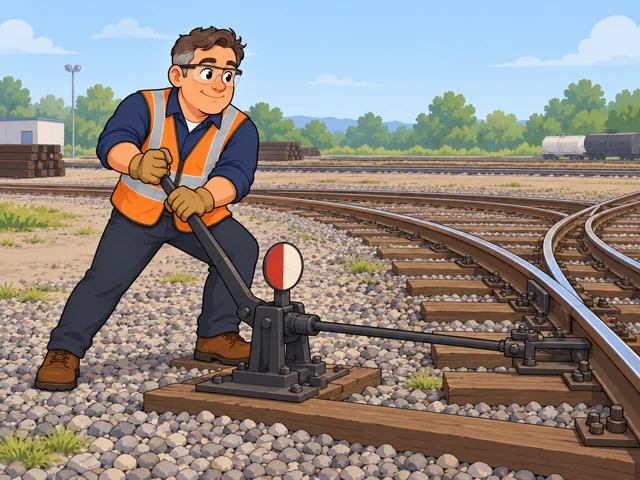
Throw a track switch
Throw the lever on a track switch so the cars head onto the track they belong on.
Career profile
Railroad switch operators help route railcars onto the correct tracks and couple them into trains.
Your tools include a switch lever, air hoses and a radio. The job blends hands-on physical labor with exact, careful communication with the engineer.
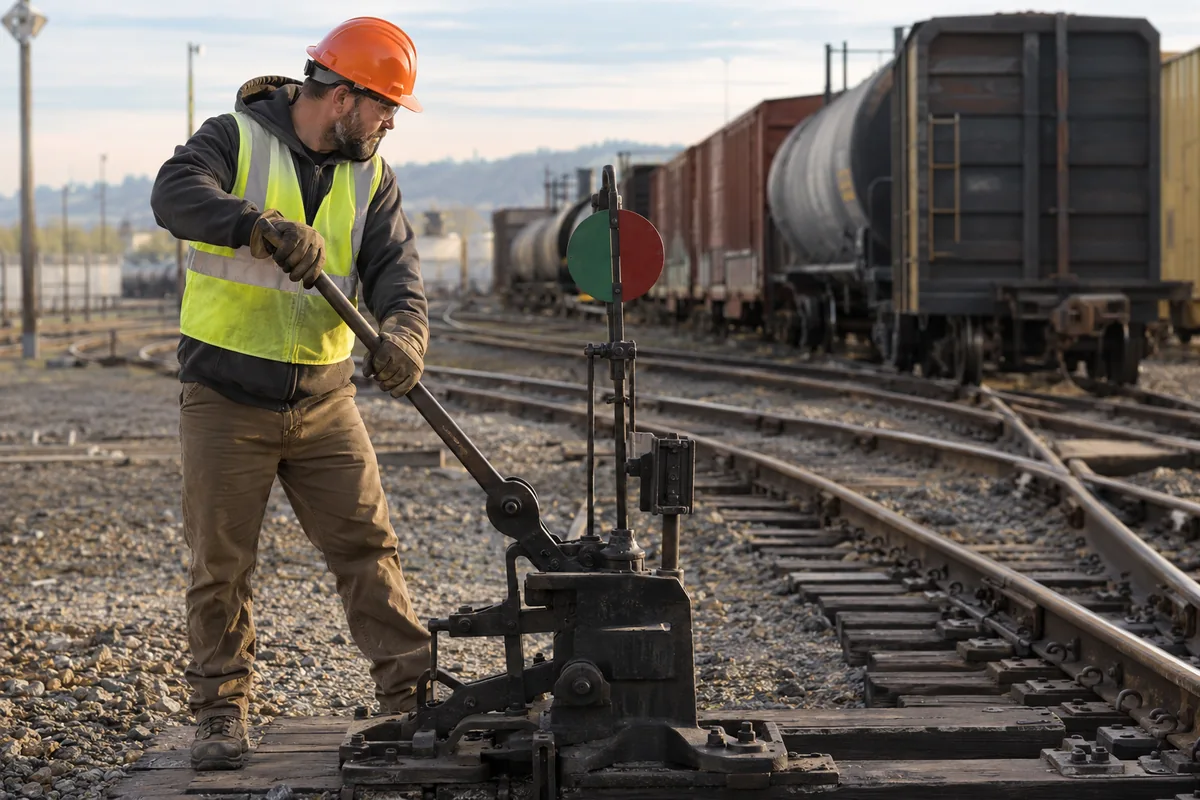
Throw the lever on a track switch so the cars head onto the track they belong on.
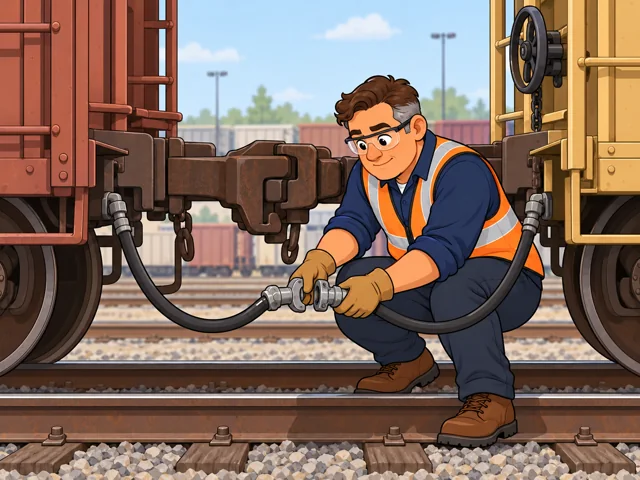
You couple railcars to build trains or split them apart, and connect the air hoses between them.
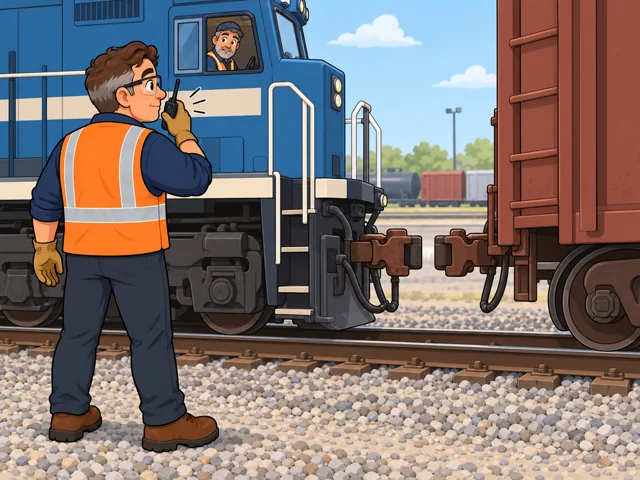
Tell the engineer when to start and stop as cars couple, by radio, hand signals or a lantern.
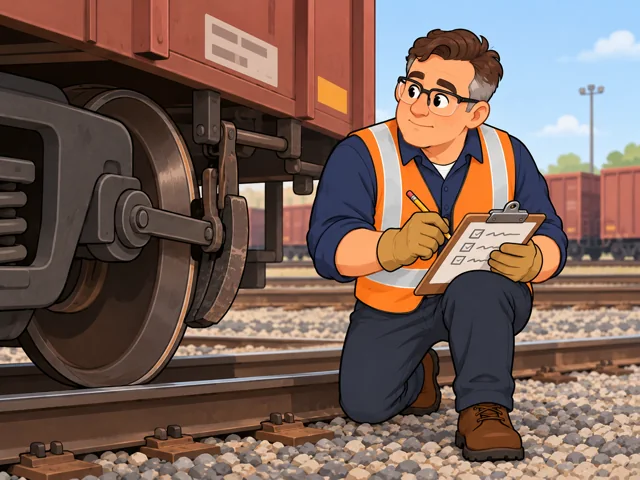
Test the brakes, and when equipment needs repair, write down the car numbers and the defects you found.
United States · 2026
United States · May 2025
United States · 2025–2035
Quick orientation
A high school diploma or equivalent is typical; company training teaches the operating work.
Median: $33.10 an hour, including locomotive firers in the occupational group.
Employment is projected to rise 0.8%, with about 900 openings annually in the group that includes locomotive firers.
At some industrial yards, software keeps a live inventory of railcars and flags exceptions, helping crews keep track of the yard.
You still interpret the switching plan, communicate with the crew, and notice hazards around moving equipment.
Automation may change how much checking and movement control sits with each crew member. How far those tasks shift will depend on the yard's equipment and operating methods.
Pay in context
The national median was $68,840 a year, or $33.10 an hour, in May 2025. These figures cover railroad brake, signal, and switch operators and locomotive firers together.
The 10th-to-90th-percentile range was $45,660–$86,590 a year, or $21.95–$41.63 an hour. These are wage positions across workers, not starting and experienced pay rates.
Training pay can follow a negotiated contract: Union Pacific sets it through a collective bargaining agreement. Ask for the training rate and the rate after qualification before comparing offers.
Employment in the full occupational group is projected to grow 0.8% from 2025 to 2035, with about 900 openings per year on average. Openings include replacement needs as well as growth.
Company training is the usual bridge into switching work. You learn rules in class and practice with an experienced employee; requirements depend on the employer and position.
After entry
This starts where the entry routes leave off: early work, growing capability, and advancement or specialization.
Learn your yard's layout and make its switching routines familiar enough that you can explain the next move clearly.
Get better at reading switching plans, spotting obstructions, and keeping the crew informed as cars change position.
With experience, you may move toward yardmaster work: coordinating crews, schedules, and where cars need to go.
You sort railcars into outbound trains as part of a yard crew. Work continues around the clock, and some train-crew assignments involve irregular call times.
You position cars for loading, unloading, and production. Some plant jobs also include weighing cars or helping production workers between switching moves.
Try it
Draw a track that branches into two sidings. Use six numbered paper railcars and write a destination list. Move the cars one step at a time while a partner follows your spoken instructions. Notice whether you enjoy keeping track of positions and making each instruction unambiguous.
Stay safe: Keep this exercise on paper; it is not training for operating railway equipment.