
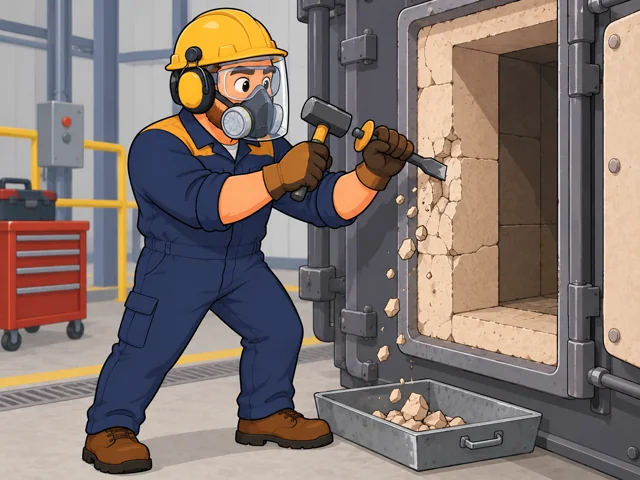
Chisel out crusted buildup
Knock off hardened buildup with a hammer and chisel, and strip out lining too damaged to save.
Career profile
Refractory repairers rebuild the heat-resistant lining inside industrial furnaces and vessels that hold molten metal.
The craft is in applying the material, whether you pack it down tight, spray it on, or cast a new layer inside a form.
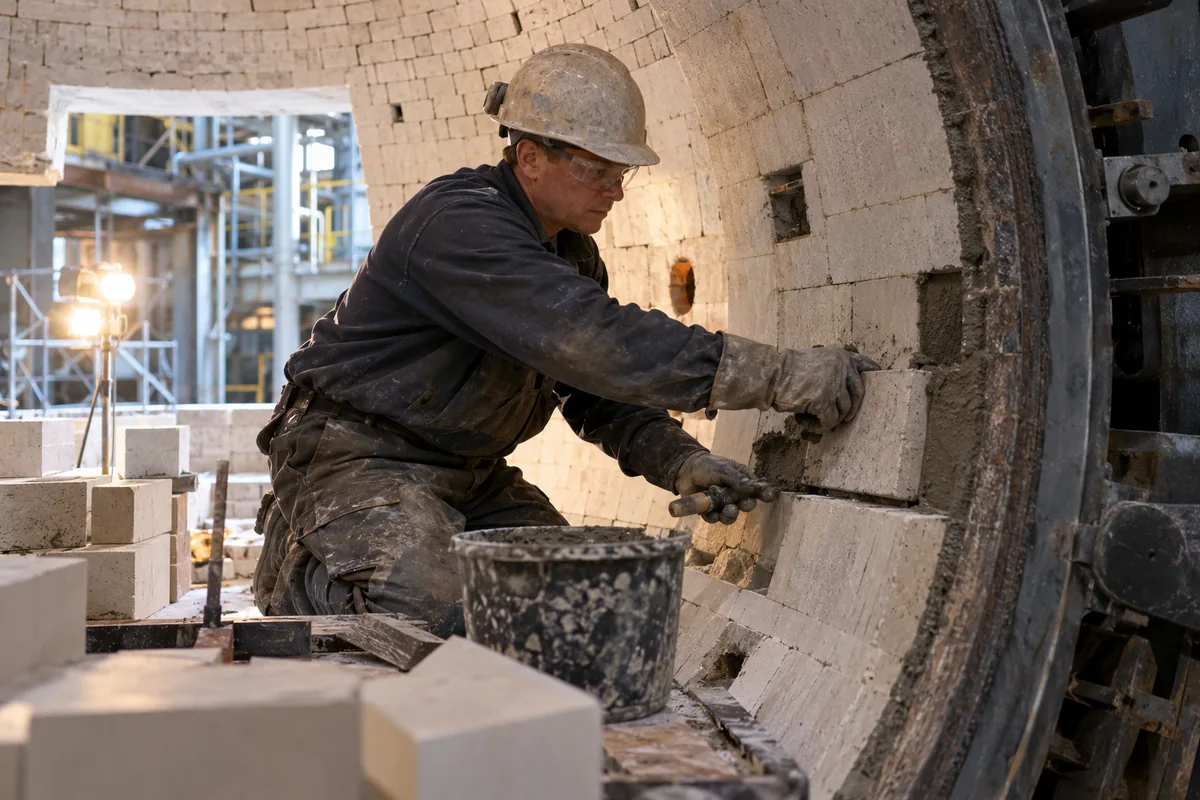
Knock off hardened buildup with a hammer and chisel, and strip out lining too damaged to save.
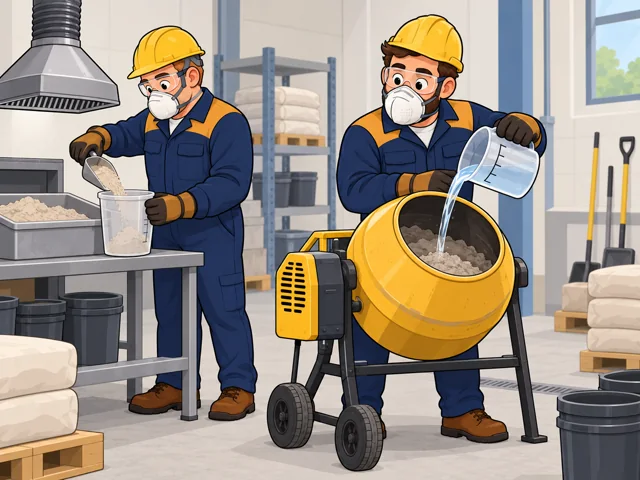
You measure out dry ingredients and water, then blend them into mortar with a shovel or machine mixer.
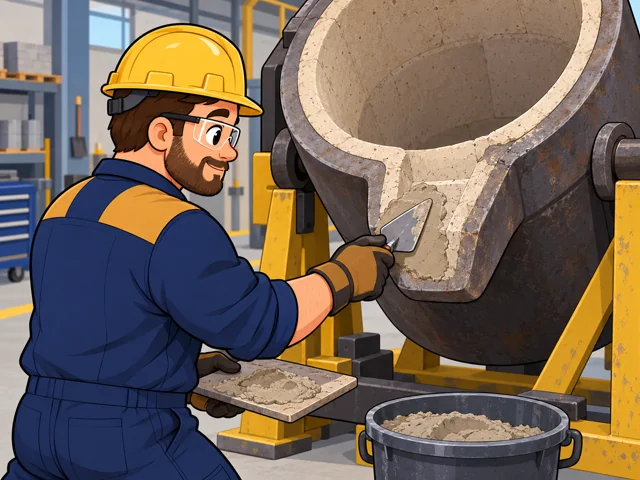
Rebuild the lining or spout of a ladle, the container that moves molten metal, using a trowel.
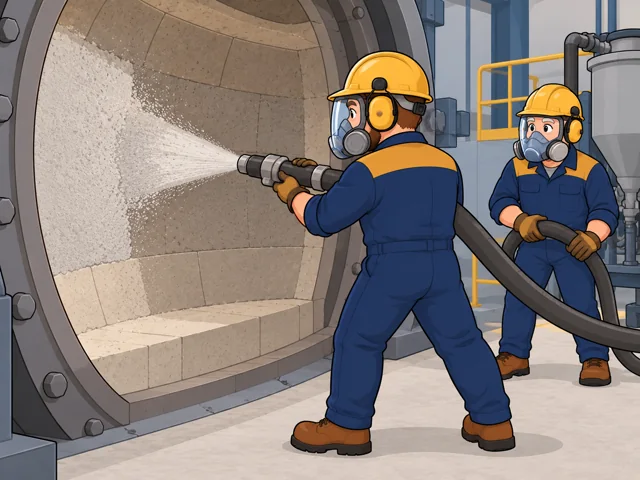
Handle the hose and spraying gear to coat an industrial furnace surface in refractory mix.
United States
United States · May 2025
United States · 2025–2035
Quick orientation
Typical entry education; practical skills develop on the job.
National median, equivalent to $29.47 an hour, for refractory materials repairers, except brickmasons.
Employment is projected to shrink, with about 100 openings a year nationwide.
Some electric-arc-furnace systems use lasers to measure lining wear, suggest repairs, and automatically spray material onto worn areas.
People still prepare materials, handle installation equipment, and maintain it. Automated repair systems also give an operator a maintenance plan to work with.
How much spraying becomes automated will depend on the furnace and repair system. Your future mix of handwork and machine operation may differ considerably between sites.
Pay in context
The national median is $61,290 a year, or $29.47 an hour. That is a midpoint across workers, not a starting offer.
The 10th–90th percentile range is $40,590–$86,510 annually, or $19.52–$41.59 hourly. These figures cover refractory materials repairers, except brickmasons; they do not mark beginner and expert pay levels.
Some contractors tie raises to demonstrated skills. Ask which installation skills affect your rate and how progress is assessed.
Employment is projected to decline 13.7% from 2025 to 2035. About 100 openings a year are projected on average as workers leave or change occupations, even while total employment falls.
Look for employers that take beginners and teach the work on a crew. Contractor and steel-mill entry jobs can have different travel and scheduling demands.
After entry
This starts where the entry routes leave off: early work, growing capability, and advancement or specialization.
Learn to stage materials, keep application equipment clean, and carry out the site's safety procedures consistently.
Build beyond your first tasks by learning methods such as spraying refractory or setting up forms and pouring a lining.
An experienced service role can add planning job priorities, talking directly with plant customers, and supervising refractory installation.
You apply refractory material and keep its equipment working at a customer's mill. The schedule may include rotating shifts and emergency callouts.
You move between customer projects involving furnaces, kilns, or boilers. A crew may handle an urgent repair on one assignment and a longer rebuild on another.
You rebuild and line components such as furnace doors before they go to the plant. Drawings, fit, and checks before shipping shape the work.
Try it
Use modeling clay to make an even lining inside a disposable cup. Remove a small patch, rebuild it, and compare its thickness with the surrounding clay. Notice whether you enjoy careful shaping and checking your work.
Stay safe: Use craft materials only, without heat. This explores the handwork, not industrial repair technique.