
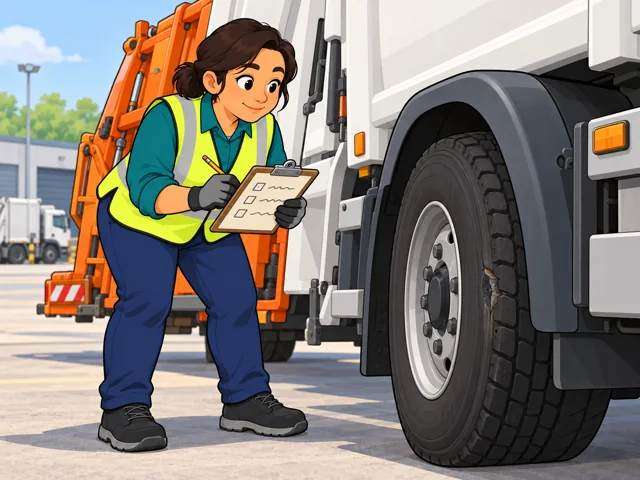
Inspect the truck before rolling
Prior to leaving, check brakes, tires and lift gear, logging faults on a vehicle checklist so they're handled.
Career profile
Refuse collectors gather trash and recycling from homes and businesses and move each truckload onward.
Some routes have a crew moving containers, others a truck-mounted lifting arm. That equipment changes how much you lift and how route time gets spent.
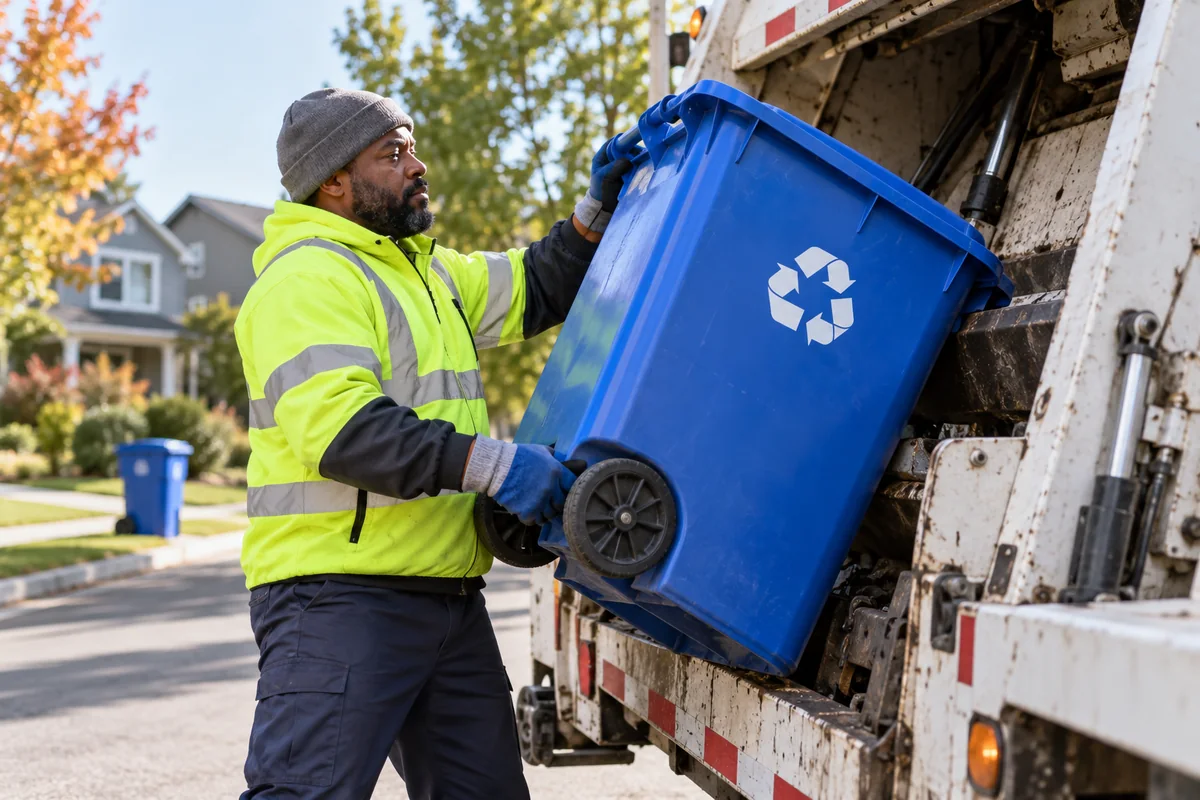
Prior to leaving, check brakes, tires and lift gear, logging faults on a vehicle checklist so they're handled.
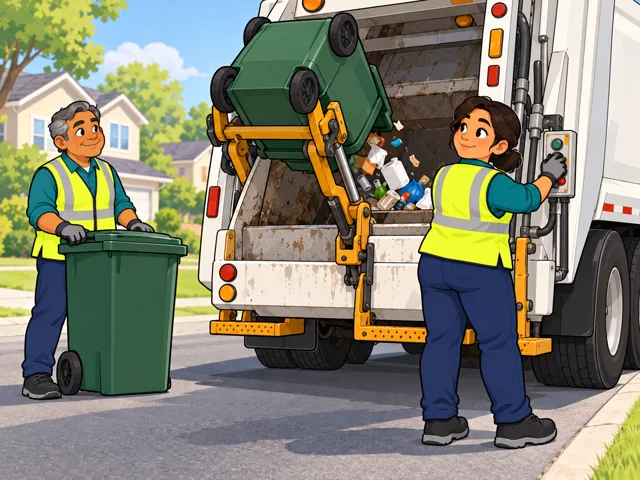
Bring containers to a rear-loader and dump them by hand or tipper, or run an automated lifting arm.
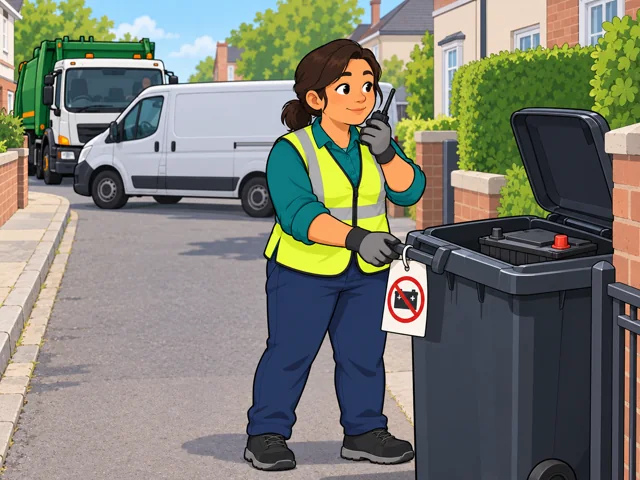
Let dispatch know about blocked streets, and tag bins holding banned items so customers see what to fix.
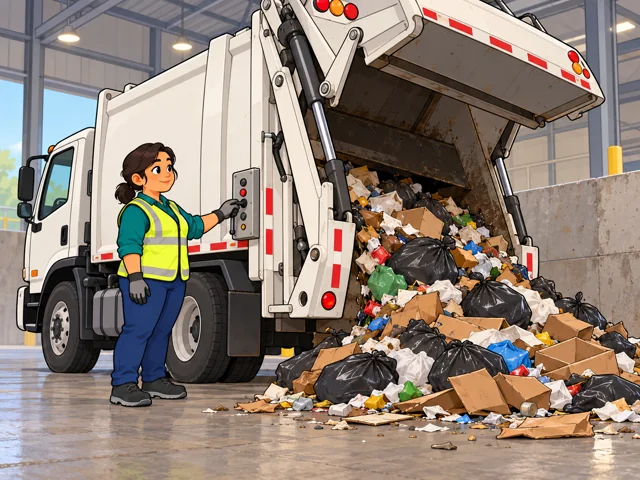
When you drive, take the load to a recycling facility or disposal site and run the truck's unloader.
United States
United States · 2025
United States · 2025–2035
Quick orientation
A high school diploma or equivalent is common; employer requirements differ between loading and driving jobs.
National median pay, equivalent to $23.89 an hour.
National employment is projected to grow slowly.
Some trucks use joystick-controlled arms to empty carts. Tablets provide routes and connect drivers with dispatch.
You still position the truck, watch for obstacles and decide when a stop cannot be completed safely.
How much manual loading remains will depend on which routes adopt automated trucks. Better routing and automation may also reduce the workers needed for a given volume.
Pay in context
The national median is a useful reference, not a starting offer.
In 2025, median pay was $49,690 annually, or $23.89 hourly. The lowest-paid 10% earned $33,590 or less; the highest-paid 10% earned $75,900 or more. Those groups are not career stages.
A historical comparison: in May 2023, collectors in Waste Collection averaged $48,260 annually ($23.20 hourly), versus $54,200 ($26.06 hourly) in Waste Treatment and Disposal. These are industry averages, not current offers.
Employment is projected to grow 2% during 2025–2035. Separately, the earlier 2024–2034 forecast estimated 16,900 openings a year, including replacement needs. These figures come from different forecast periods.
You can enter through employer training or prepare for driving jobs before applying. Check whether a position starts with loading, driving or both.
After entry
This starts where the entry routes leave off: early work, growing capability, and advancement or specialization.
Learn container handling, collection stops and communication with dispatch alongside an experienced worker.
In driving work, build skill positioning the truck around obstacles and recording missed pickups or damaged containers.
With experience, pursue a driver-trainer role helping new hires build safe habits.
Rear-loading trucks can pair a driver with helpers moving household bins. Automated side-loading routes can put one operator in charge of driving and the lifting arm.
Commercial routes can use front-loading trucks. You align the truck's forks with a larger container and lift it over the cab; one operator can run this setup.
Roll-off routes involve delivering and retrieving large containers, with trips to disposal facilities. Tight access and muddy sites can make positioning the truck harder.
Try it
Watch a collection truck make a few pickups from a safe public spot. Note what the worker does between lifting bins: checking clearance, repositioning or communicating. Would you enjoy keeping that attention through a whole route?
Stay safe: Stay well away from the truck and moving containers. Do not follow it into the street or approach the crew during collection.