

Career profile

Regulatory Affairs Specialist

Regulatory affairs specialists turn evidence about a company's products into the paperwork government regulators require.

Every time a product changes, you work out which rules apply and what proof the company has to send in.

Regulatory affairs specialist reviews technical documents at a desk.

A day in the life

1A regulatory affairs specialist points out a missing item on a submission checklist while an engineer opens supporting test records.

Chase a missing test report

Spot a gap in a device filing's file list, then ask the engineer for the missing test report.
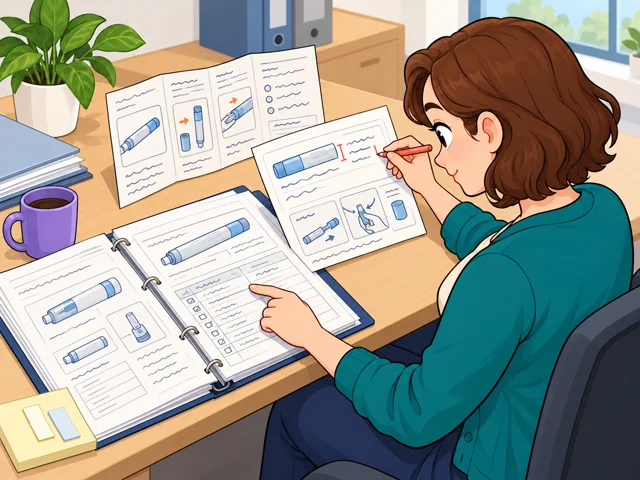
2The specialist compares a device label and instructions with technical records and marks a passage for correction.

Match the label to records

Mark label and instruction wording that disagrees with the technical records before the paperwork moves on.

3The specialist and an engineer examine a proposed device change as she assesses whether it needs a regulatory submission or an internal record.

Route an engineer's proposed change

You decide whether an engineer's proposed change needs a new filing with regulators or an internal record.

4The specialist gathers colleagues' answers and supporting records, matching them to a reviewer's questions and assembling a response packet.

Answer an agency's questions

Split an agency request into pointed questions for coworkers, then build their answers into a clear, documented reply.

Quick facts

Preparation

Usually a bachelor's degree

United States

Pay

Not displayed

Compare salary ranges for the specific product area and experience level.

Outlook

Not displayed

A national growth rate specific to this specialty is unavailable.

Quick orientation

Preparation, pay & outlook

Preparation

Usually a bachelor's degree

Relevant experience also matters; requirements differ by product and employer.

Geography
United States
Period
Not applicable

Pay

Not displayed

Compare salary ranges for the specific product area and experience level.

Geography
United States
Period
Not applicable

Outlook

Not displayed

A national growth rate specific to this specialty is unavailable.

Geography
United States
Period
Not applicable

Fit, tradeoffs & changing tools

Things to weigh

  • Much of the work involves close reading and checking details, even when a deadline is pressing.
  • Manufacturing roles can involve competing requests and occasional extended hours.

Where AI may help

For medical-device submissions, the Food and Drug Administration's electronic Submission Template and Resource (eSTAR) guides you through questions and organizes the required information.

What people still lead

You still interpret requirements, judge whether evidence answers the question, and explain gaps to colleagues.

What we can’t predict yet

How much submission preparation becomes automatic will depend on whether tools can handle unusual products and incomplete evidence, beyond organizing a form.

Pay in context

Earnings

Product expertise, experience, and location affect offers. These advertised salaries illustrate experienced roles, not a national pay scale.

Diagnostic-device development

In Sparks, Maryland, a specialist role lists $95,900–$153,400 annually and seeks 2–5 years of relevant experience.

Geography
Sparks, Maryland, United States
Period
Posting retrieved October 4, 2026
Pay basis
Advertised annual salary range; not total compensation or an occupation median

Medical-device manufacturing

In Torrance, California, a specialist role lists $120,000–$150,000 annually and requires 8–10 years of relevant experience. The different experience requirements prevent a direct workplace-pay comparison.

Geography
Torrance, California, United States
Period
Posting retrieved October 4, 2026
Pay basis
Advertised annual salary range based on experience and qualifications

Getting started

Build a relevant degree foundation

What the route involves
Study life sciences, engineering, pharmacy, or regulatory affairs.
What it can lead to
Look toward junior specialist work helping experienced colleagues prepare submissions and assess changes.
What to check
A degree alone does not meet every specialist vacancy's experience requirement.

Move from related technical work

What the route involves
Build relevant experience in a medical-device quality or technical position.
What it can lead to
Some specialist roles consider this experience in place of direct regulatory experience.
What to check
This route can still require a relevant bachelor's degree.

Choose a product area first; its science and technical records shape the preparation you need.

After entry

Career paths

This starts where the entry routes leave off: early work, growing capability, and advancement or specialization.

  1. Get established

    Learn the product's submission history and practice preparing complete, consistent documents.

  2. Handle more of the review

    Build skill in assessing product changes and resolving questions from agency reviewers.

  3. Lead a product's submissions

    Develop expertise in an area such as diagnostic devices and coordinate submissions across departments.

Where you can work

Diagnostic-device development teams

Work with scientists, engineers, and clinical colleagues while new tests and laboratory systems are being developed. Regulatory questions influence project plans.

  • Office
  • Indoors

Medical-device manufacturing companies

Work alongside quality and manufacturing staff. Supplier certificates, customer documentation requests, and audit preparation can share your desk with product files.

  • Office
  • Indoors

Try it

See whether the job clicks before you commit to the path.

Pick an everyday product label and imagine changing one claim on it. Make a short checklist of the evidence you would request and who might hold it. Notice whether tracing a claim back to proof interests you.

Stay safe: Keep this a paper exercise, not a judgment that the product meets legal requirements.

Explore more careers

Sources

  1. O*NET OnLine. Regulatory Affairs Specialists — 13-1041.07. Accessed 2026-10-04.
  2. O*NET OnLine / U.S. Bureau of Labor Statistics. National Wages: Regulatory Affairs Specialists. Accessed 2026-10-04.
  3. U.S. Bureau of Labor Statistics. Occupational projections and worker characteristics. Accessed 2026-10-04.
  4. Becton, Dickinson and Company. Regulatory Affairs Specialist (Innovation). Accessed 2026-10-04.
  5. Broadata Communications. Regulatory Affairs Specialist. Accessed 2026-10-04.
  6. Boston Scientific. Regulatory Affairs Specialist I. Accessed 2026-10-04.
  7. U.S. Food and Drug Administration. eSTAR Program. Accessed 2026-10-04.

Your message goes to the Great Jobs team. How we use your information