
Career profile

Roofer

Roofers install and repair the outer layers of roofs that keep water out.

Wherever something like a vent breaks up a roof, leaks can start. You trim and fit the pieces that close that gap.
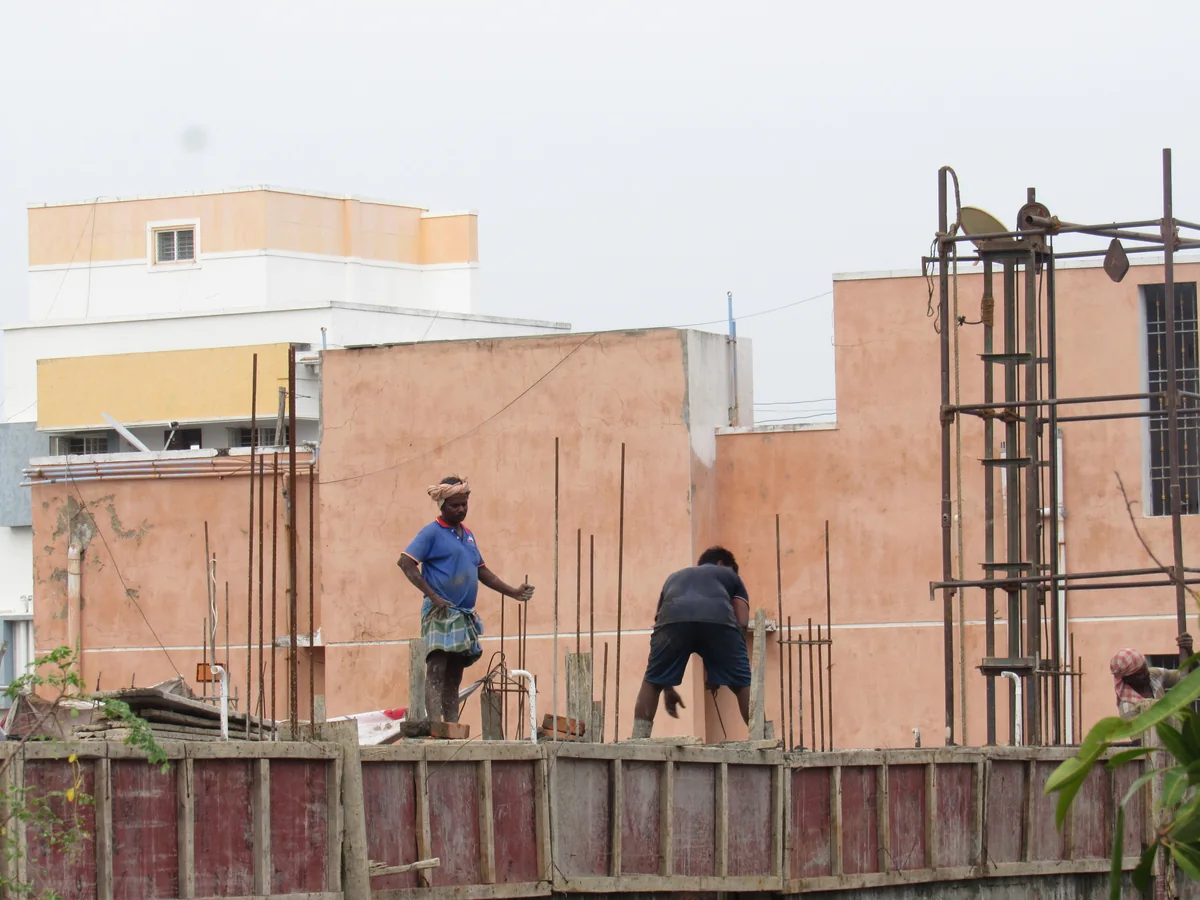
Roofers work along the edge of a new roof structure.
Saral Shots / CC0

A day in the life

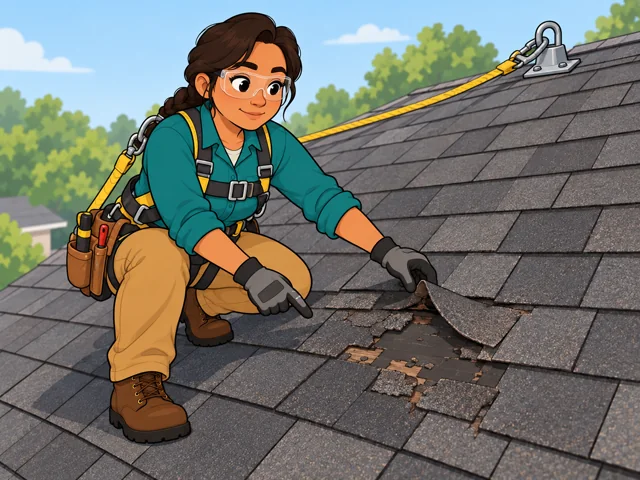
1A roofer crouches on a roof and lifts a curled shingle to inspect a damaged section beside intact shingles.

Find what needs fixing

Look over a roof with trouble spots and decide which damaged parts you need to fix.
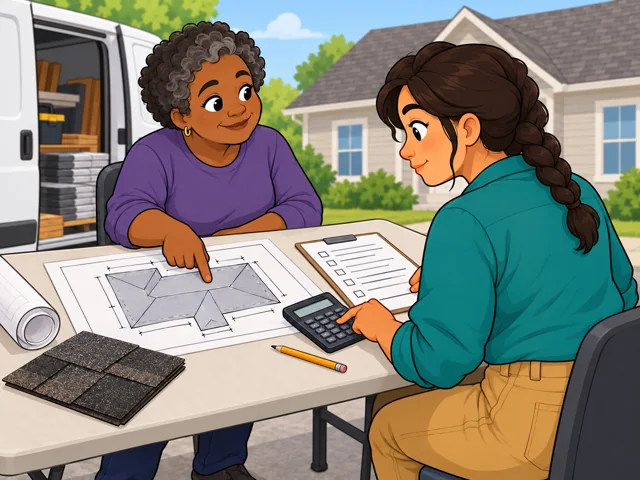
2A roofer uses a calculator beside a roof diagram and estimate sheet while an older woman coworker points out a roof section.

Figure out what to order

Estimate materials and work hours so you know what to order, sometimes from an aerial roof report.
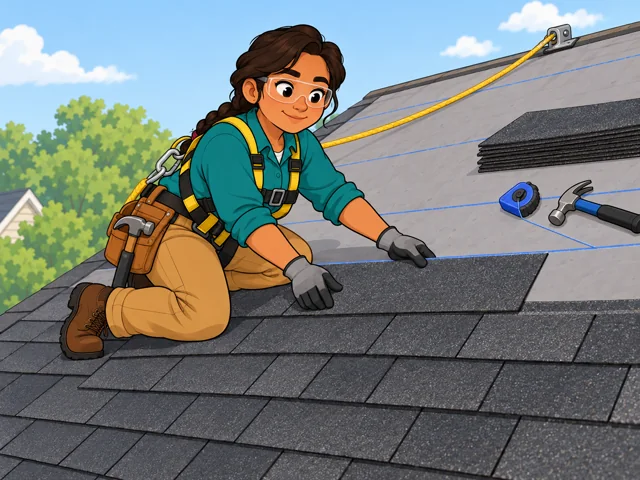
3A roofer aligns a new shingle with a blue chalk line above evenly overlapping rows on a partially covered roof.

Lay shingles in straight rows

Mark straight chalk lines across the roof so each overlapping row of shingles lines up.
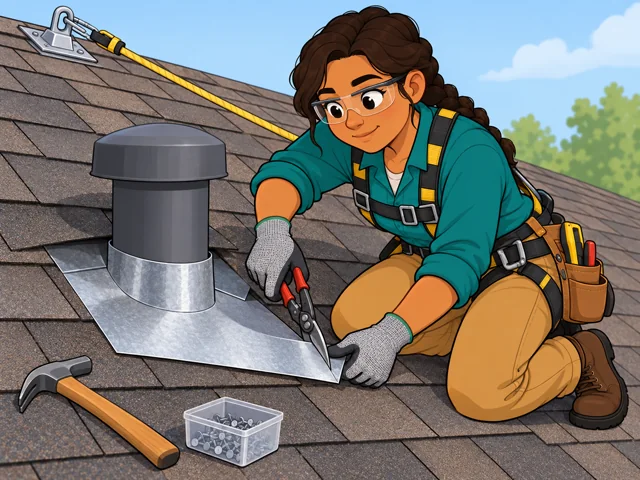
4A roofer carefully trims metal flashing beside a roof vent, fitting its edges into the overlapping roof covering.

Seal around a vent

Cut metal strips called flashing to fit around a vent, then fasten them to seal the joint.

Quick facts

Preparation

Learn on the job

United States · 2025

Pay

$55,440/year

United States · May 2025

Outlook

5.3% growth

United States · 2025–2035

Quick orientation

Preparation, pay & outlook

Preparation

Learn on the job

Typically no formal educational credential or previous related experience is required.

Geography
United States
Period
2025

Pay

$55,440/year

National median: $26.65/hour.

Geography
United States
Period
May 2025

Outlook

5.3% growth

Projected employment growth over 2025–35, with about 12,000 openings annually.

Geography
United States
Period
2025–2035

Fit, tradeoffs & changing tools

Things to weigh

  • Kneeling and lifting wear you out. Northern winters can reduce work; summer can bring overtime.
  • Falls can be fatal. Using fall protection and treating roof edges seriously are part of the job every day.

Where AI may help

Software can turn aerial photographs into roof measurements and diagrams for estimates and material orders.

What people still lead

You still judge repair needs and physically fit roofing materials.

What we can’t predict yet

How much inspection will move to remote images remains uncertain; measuring a roof and deciding how to repair it are different tasks.

Pay in context

Earnings

Use these national figures to compare offers, not to predict your starting wage.

The pay spread

The lowest-paid 10% earned below $37,460; the highest-paid 10% earned above $81,720 annually. These are wage percentiles, not career stages.

Geography
United States
Period
May 2025
Pay basis
Annual employee wages

Employer type matters

Median annual pay was $55,860 at roofing contractors and $49,520 in construction of buildings.

Geography
United States
Period
May 2025
Pay basis
Annual employee wage medians by industry

Openings include replacements

The projected 12,000 yearly openings include workers leaving the occupation, as well as employment growth. They are not all newly created jobs.

Geography
United States
Period
2025–2035
Pay basis
Employment projection; annual average openings

Getting started

Join a crew as a trainee

What the route involves
Learn tools and materials from experienced roofers.
What it can lead to
Progress from carrying materials to measuring, cutting, and installing roofing.

Enter a roofing apprenticeship

Paid
What the route involves
Combine jobsite training with technical classes; check the sponsor’s admission requirements.
What it can lead to
Build roofing skills through a structured work-and-classroom program.

Federal rules generally prohibit roofing employment under 18, including ground work. Limited exceptions apply to qualifying apprentices and student-learners; stricter state rules may apply.

After entry

Career paths

This starts where the entry routes leave off: early work, growing capability, and advancement or specialization.

  1. Get established

    Make safe access and correct use of fall protection routine before concentrating on speed.

  2. Handle harder details

    Improve your flashing work and judgment about repairs.

  3. Lead a crew

    A foreman plans the job, explains the work to the crew, and checks safety and quality. Developing teaching and communication skills prepares you for that responsibility.

Where you can work

House roofs

Steep slopes and individual shingles are common. Your working position and fall protection shape how you reach each section.

  • Outdoors
  • Physical demands
  • Safety-sensitive

Commercial and apartment roofs

Low slopes are common. Work often involves insulation boards and waterproof sheets or built-up layers.

  • Outdoors
  • Physical demands
  • Safety-sensitive

Try it

See whether the job clicks before you commit to the path.

Make a small cardboard roof on a table. Arrange overlapping paper shingles around a paper vent, then mark where fitting gets difficult. Notice whether you enjoy careful layout and adjusting small pieces.

Stay safe: Keep this a tabletop model; do not climb onto a roof.

Explore more careers

Sources

  1. O*NET OnLine. 47-2181.00 — Roofers. Accessed 2026-10-02.
  2. U.S. Bureau of Labor Statistics. Roofers — Occupational Outlook Handbook. Accessed 2026-10-02.
  3. U.S. Bureau of Labor Statistics. Table 1.2 Occupational projections, 2025–35, and worker characteristics, 2025. Accessed 2026-10-02.
  4. U.S. Department of Labor. Fact Sheet #74: The Employment of Youth in Roofing Occupations and On Roofs. Accessed 2026-10-02.
  5. United Union of Roofers, Waterproofers & Allied Workers. Training. Accessed 2026-10-02.
  6. Eagleview. Commercial Construction Reports. Accessed 2026-10-02.
  7. Occupational Safety and Health Administration. Fall Protection in Residential Construction. Accessed 2026-10-02.
  8. Roofers & Waterproofers Research and Education Joint Trust Fund. Foreman Training. Accessed 2026-10-02.

Your message goes to the Great Jobs team. How we use your information