

Map out the client's problem
Hear how a client's setup runs and what holds it back, then list the product's requirements.
Career profile
Sales engineers help companies pick technical products by showing how each works in their setup.
Find out a client's needs, check technical requirements, build a convincing demo. The hard part is closing a deal the product can truly deliver on.

Hear how a client's setup runs and what holds it back, then list the product's requirements.
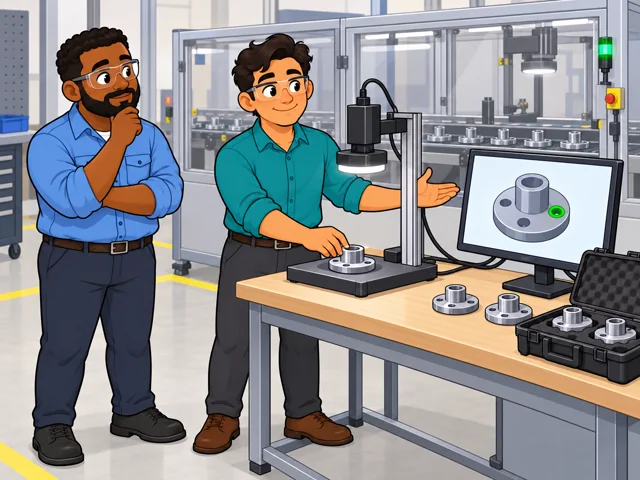
For industrial clients, bring a demo unit on-site and tie its functions to the process they want improved.
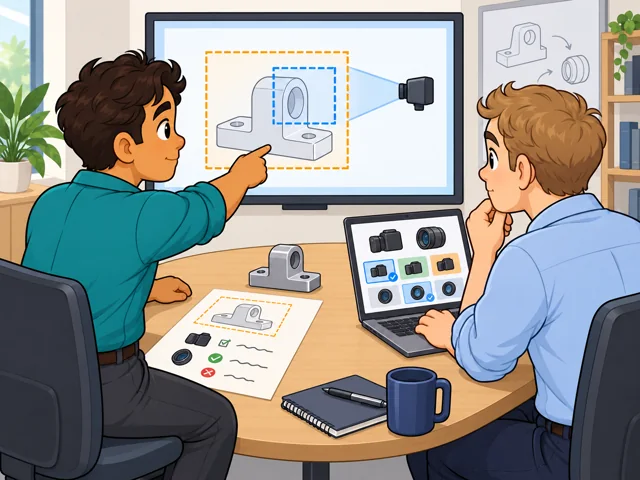
Test a configuration against client specs, then rework parts that do not fit, with engineers, before the proposal.

Log open questions and follow-ups in the sales software, then help choose a trial or another technical talk.
United States
United States · May 2025
United States · 2025–2035
Quick orientation
Technical knowledge and sales skills matter; employer training follows hiring.
National median, equivalent to $60.05 an hour; not starting pay.
About 3,800 openings a year, including replacement needs.
Artificial intelligence tools may speed up market research.
You still lead customer discussions and decide what a useful product evaluation should test.
How much research and evaluation work becomes automated remains uncertain.
Pay in context
Check how much of an offer is salary and how much depends on sales.
The median was $124,900 a year, or $60.05 an hour. The 10th and 90th percentiles were $73,870 and $195,270. These describe the wage distribution, not beginner and senior salaries.
Annual medians were $153,410 at software publishers and $103,140 in manufacturing.
Salary commonly comes with commissions or bonuses. These wage figures include commissions and production bonuses, exclude overtime premiums, and do not cover self-employment.
Employment is projected to grow 2.8% from 2025 to 2035. The roughly 3,800 annual openings include people changing occupations or leaving work.
Employers look for technical understanding and the ability to sell.
After entry
This starts where the entry routes leave off: early work, growing capability, and advancement or specialization.
Shadow experienced salespeople and learn the product before handling customers independently.
Get better at turning customer problems into tailored demonstrations. Agree on what a successful trial must show, then help the customer evaluate the results.
Advancement may mean a larger territory or a sales management role.
You may split time between an office and customer facilities, carrying demonstration equipment to appointments. Seeing the customer's actual process helps you explain where a product could help.
In software development tools, you work with an account team and customer developers. Demonstrations and trials must fit the customer's existing tools, with agreed measures for judging results.
Try it
Pick two printers using their public specification sheets. Ask a friend to play a buyer and describe what they need to print. Recommend one, explain a limitation, and answer a follow-up question. Notice whether you enjoy uncovering requirements as much as explaining features.