
Career profile

Wood Sawing Machine Operator

Sawing machine operators handle the saws that cut wood into parts of required sizes.

Good sawing shows in the finished stack: pieces that match each other, clean edges and less scrap.
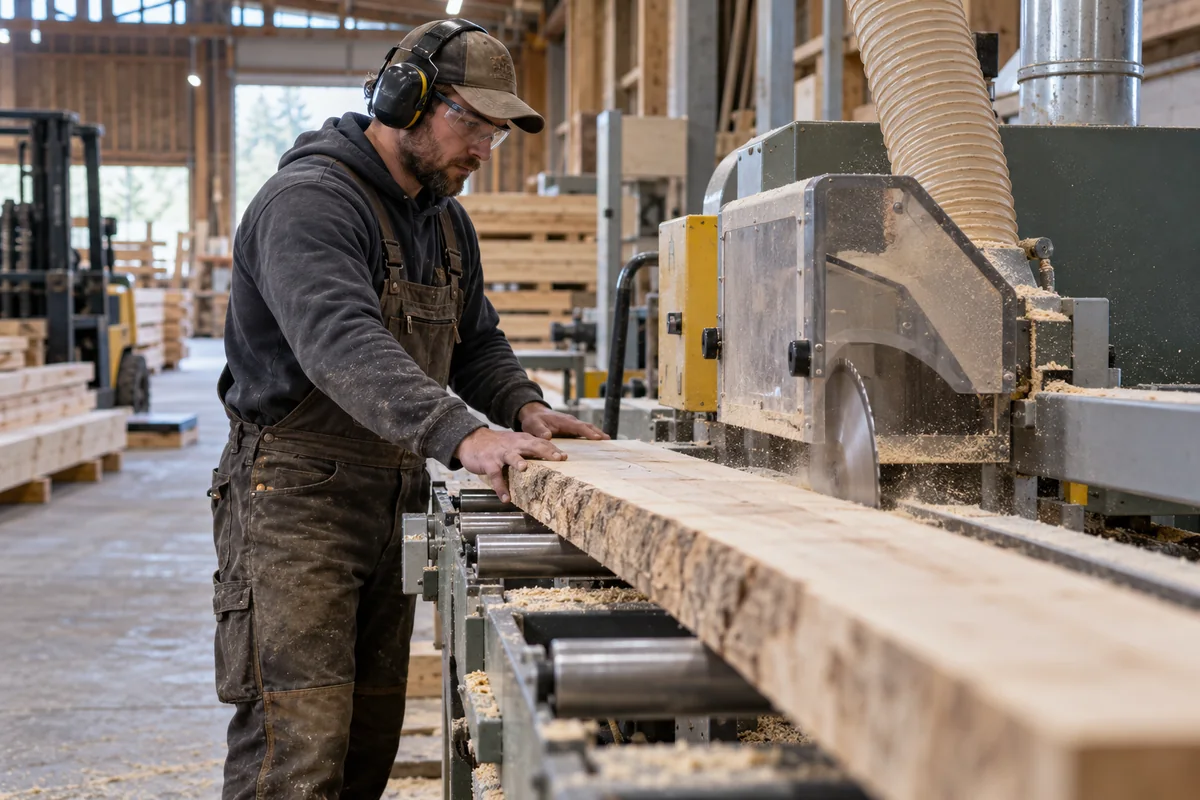
A saw operator checks a timber board passing through a guarded machine.

A day in the life

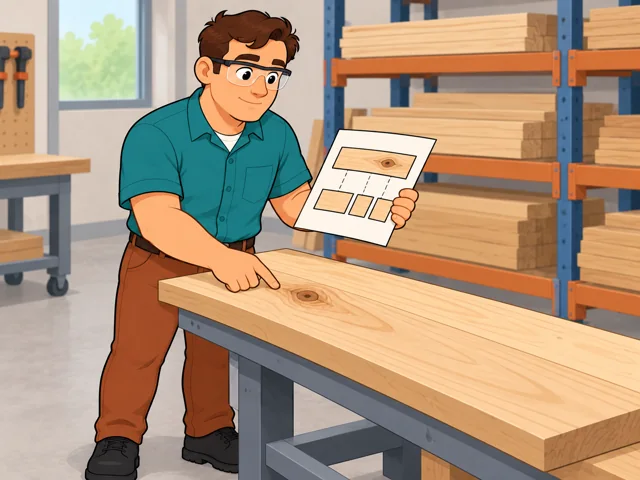
1A wood sawing machine operator compares a work order with a board while inspecting a knot and the surrounding grain.

Plan cuts from order and wood

You read the job's order and examine the wood closely before you choose any cuts.
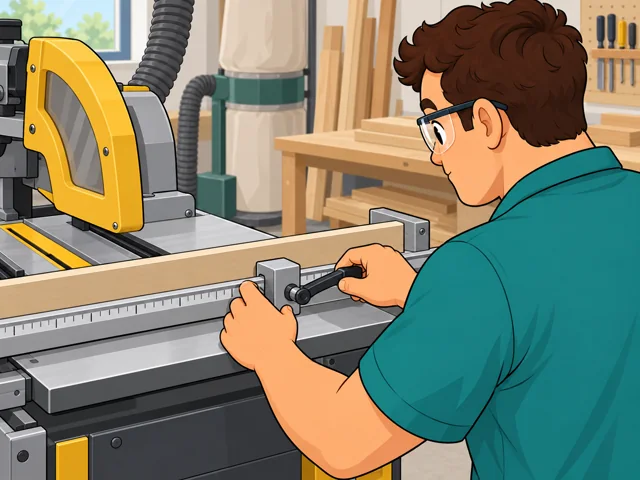
2The operator adjusts and locks a length stop on a powered-down wood saw, keeping his hands clear of the guarded blade.

Set the guides and stops

Move the saw's guides and stops so the machine cuts to the required sizes.
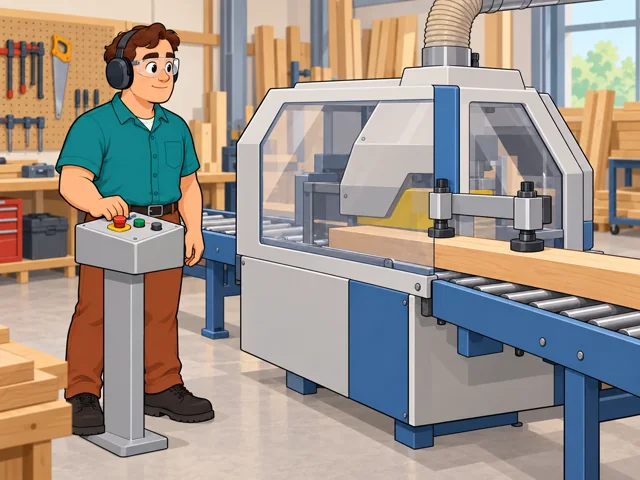
3Wearing safety glasses and hearing protection, the operator watches a guarded wood saw run from its control station.

Watch and listen while it runs

Keep watching and listening as the saw runs, since odd noises or excess shaking signal a problem.
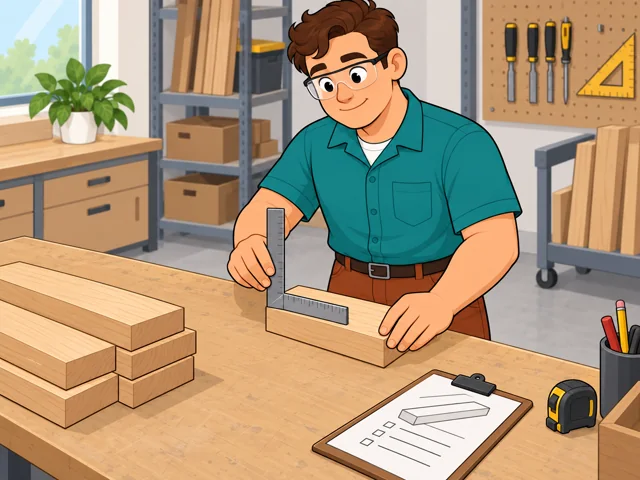
4The operator holds a carpenter's square against a finished wooden piece to check the cut, with the work order beside it.

Check finished pieces against specs

Hold a ruler or a square to finished pieces to confirm they match the order's sizes.

Quick facts

Preparation

High school + workplace training

United States · 2025

Pay

$42,770/year

United States · May 2025

Outlook

1% decline

United States · 2025–2035

Quick orientation

Preparation, pay & outlook

Preparation

High school + workplace training

A diploma or equivalent is typical; you learn the machinery on the job.

Geography
United States
Period
2025

Pay

$42,770/year

National median employee wage, equivalent to $20.56 an hour.

Geography
United States
Period
May 2025

Outlook

1% decline

About 4,500 openings a year are projected nationwide despite a small employment decline.

Geography
United States
Period
2025–2035

Fit, tradeoffs & changing tools

Things to weigh

  • Standing and repeated movements can be tiring; machine speed may set your pace.
  • Sharp moving blades can cause serious injury. Noise and dust also make protective equipment part of the workday.

Where AI may help

Some panel-saw systems arrange parts into cutting layouts, recall settings and guide you through the next cut.

What people still lead

You still supply the order and material information and complete the handling steps the machine leaves to you.

What we can’t predict yet

How much cutting and handling becomes automatic will depend on the equipment a shop adopts and the products it makes.

Pay in context

Earnings

Use the national median as a reference when comparing offers. Ask about the hourly rate, expected hours and benefits.

The middle of the pay scale

The median was $20.56 an hour, or $42,770 a year. Half of employees earned more and half earned less; this is not a starting rate.

Geography
United States
Period
May 2025
Pay basis
Median employee wages for sawing machine setters, operators, and tenders, wood; not total compensation.

Openings despite a smaller workforce

About 4,500 openings per year are projected alongside a 1% employment decline. These are national projections, not a count of jobs available near you.

Geography
United States
Period
2025–2035
Pay basis
Employment projection; not a wage measure.

How widely pay varies

The lowest-paid 10% earned $14.85 an hour or less ($30,890 a year); the highest-paid 10% earned $27.97 or more ($58,170 a year). These describe the pay spread, not beginner and experienced-worker rates.

Geography
United States
Period
May 2025
Pay basis
10th- and 90th-percentile employee wages for sawing machine setters, operators, and tenders, wood; not total compensation.

Pay across workplace types

In May 2023, saw operators averaged $19.65 an hour in sawmills and wood preservation, compared with $19.16 in household, institutional and office furniture and kitchen cabinet manufacturing. This older comparison shows industry averages, not today's offer rates.

Geography
United States
Period
May 2023
Pay basis
Hourly mean employee wages for SOC 51-7041 in NAICS 321100 and 3370A1 (3371 and 3372 only); historical averages, not medians or total compensation.

Getting started

Learn in an entry production job

What the route involves
Learn feeding and stacking from an experienced worker before tackling more complex tasks.
What it can lead to
You build skills on the employer’s machinery.
What to check
Federal rules generally prohibit powered woodworking machine work for employees under 18. Limited apprentice and student-learner exceptions have specific conditions.

Take relevant vocational courses

What the route involves
Study woodworking production, math and computer applications through vocational or college coursework.
What it can lead to
Some production employers prefer this preparation. You still need training on their machines.

A high school diploma or equivalent is the usual starting point. Machine skills develop at work.

After entry

Career paths

This starts where the entry routes leave off: early work, growing capability, and advancement or specialization.

  1. Get consistent

    Build reliable feeding, stacking and checking habits on your first machine.

  2. Handle more setups

    Learn to read drawings, set up machines and plan the sequence of work.

  3. Specialize in panel-saw controls

    Develop the skills to manage saved cutting patterns, material settings and part labels on a computer-controlled saw.

Where you can work

Sawmills

On a carriage-fed saw, logs are secured to a moving platform. Keeping people clear of its travel path is a major constraint around the cutting station.

  • Physical demands
  • Safety-sensitive

Cabinet and furniture production shops

You cut panels into smaller components. Custom shops may use sliding table saws; larger production runs may use beam saws that process greater panel volumes.

  • Indoors
  • Safety-sensitive

Try it

See whether the job clicks before you commit to the path.

On graph paper, draw a 12-by-8 rectangle representing a wood panel. Fit four 5-by-3 parts inside it, leaving a small gap for each cut. Compare two layouts for waste and ease of measuring. Notice whether checking the dimensions feels satisfying.

Stay safe: Keep this exercise on paper; it does not require a saw.

Explore more careers

Sources

  1. O*NET OnLine. Sawing Machine Setters, Operators, and Tenders, Wood — 51-7041.00. Accessed 2026-10-03.
  2. U.S. Bureau of Labor Statistics. Occupational projections and worker characteristics, 2025–2035. Accessed 2026-10-03.
  3. U.S. Bureau of Labor Statistics. Woodworkers — Occupational Outlook Handbook. Accessed 2026-10-03.
  4. U.S. Department of Labor. Field Operations Handbook, Chapter 33 — Child Labor. Accessed 2026-10-03.
  5. Stiles Machinery. Sawing & Cutting. Accessed 2026-10-03.
  6. HOMAG, published by Stiles Machinery. CADmatic Saw Control System. Accessed 2026-10-03.
  7. Occupational Safety and Health Administration. Sawmills eTool — Saws. Accessed 2026-10-03.
  8. Occupational Safety and Health Administration. Sawmills eTool — Log Carriages/Carriage Runways. Accessed 2026-10-03.
  9. O*NET OnLine. Oklahoma Wages: 51-7041.00 — United States wage rows. Accessed 2026-10-03.
  10. U.S. Bureau of Labor Statistics. May 2023 Occupational Employment and Wages — Sawing Machine Setters, Operators, and Tenders, Wood. Accessed 2026-10-03.

Your message goes to the Great Jobs team. How we use your information