
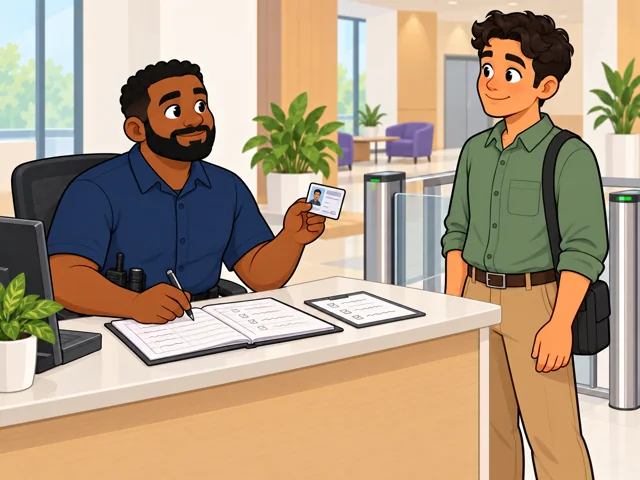
Screen visitors at the front door
Check a visitor's identification, confirm they're allowed in and log the visit before letting them pass.
Career profile
Security guards control site entry, patrol on foot, and act when something seems wrong.
Good at noticing small things and staying calm around people? Look into security work, posted at a security desk or walking a patrol route.

Check a visitor's identification, confirm they're allowed in and log the visit before letting them pass.
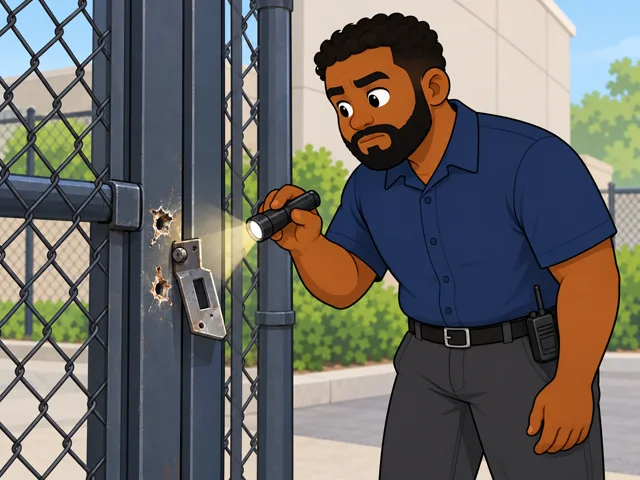
Look for break-in signs or damage, since you have to report a broken latch even when nobody's around.
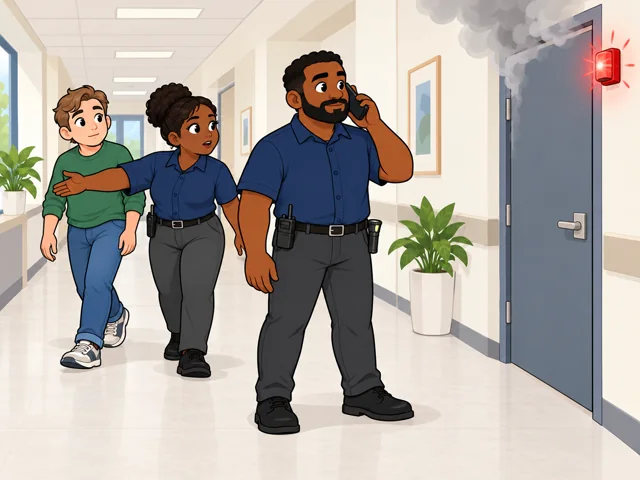
Track the alarm to its cause, and call police, fire or paramedics if it needs emergency help.
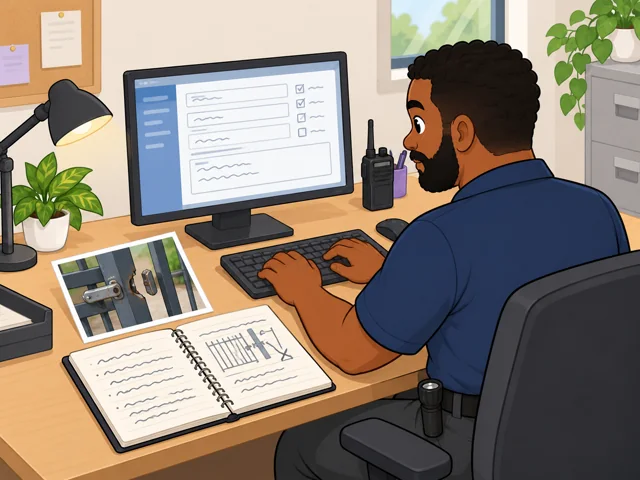
Describe what happened, where, and what you did, keeping what you observed separate from guesses about anyone's motives.
United States · 2025
United States · May 2025
United States · 2025–2035
Quick orientation
A diploma or equivalent and short-term training are typical. State and employer requirements also apply.
National median for security guards, equivalent to $18.28 an hour.
About 156,000 openings annually nationwide, including replacement needs.
Cameras and alarms let you monitor areas beyond your immediate view.
You still explain access rules, respond to incidents, and summon help.
More surveillance may reduce staffing needs; how much monitoring it replaces will vary by site.
Pay in context
Use the national figures as a comparison point when reading a job offer.
Median pay was $38,020 a year, or $18.28 an hour. Half earned more and half less.
The lowest-paid 10% earned below $30,210; the highest-paid 10% earned above $58,840. These are not career stages.
Annual medians were $44,920 in healthcare and social assistance, $44,250 in educational services, and $35,640 in retail trade.
Projections show 156,000 openings a year but only 11,300 net additional jobs over the decade. Openings include replacing departing workers.
Check your state's requirements before paying for training. Hiring and required instruction can happen in different orders.
After entry
This starts where the entry routes leave off: early work, growing capability, and advancement or specialization.
Get comfortable with the site's access rules, patrol route, and expectations for helping visitors.
Practice explaining an incident and requesting the right help. Ask your supervisor which details would make your reports more useful.
A possible next step is security shift supervisor: assign posts, coach guards through problems, and check that procedures are followed.
Entry checks cover workers, visitors, and vehicles. Your post may be a gate or desk, with patrols around buildings and equipment.
You work around shoppers and merchandise, sometimes alongside store detectives. Patrols may extend into parking lots.
Try it
Try writing a short incident report from this fictional scene: at 3:10 p.m., a delivery cart bumps a lobby door and leaves a mark; the driver tells reception. Record the time, place, event, and response without guessing motives. Notice whether precise reporting holds your interest.
Stay safe: Use the fictional scene; do not test security systems or challenge strangers.