
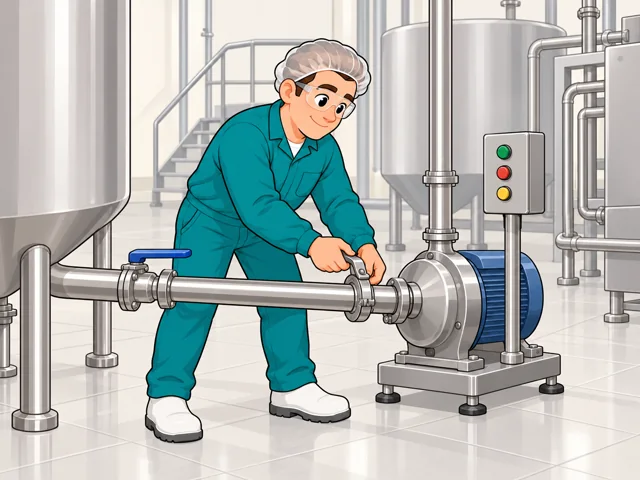
Connect tanks to the equipment
To set up the next run, fit valves and piping from tanks to equipment, then pump material through.
Career profile
Separator and still operators run stills, centrifuges, and filters that pull wanted products from mixtures.
Send a liquid through, and it may emerge as concentrated ingredient or recovered solvent. Keeping the separation going means tying gauge readings to that output.
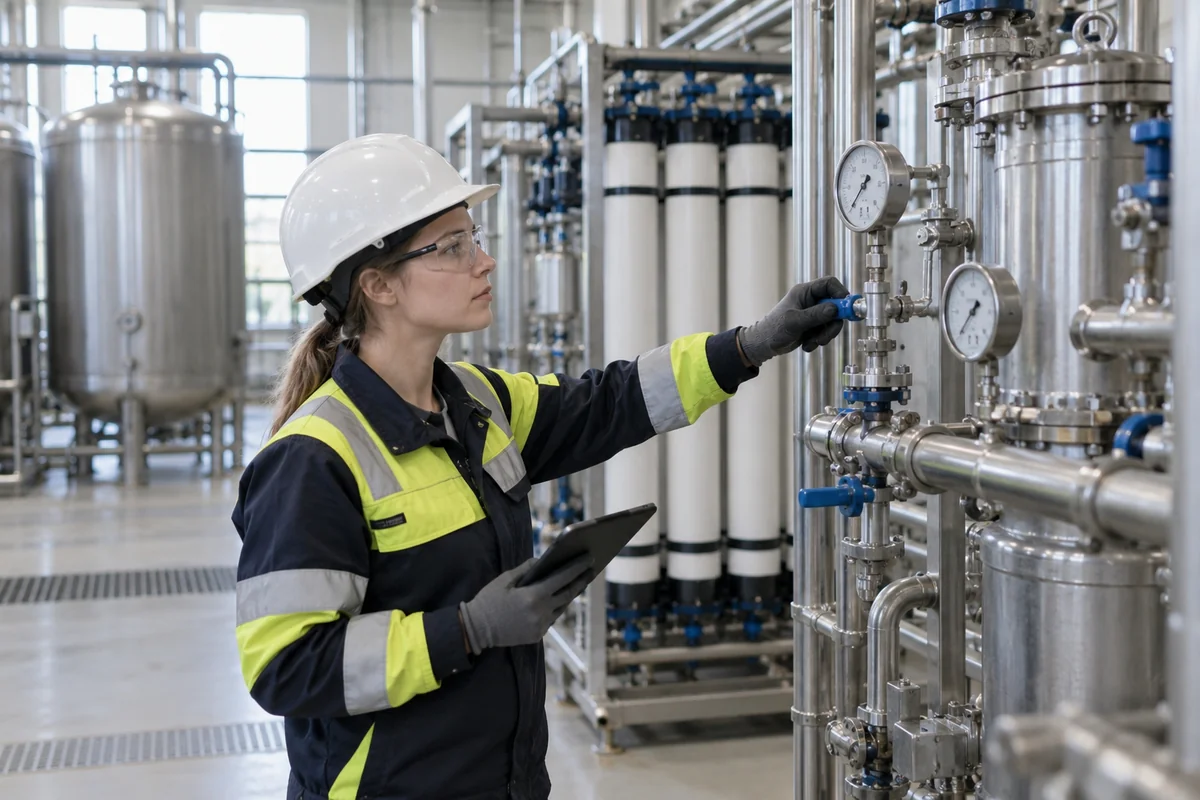
To set up the next run, fit valves and piping from tanks to equipment, then pump material through.
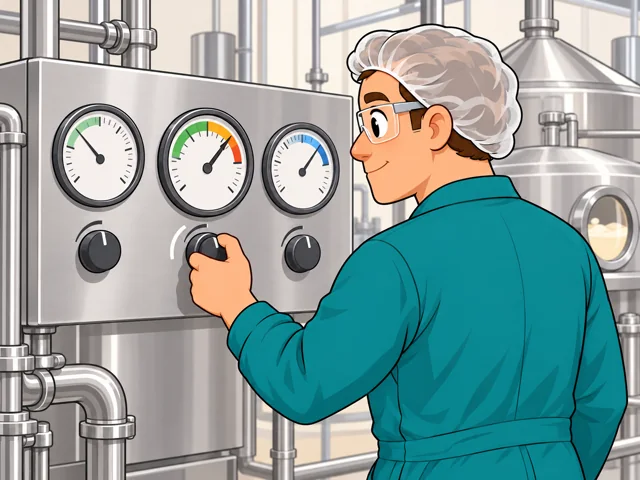
Watch flow, pressure, and heat gauges, and change control settings when a reading leaves its set range.
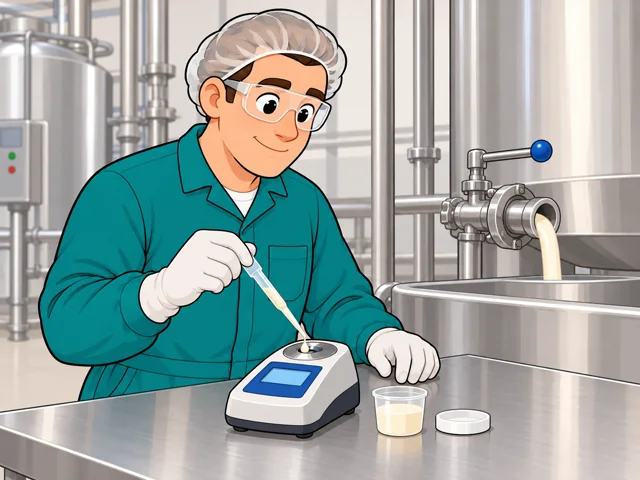
Pull a product sample, and in milk evaporation, test that the finished liquid reaches its required solids level.
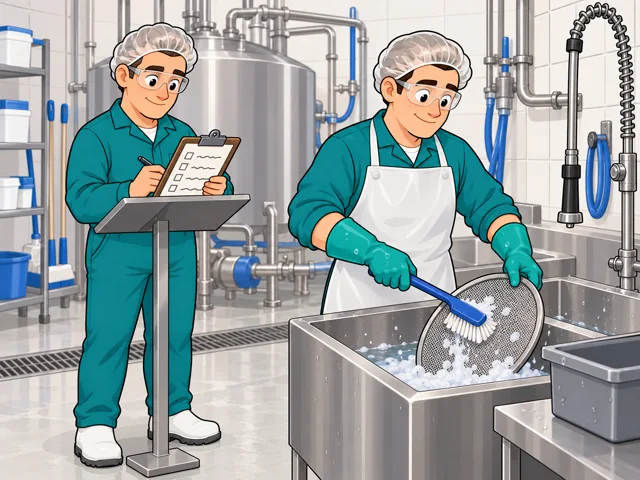
Wash piping, screens, and tanks to clear the last run, and at food plants, fill in sanitation records.
United States · 2025
United States · 2025
United States · 2025–2035
Quick orientation
A high school diploma or equivalent is typical, followed by training on the plant's equipment.
National median annual pay in 2025; the hourly median was $24.81.
Employment is projected to shrink from 2025 to 2035, with about 5,200 openings per year.
Some dairy separators can automatically regulate flow and monitor equipment condition, giving you more information while reducing manual adjustments.
You still check the product, investigate trouble, and verify cleaning.
How much adjustment becomes automatic will depend on the equipment a plant installs. Your balance of screen monitoring and hands-on work may change.
Pay in context
These national figures cover separation and related processing-machine operators, including dairy operators—not just people running stills.
The 2025 median was $51,610 a year, or $24.81 an hour. The lowest-paid 10% earned $36,200 or less; the highest-paid 10% earned $79,750 or more. These are wage percentiles, not beginner and experienced-worker rates.
For historical context, average annual pay in May 2023 was $54,480 in beverage manufacturing and $51,200 in dairy product manufacturing. These industry averages are not current offers or starting salaries.
The 2025–2035 projection combines a 5.7% employment decline with about 5,200 openings annually. Openings include replacement needs; they do not mean the occupation is adding that many jobs.
You can enter through an employer that trains operators or build equipment knowledge in a process-technology program.
After entry
This starts where the entry routes leave off: early work, growing capability, and advancement or specialization.
Learn your machine's normal operation and make sampling, startup checks, and production records consistent.
Build troubleshooting skills by learning how pumps, instruments, and separation equipment affect one another.
A distillation lead schedules runs and trains operators. This adds coordination and teaching to equipment knowledge; hazardous-waste sites also require specific safety training.
You work around evaporators and bulk liquid ingredients. Product concentration and sanitation both matter, so cleaning-system checks and food-production records are part of the shift.
Stills and evaporators recover material from liquid waste. Laboratory samples help check the recovered product, while hazardous-material handling and operating limits shape how runs proceed.
Try it
Mix a little clean sand into room-temperature water. Pour equal amounts through a kitchen strainer and a paper coffee filter into separate clear containers. Record flow time, clarity, and what each catches. Notice whether comparing the results makes you want to investigate further.
Stay safe: Do not drink the water; this demonstrates separation, not purification.