
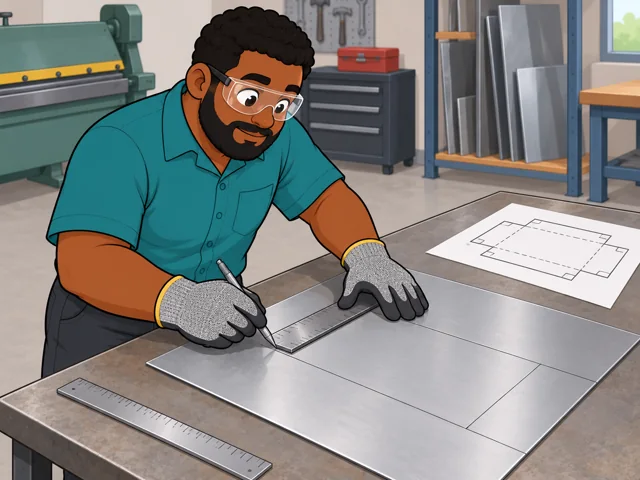
Mark the cut and bend lines
Study the drawing first, then mark each cut and bend with a ruler, square and scribe.
Career profile
Sheet metal workers shape ducts and custom parts, fitting them together in shops or buildings.
You plan how a flat sheet must be cut, then bent, to fit a 3D space. The reward is your measurements becoming an installable piece.
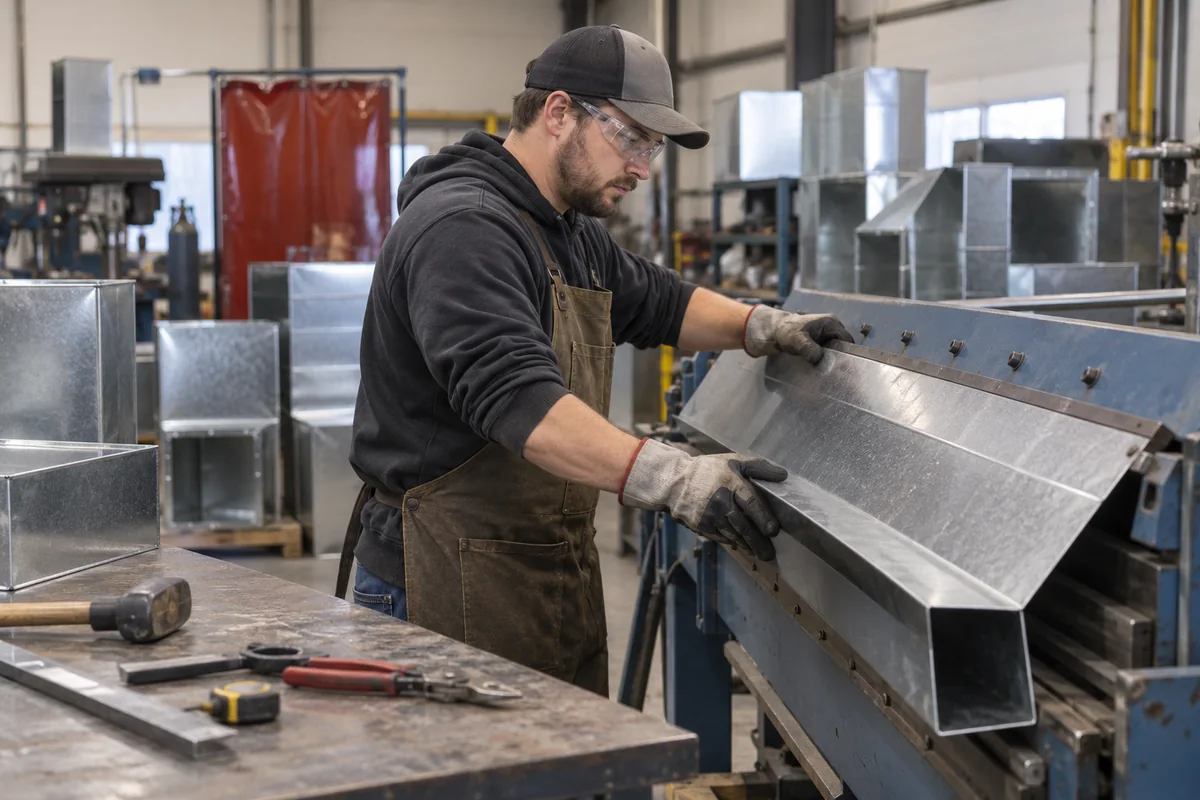
Study the drawing first, then mark each cut and bend with a ruler, square and scribe.
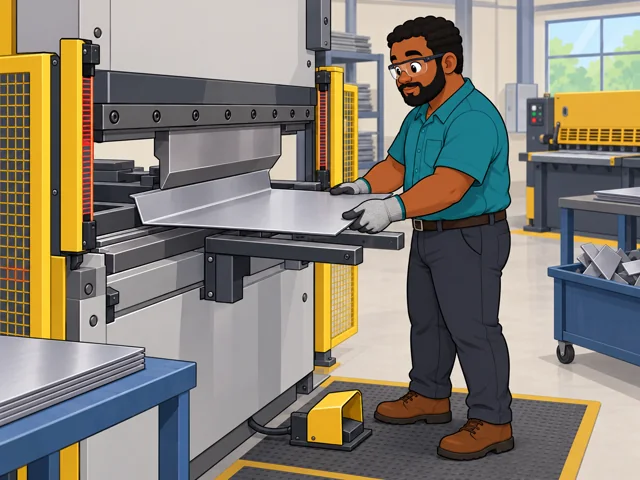
You cut with shears and bend on a press, though some shops use computer-run machines instead.
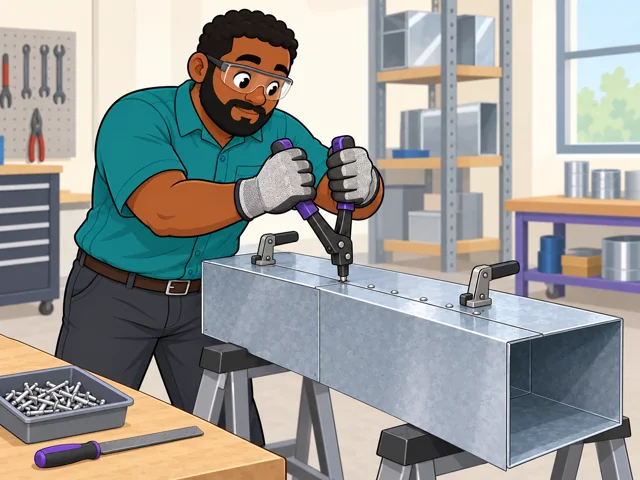
Join seams with rivets, bolts or welds depending on the product, then file or grind rough joints.
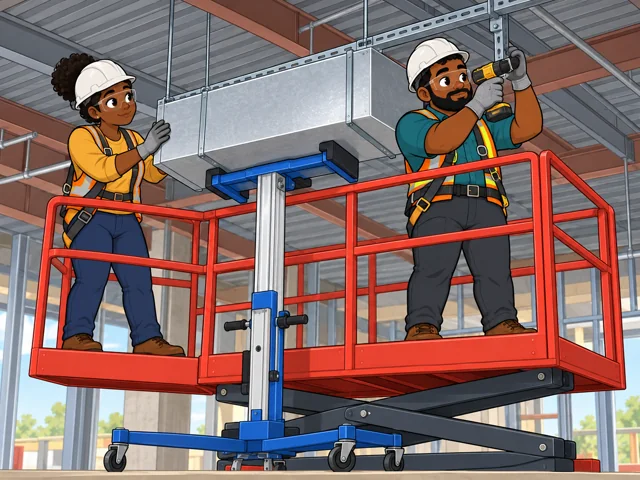
Attach duct sections to supports, measuring and altering any that does not fit with shears or a drill.
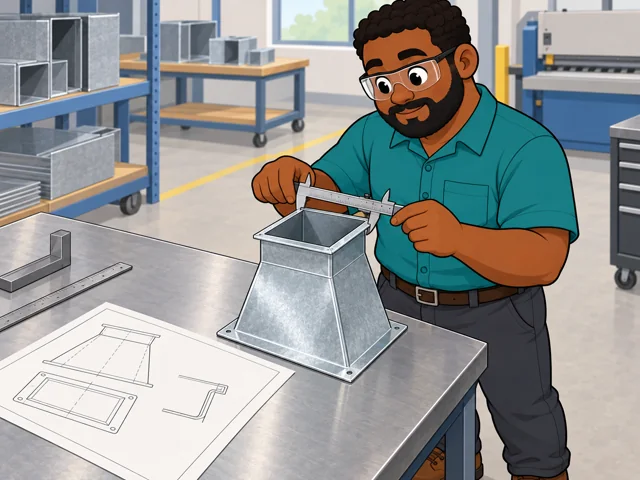
Use calipers on the finished part, then compare those numbers to the drawing for size or alignment errors.
United States
United States · May 2025
United States · 2025–2035
Quick orientation
Construction workers usually enter through apprenticeships; manufacturing workers may learn on the job or at technical school.
National median, equivalent to $29.71 an hour.
About 9,800 openings a year nationwide, on average, over 2025–2035.
Software can turn drawings into machine instructions. Some shops already use automated equipment to measure, cut, bend, and fasten metal.
You still need to check the finished piece and work out how it fits the installation. A correctly cut part can still need adjustment on site.
How much fabrication stays on site may change as more ductwork arrives ready-made. The balance between operating machines and shaping parts by hand will vary across shops and projects.
Pay in context
The workplace matters, and an apprentice usually starts below a fully trained worker.
The median was $61,800 a year, or $29.71 an hour. The lowest-paid 10% earned below $38,630; the highest-paid 10% earned above $105,650. These are wage percentiles, not starting and experienced-worker rates.
Annual median pay was $63,100 at specialty trade contractors and $51,570 in manufacturing. Those are industry-wide comparisons for sheet metal workers, not offers from individual employers.
Apprentices usually earn less than fully trained workers, with increases as they learn more skills. Ask a program for its starting wage and progression schedule.
Employment is projected to grow 2.5% from 2025 to 2035, with about 9,800 openings a year. Many openings come from workers changing occupations or leaving the workforce.
A high school diploma or equivalent is typical; algebra, geometry, and drawing are useful preparation. Some states require a sheet metal worker license, so check the rules where you plan to work.
After entry
This starts where the entry routes leave off: early work, growing capability, and advancement or specialization.
Build reliable habits for reading drawings, marking metal, and using machines safely. Check your pieces against the required dimensions.
Develop from individual cuts and bends to planning the sequence: lay out the piece, form it, join it, and check the fit.
With experience, you may train apprentices or supervise other workers.
You work around cutting and forming equipment and may spend much of the day standing. Large production runs can involve automated machines and repeated operations.
You fit assemblies into a building rather than staying at a workstation. Tight spaces and ladders can shape the day; outdoor installations also bring weather exposure.
Try it
Use paper, a ruler, scissors, and tape to make a short rectangular duct with two open ends. Draw the flat pattern first, leaving a tab for the seam. Fold it, join it, and check whether both ends match your planned dimensions. Notice whether you enjoy working backward from a finished shape to its flat layout.
Stay safe: Use paper for this exercise; sheet metal edges and fabrication tools require proper training.