
Trace a train-control fault
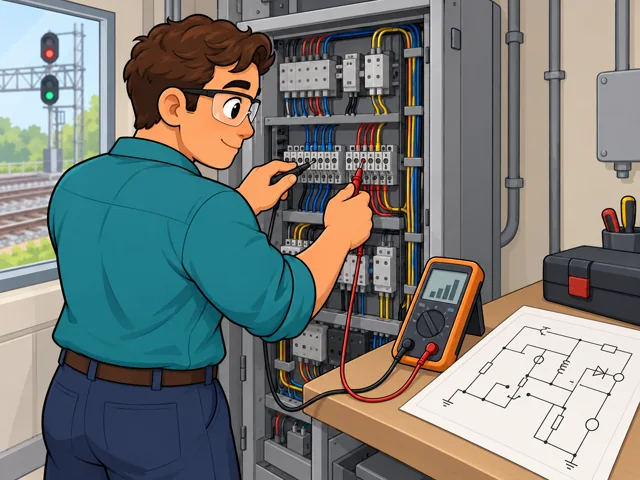
When train-control equipment won't respond, compare meter readings with the wiring diagram to locate the electrical fault.
Career profile
Signal and track switch repairers keep rail signals, crossing gates and switch-moving gear working.
A fault can hide in the wiring or in a part that moves, and this job asks you to understand both.
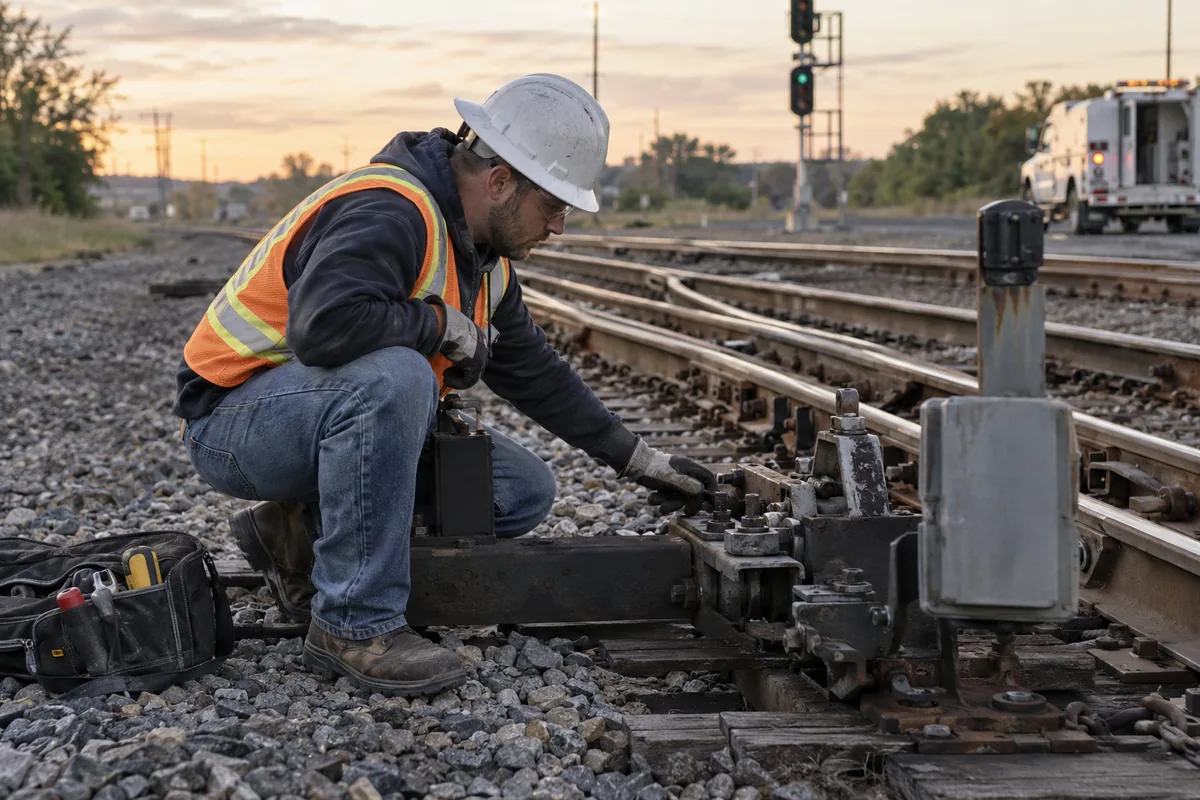
When train-control equipment won't respond, compare meter readings with the wiring diagram to locate the electrical fault.
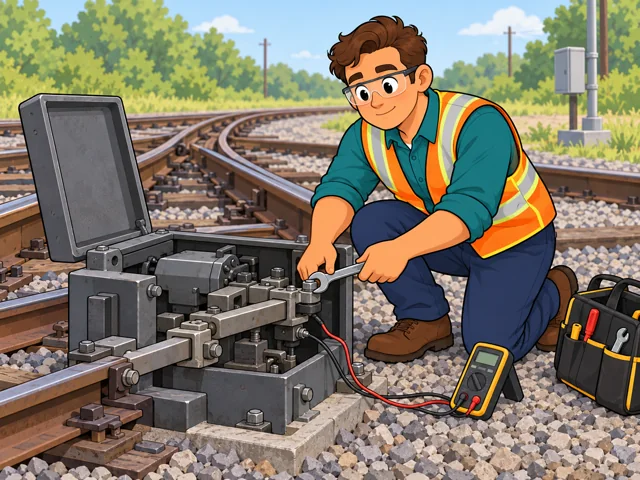
You inspect the mechanism that throws a track switch into position, working with hand tools and test equipment.
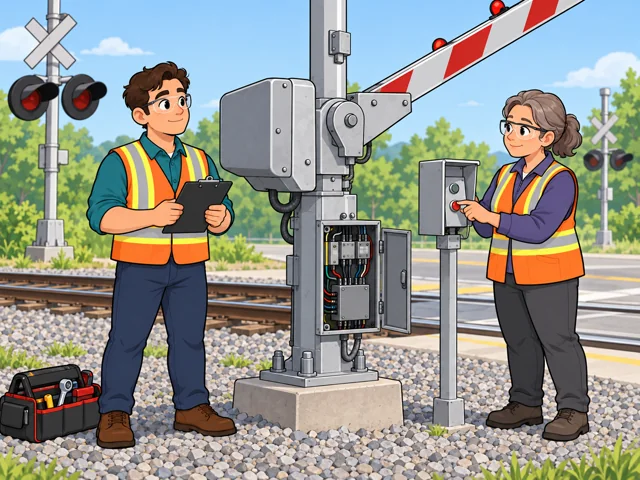
Examine a crossing gate's wiring connections and moving parts, tighten loose bolts, then test whether it works.
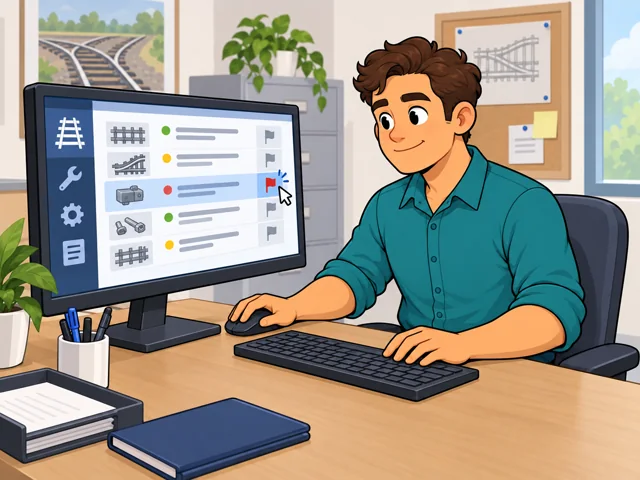
Log the fix and parts in maintenance software, and flag recurring faults for whoever works on them next.
United States · 2025–2035
United States · May 2025
United States · 2025–2035
Quick orientation
A high school diploma or equivalent is the typical starting education; railroad training develops the signal skills.
National median for signal and track switch repairers, equivalent to $44.45 an hour.
About 800 openings a year are projected nationally, including replacement openings.
Computer diagnostic tools help locate faults. Some transit systems are also replacing older signals with equipment that exchanges train-position information through communications networks.
You still test the physical equipment and decide what needs repair.
As systems change, the balance between tracing wiring faults and diagnosing networked equipment may shift. How much troubleshooting becomes automatic will depend on the system.
Pay in context
The national figures cover signal and track switch repairers across employers; they are not starting-pay offers.
In May 2025, median pay was $92,460 a year, or $44.45 an hour. The 10th-to-90th-percentile range was $62,610–$119,550 annually. Those percentiles describe wage differences, not career stages.
Railroad wage schedules can set separate rates for apprentices and qualified maintainers. Ask which rate applies when you start.
Employment is projected to grow 1.8% from 2025 to 2035, with about 800 openings annually. Openings include replacing workers who leave the occupation, so they exceed the number of newly created jobs.
Choose between learning through railroad employment and bringing electronics preparation to a transit technician role.
After entry
This starts where the entry routes leave off: early work, growing capability, and advancement or specialization. This path also has a credential or licensing boundary; see the requirements and limits.
Learn the local equipment and make inspections, meter readings, and repair records consistently accurate.
Build skill in diagnosing hardware and software problems, including deciding when equipment needs shop repair.
A next step in transit is train control foreworker: plan the shift's work, help technicians solve difficult faults, and review repairs. Technical experience and leadership ability matter.
Work outdoors on signals and road crossings across a territory. Travel and on-call repairs can shape your week.
Maintain switches and equipment that sends routing instructions to trains, with control-center coordination. Work can alternate between shops and field locations on varied shifts.
Try it
Draw a pretend crossing-warning circuit on paper with a battery, switch, wires, and lamp. Mark one broken connection, then explain how you would narrow down its location. Notice whether tracing the fault interests you.
Stay safe: Keep this a paper exercise; never enter railroad property or touch railway equipment.