
Career profile

Slaughter and Meat Packing Worker

Slaughterers and meat packers prepare animal carcasses, cut them precisely, and package meat for sale.

Your station could be sawing carcasses in half or wrapping finished cuts. Either way, good work takes steady hands and close focus on each piece.
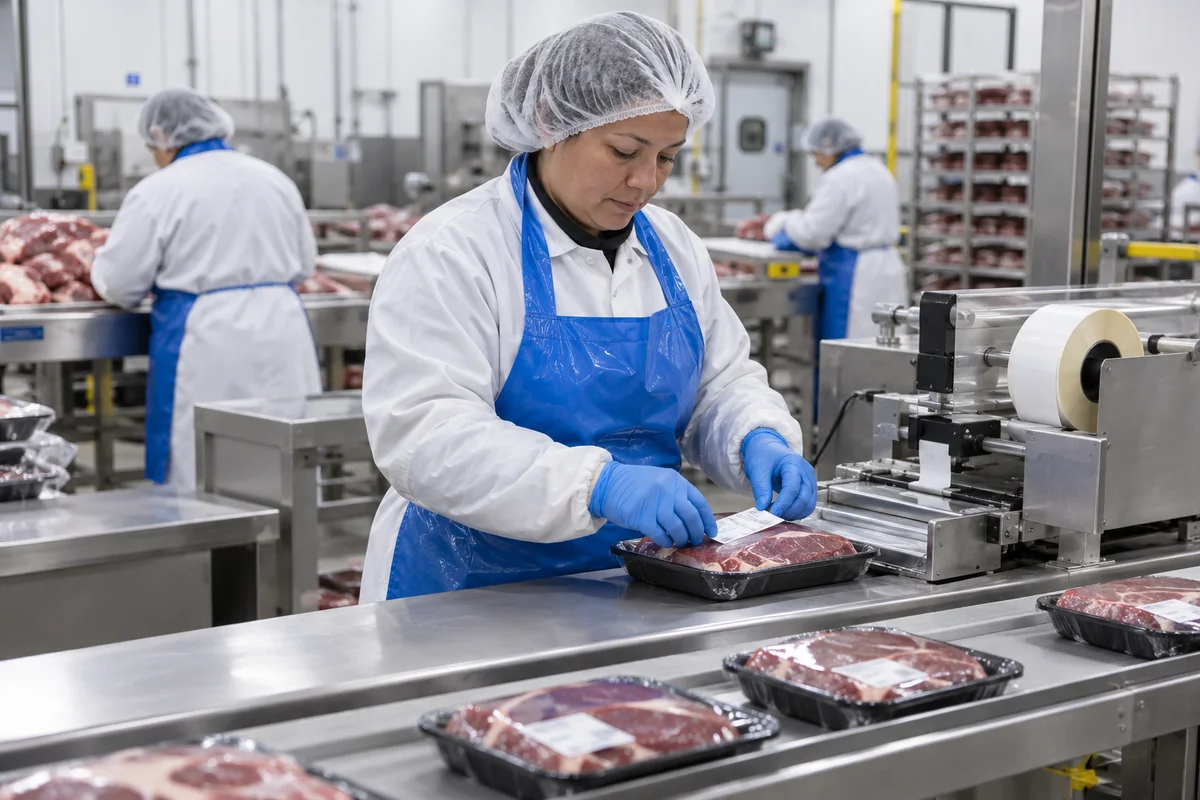
An adult meat packing worker sealing and labeling packaged cuts on a clean industrial food processing line, no gore or readable text.

A day in the life

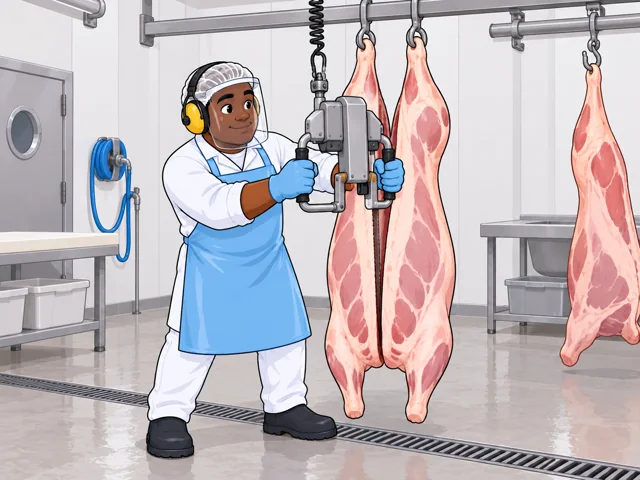
1A meat processing worker uses a suspended saw with both hands to split a hanging dressed carcass.

Saw carcasses into smaller sections

In slaughter-floor jobs, you cut carcasses into smaller pieces with a meat saw so they're easier to handle.
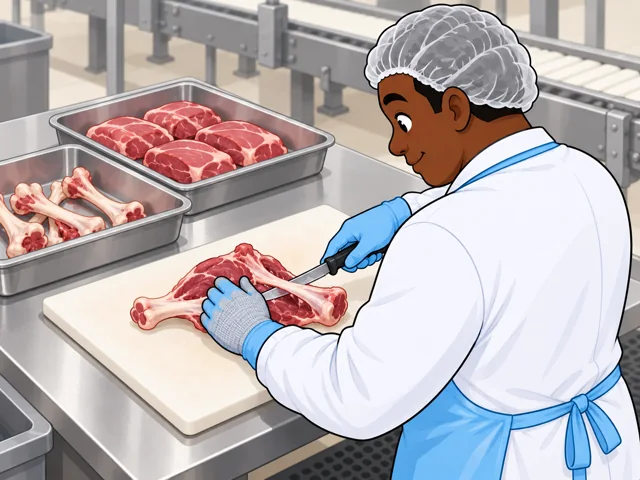
2The worker carefully separates meat from bone with a boning knife at a production-line cutting station.

Bone and trim standard cuts

Remove bones and trim meat into standard cuts, though line workers may repeat just one of those steps.
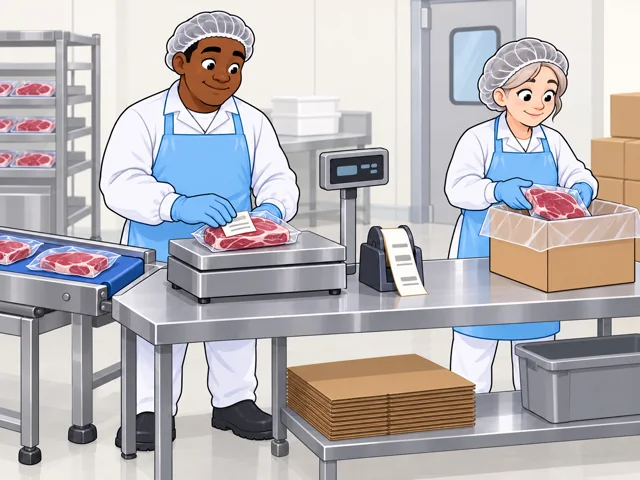
3The worker checks a bagged meat cut on a scale and applies a label while an older light-skinned woman packs finished cuts into a box.

Weigh, label, and pack meat

Weigh the meat, label it, and bag or box it for shipping, still minding quality and food safety.

4The worker retrieves a sharpened replacement knife from a protective rack after securing his dull knife in a separate holder.

Keep knives sharp for your hands

Once cutting takes more force, grab a sharpened knife or follow the plant's own sharpening process.

Quick facts

Preparation

Learn on the job

United States · 2025

Pay

$40,130/year

United States · 2025

Outlook

2% projected growth

United States · 2025–2035

Quick orientation

Preparation, pay & outlook

Preparation

Learn on the job

Typically no formal educational credential; short-term workplace training.

Geography
United States
Period
2025

Pay

$40,130/year

National median, equivalent to $19.29 an hour.

Geography
United States
Period
2025

Outlook

2% projected growth

About 7,700 openings a year on average over 2025–35.

Geography
United States
Period
2025–2035

Fit, tradeoffs & changing tools

Things to weigh

  • Repeated gripping and cutting can strain your hands and arms. Noise, slippery floors, and sharp equipment also make safety a daily concern.
  • Cold rooms and long periods standing are common. Some shifts include early mornings, evenings, weekends, or holidays.
  • Some jobs involve killing animals and handling carcasses. Consider your comfort with that before choosing a department.

Where AI may help

Researchers have demonstrated camera-guided robot arms slicing and trimming pork loins. These are experimental examples of machines sharing cutting work.

What people still lead

Workers still handle knives, check product quality, and pack meat in production jobs. In the robot trials, human input helped guide cuts.

What we can’t predict yet

How much cutting robots take over will depend on their ability to handle different meat shapes safely and at a workable cost.

Pay in context

Earnings

The 2025 national median was $40,130 a year, or $19.29 an hour. Treat it as a comparison point when reading an offer.

The national spread

The lowest-paid 10% earned $33,340 or less annually; the highest-paid 10% earned $51,090 or more. These are wage thresholds, not beginner and experienced-worker rates.

Geography
United States
Period
2025
Pay basis
Annual wage percentiles for slaughterers and meat packers, all industries

Pay in food manufacturing

The annual median in food manufacturing was $41,300, compared with $40,130 for this occupation across all industries. A particular plant may pay above or below either figure.

Geography
United States
Period
2025
Pay basis
Annual median wages for the same occupation; food manufacturing versus all industries

Openings and growth

Employment is projected to grow 2% from 2025 to 2035, with about 7,700 openings annually on average. Openings include replacement needs as well as growth.

Geography
United States
Period
2025–2035
Pay basis
Employment projection and annual-average occupational openings; not compensation

Getting started

Start in production

Paid
What the route involves
Apply for entry production work and learn simple cuts, tool care, and food safety with an experienced worker.
What it can lead to
You begin earning while building the skills needed for a cutting or packing station.

Take a processing certificate

What the route involves
The University of New Hampshire’s Meat Processing & Food Safety Certificate combines three online courses and exams with an in-person processing lab, completed within one year.
What it can lead to
You earn a noncredit certificate of completion and practice processing, knife handling, and packaging before seeking work.
What to check
This optional route requires internet access and travel to the New Hampshire lab. Courses carry registration fees; check current costs and enrollment requirements.

Direct employment is the usual starting point. Federal rules bar workers under 18 from most slaughtering and packing jobs; approved apprentice and student-learner exemptions are limited.

After entry

Career paths

This starts where the entry routes leave off: early work, growing capability, and advancement or specialization.

  1. Get established

    Build consistent tool-care and food-safety habits while learning your first station.

  2. Learn more cuts

    Train for additional cutting tasks, giving yourself time to learn each new movement.

  3. Develop a specialty

    Build skill in precision boning or carcass splitting as a next step beyond your initial station.

Where you can work

Slaughter floor

You work with whole carcasses and specialized processing equipment. Some stations involve live animals or exposure to blood, making this a distinct choice within a plant.

  • Indoors
  • Physical demands
  • Safety-sensitive

Cutting and packing rooms

The focus shifts to meat portions and finished packages in chilled rooms. A beef plant may run separate day and evening shifts for cutting, weighing, labeling, and boxing.

  • Indoors
  • Shift work
  • Physical demands
  • Safety-sensitive

Try it

See whether the job clicks before you commit to the path.

Draw a paper map from a whole animal carcass to boxed meat. Mark where splitting, boning, weighing, and wrapping happen. Choose the station you would most want to learn about and explain why; this can reveal which part of the work interests you.

Stay safe: Keep this a paper exercise; it does not require raw meat or cutting tools.

Explore more careers

Sources

  1. O*NET OnLine. Slaughterers and Meat Packers. Accessed 2026-10-03.
  2. U.S. Bureau of Labor Statistics. Occupational projections and worker characteristics. Accessed 2026-10-03.
  3. O*NET OnLine / U.S. Bureau of Labor Statistics. Slaughterers and Meat Packers wages: United States and New Jersey. Accessed 2026-10-03.
  4. U.S. Bureau of Labor Statistics. Food Manufacturing: NAICS 311. Accessed 2026-10-03.
  5. U.S. Bureau of Labor Statistics. Meat, Poultry, and Fish Processing Workers. Accessed 2026-10-03.
  6. Cargill. General Production — Dodge City, Kansas. Accessed 2026-10-03.
  7. U.S. Department of Labor. Fact Sheet #43: Child Labor Provisions for Nonagricultural Occupations. Accessed 2026-10-03.
  8. University of New Hampshire. Meat Processing & Food Safety Certificate. Accessed 2026-10-03.
  9. Occupational Safety and Health Administration. Ergonomics Program Management Guidelines for Meatpacking Plants. Accessed 2026-10-03.
  10. Occupational Safety and Health Administration. Meatpacking — Overview. Accessed 2026-10-03.
  11. Ryan Wright, Sagar Parekh, Robin White and Dylan P. Losey. Safely and Autonomously Cutting Meat with a Collaborative Robot Arm. Accessed 2026-10-03.

Your message goes to the Great Jobs team. How we use your information