
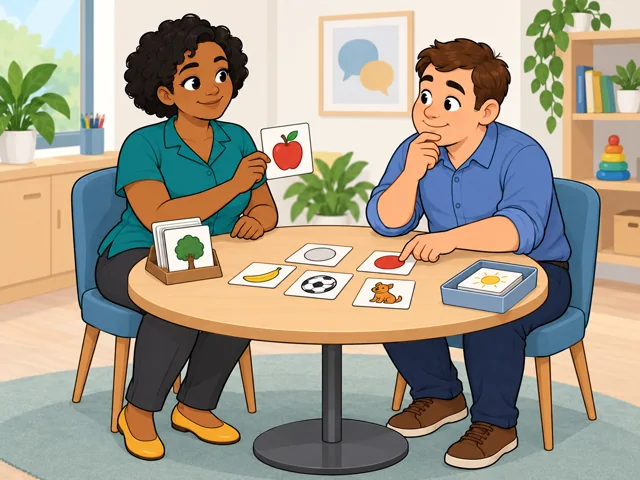
Run a picture-card talking game
Keep the game moving while people describe pictures or build sentences, giving each one a turn to answer.
Career profile
Speech-language pathology assistants (SLPAs) practice talking and language with people, noting what helps them communicate.
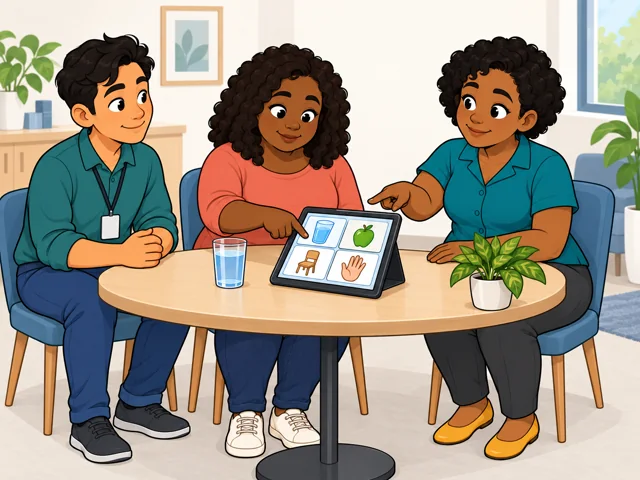
Picture cards can drive a back-and-forth talking game. Afterward the SLPA notes which answers needed a prompt, so the speech-language pathologist (SLP) sees progress.
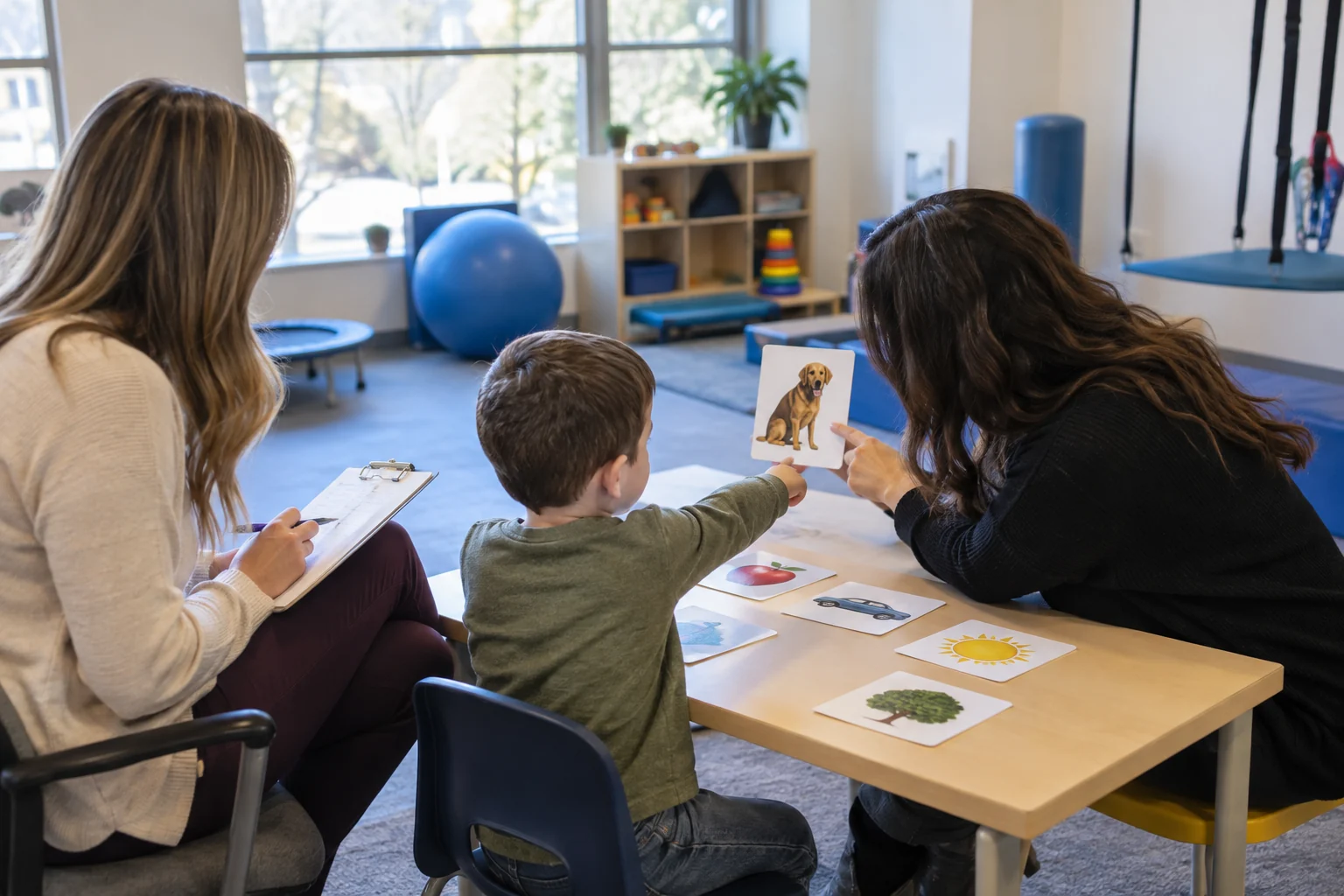
Keep the game moving while people describe pictures or build sentences, giving each one a turn to answer.
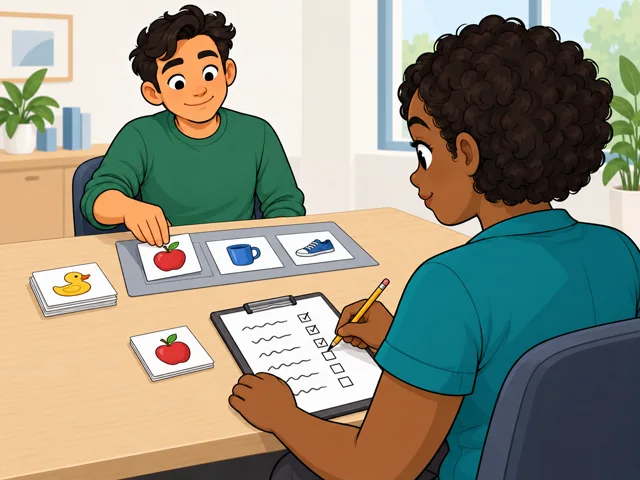
Mark each turn's answers and any prompt that helped, then tell the SLP if answers start shifting.
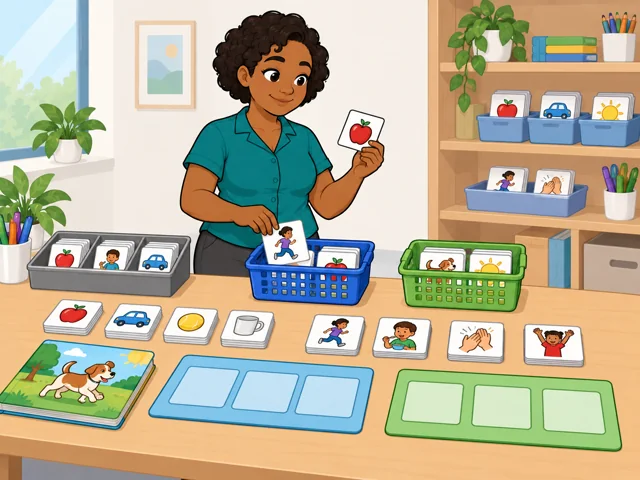
Pick picture cards or a book that fit the upcoming session's goals, then set out enough for everyone.
In certain roles, you load device messages and help people rehearse talking with relatives or staff.
United States
United States · 2025
A separate national growth rate and annual openings estimate are not available for assistants.
Quick orientation
Routes include a two-year assistant degree or a related bachelor's degree with additional preparation. Check your state's requirements before enrolling.
Among 128 hourly-paid assistants responding to a 2025 professional survey; not a national workforce estimate.
A separate national growth rate and annual openings estimate are not available for assistants.
Artificial intelligence (AI) can help draft practice materials and note templates. You must check the output and protect private information.
You notice whether someone is engaged, offer encouragement, and describe their response accurately to the SLP.
How much speech feedback software can take over remains uncertain: tools that recognize clear sounds can be less reliable when speech sounds are difficult to produce.
Pay in context
Compare hourly rates with paid hours, the work calendar, and cancellation policies.
The American Speech-Language-Hearing Association (ASHA) surveyed assistants in 2025. Hourly respondents reported a $32.50 median and a $20–$95 range. At 2,080 paid hours, that median equals $67,600 annually—not a promise of those hours. A separate salaried group reported a $54,500 annual median. These are small voluntary samples with differing schedules.
In California's Sierra Unified district, the advertised range is $33.09–$47.57 an hour for 7.5-hour days across 182 duty days. A school-year job does not automatically provide year-round paid hours.
For a part-time assistant role around Cedar Park, Texas, advertised estimated annual pay is $31,000–$81,000. The hours and visit volume behind that estimate are unspecified. Ask how visits, travel, documentation and cancellations affect your actual pay.
Check your state licensing board and education department before choosing a program. Education, registration or licensing, and supervision requirements can differ by state and setting. These routes address national certification preparation.
After entry
This starts where the entry routes leave off: early work, growing capability, and advancement or specialization. This path also has a credential or licensing boundary; see the requirements and limits.
Review your session skills and records with your supervising SLP. Use feedback to make your notes clear enough for someone else to follow.
Develop confidence with communication devices: programming messages, troubleshooting their use, and helping families practice.
If you want to assess disorders and design treatment, explore becoming an SLP. That typically means a master's degree, supervised clinical experience, an exam and state licensure; assistant experience alone does not qualify you.
Your sessions connect to students' educational goals. You work with the school team and keep service records within a school-year calendar.
Play-based sessions bring children and caregivers into the clinic. In multidisciplinary practices, your coworkers may include occupational and physical therapists and behavioral health providers.
You travel within a service area for individual visits, help families carry communication practice into daily life, and enter session notes electronically.
Try it
With a willing friend, use five everyday pictures for a short description game. Take turns asking for a description, waiting, and recording whether an extra question helped. Notice whether you enjoy both encouraging conversation and keeping track of responses.
Stay safe: Keep this an ordinary game, not a test or treatment of anyone's speech.