

Decide what needs to be ready
Weigh forecasts, incoming orders, current stock and production limits to decide which materials and goods you need.
Career profile
Supply chain managers plan purchasing, storage and shipping, adjusting when demand, vendors or shipments change.
Some people enjoy tracing one delay out to everything it touches. Here, that tangle lands on your desk to sort out.

Weigh forecasts, incoming orders, current stock and production limits to decide which materials and goods you need.

Track stock, deliveries, warehousing and outgoing shipments, and dig into shortages, overstock, waste or missed service targets.

Score vendors on quality and timeliness, discuss forecasts, negotiate terms and demand catch-up plans from those missing commitments.

Get purchasing, production, sales, finance, the warehouse and carriers in step when a shipment slips or forecasts change.
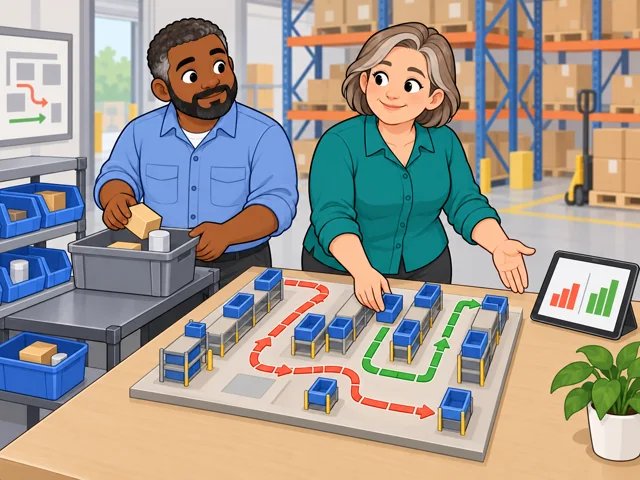
Set metrics, map how work moves, compare technology options and roll out changes in planning, warehousing or distribution.
United States · O*NET updated 2026
BLS reports a May 2025 national median annual wage of $107,230 for the broader Transportation, Storage, and Distribution Managers group, not an exact Supply Chain Manager figure.
The broader BLS group is projected to grow 6% from 2025 to 2035, with about 18,300 openings per year. These are not Supply Chain Manager-only estimates.
Quick orientation
In O*NET’s survey, 67% said a new hire needs a bachelor’s degree. The occupation also usually calls for substantial related experience or training; employers set their own mix.
BLS reports a May 2025 national median annual wage of $107,230 for the broader Transportation, Storage, and Distribution Managers group, not an exact Supply Chain Manager figure.
The broader BLS group is projected to grow 6% from 2025 to 2035, with about 18,300 openings per year. These are not Supply Chain Manager-only estimates.
Forecasting, modeling, ERP, inventory, scheduling, and reporting systems can combine records, compare scenarios, and flag changes that need attention.
People still decide which tradeoffs are acceptable, negotiate with suppliers, align departments, lead teams, and own the response when the plan fails.
Employers will adopt tools at different speeds and divide tasks differently, so the effects on entry roles, staffing, and pay remain uncertain.
Pay in context
Use the national benchmark to understand the scale of pay, not as a starting salary or a promise of an offer.
The broader Transportation, Storage, and Distribution Managers occupation had a median annual wage of $107,230: half earned more and half earned less. The median hourly wage was $51.55.
In May 2025, the 10th-percentile annual wage was $65,120 and the 90th-percentile wage was $194,900. These are wage percentiles, not starting and senior salaries.
Among the major industries BLS listed for the broad group, median annual wages ranged from $100,670 in wholesale trade to $156,720 in management of companies and enterprises.
This is usually not a first job. Employers commonly look for related experience, and many Supply Chain Manager positions also expect a degree.
After entry
This starts where the entry routes leave off: early work, growing capability, and advancement or specialization.
Learn the employer’s products, suppliers, service targets, planning system, and handoffs. Become reliable at keeping records accurate and escalating problems early.
Take responsibility for a product line, supplier group, planning process, inventory category, or operating area. Track results and coordinate recovery when performance slips.
Move into larger networks, process redesign, staff leadership, technology selection, or supply-chain strategy as your judgment and operating record develop.
Work is mostly indoors and desk-based, with much of the coordination happening by screen, phone, or meeting rather than beside moving inventory.
These roles stay closer to active storage and loading areas, where moving equipment, protective gear, and extended operating schedules may shape the day.
Some roles include visits to suppliers, warehouses, plants, or other network points to review capacity, performance, processes, or disruptions.
Try it
Choose a familiar product and sketch five steps from raw material to customer. Then delay one step by a week: mark who needs to know, what data they need, and which tradeoff you would decide first. Notice whether that systems puzzle holds your attention.