
Career profile

Tailor and Dressmaker

Tailors make new clothes, mend existing ones and alter each piece to fit its wearer.

Change a hem even slightly and the whole garment can hang differently. So you settle on the alteration first and stitch it afterward.
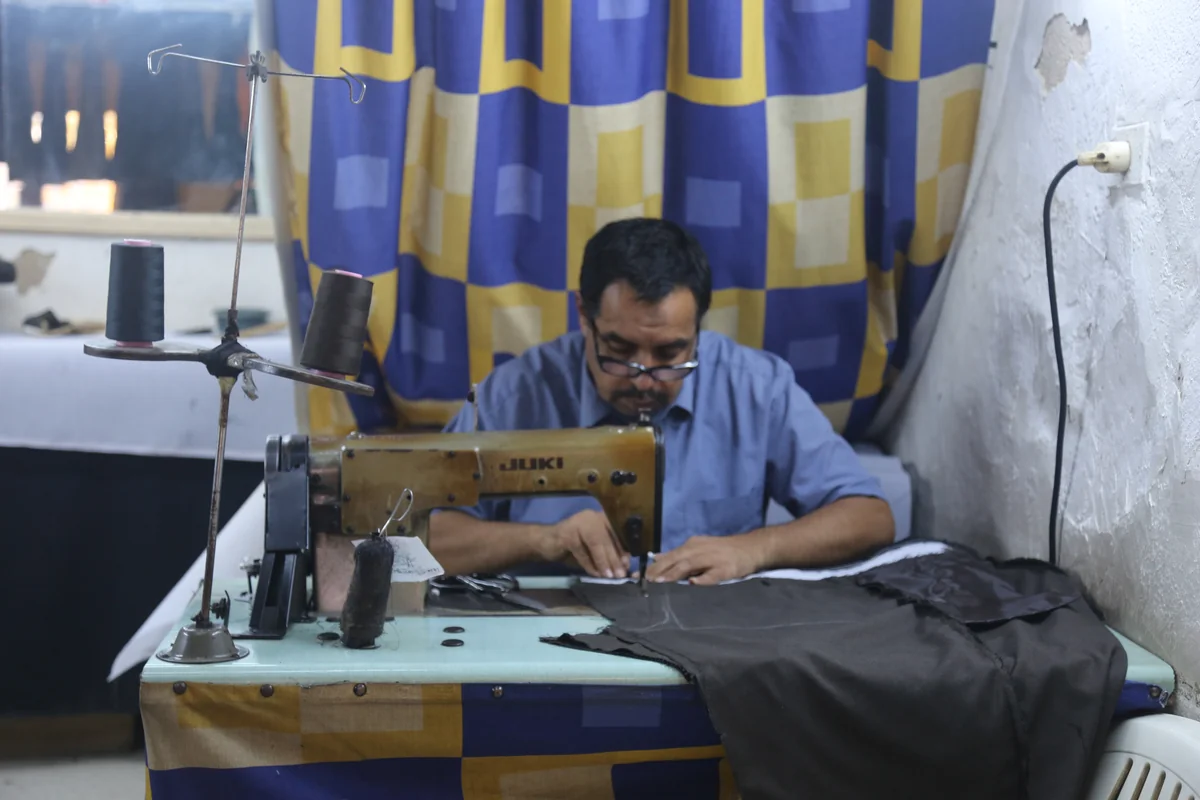
Dressmaker sews a garment at a machine in a tailoring shop.
Faiza affes / Wikimedia Commons, CC BY-SA 4.0

A day in the life

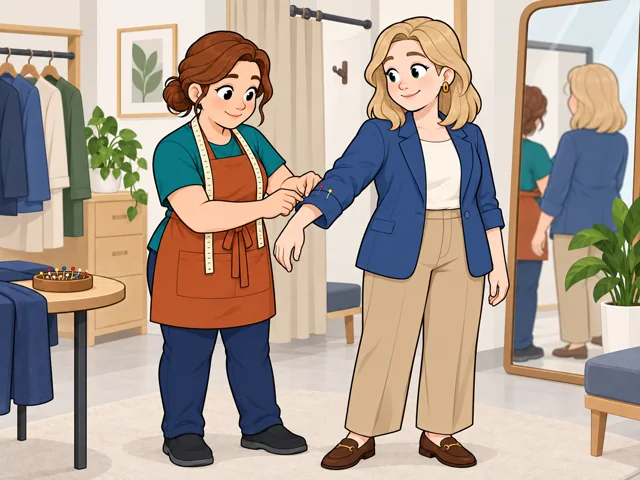
1A tailor pins a folded jacket cuff to shorten an adult customer's sleeve, with a measuring tape around her neck.

Measure and pin new lengths

Take the customer's measurements with a tape measure, then pin sleeves or trouser legs at the new length.
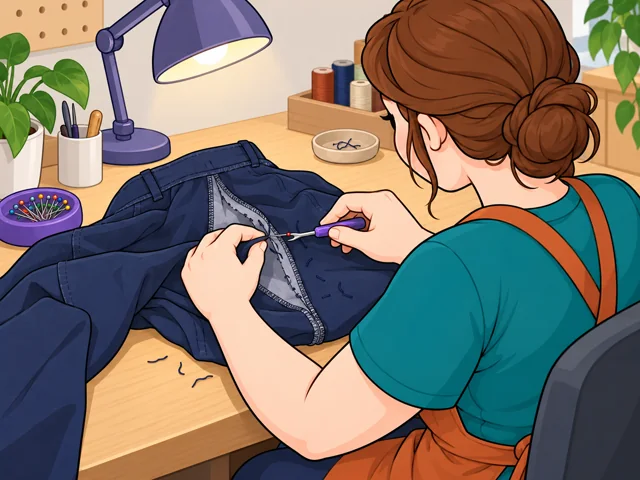
2A tailor uses a seam ripper to remove stitches from an inside-out trouser seam.

Unpick seams with a ripper

Before taking a garment in or letting it out, pull out the old stitching with a seam ripper.
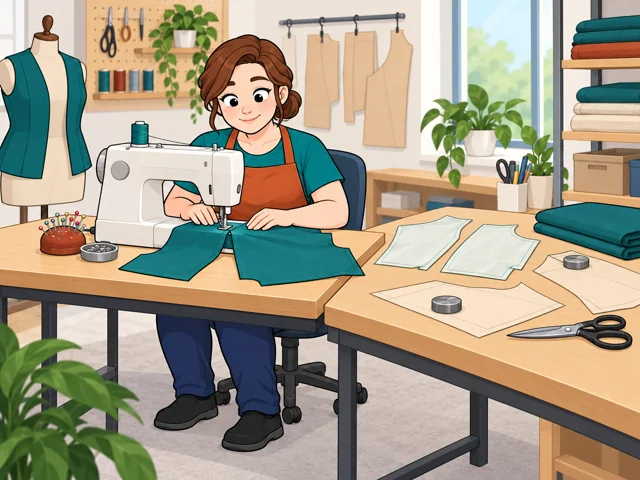
3A tailor machine-stitches cut fabric panels beside a cutting table holding paper patterns, shears, and separate lining pieces.

Cut and sew a new garment

In custom jobs, cut pieces from a pattern and machine-sew them, minding the order for linings and edges.
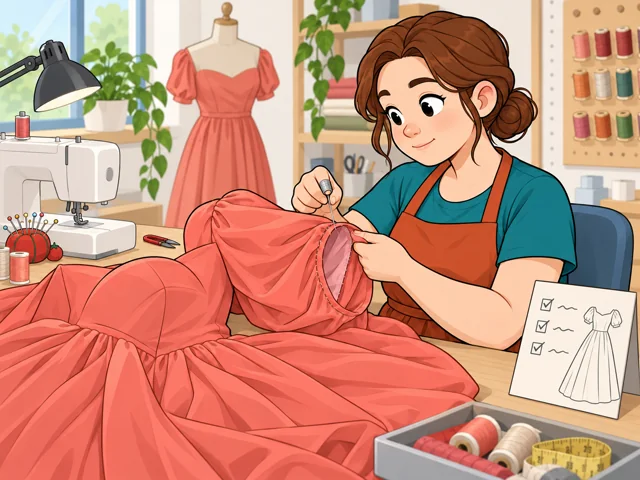
4A tailor hand-finishes a gown's newly attached sleeve beside an alteration card and sewing machine.

Resize a gown in the workroom

Following the fitting's alteration card, resize a dress or add sleeves, switching between machine sewing and hand finishing.
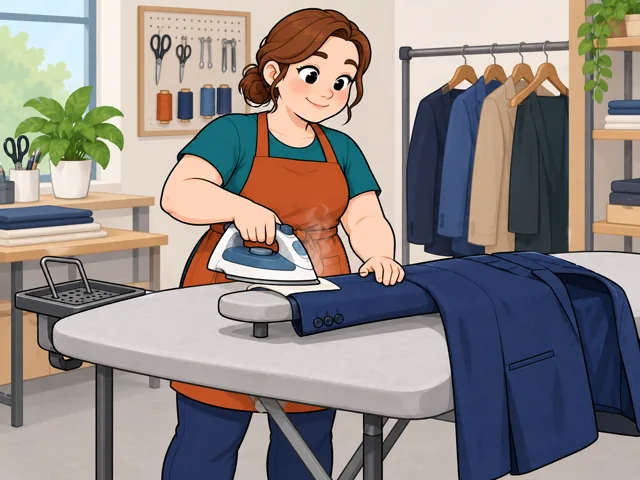
5A tailor presses an altered jacket cuff through a pressing cloth on a sleeve board.

Press the finished garment

Press the garment flat with an iron or pressing equipment, finishing the sewn areas for a smooth look.

Quick facts

Preparation

Learn on the job

United States · 2025

Pay

$41,640/year

United States · 2025

Outlook

8.8% decline

United States · 2025–2035

Quick orientation

Preparation, pay & outlook

Preparation

Learn on the job

Typical entry requires no formal educational credential, followed by on-the-job training. Employers can set additional requirements.

Geography
United States
Period
2025

Pay

$41,640/year

The national median for tailors, dressmakers, and custom sewers is about $20.02 an hour.

Geography
United States
Period
2025

Outlook

8.8% decline

Employment is projected to shrink, with about 3,700 openings a year across the occupation.

Geography
United States
Period
2025–2035

Fit, tradeoffs & changing tools

Things to weigh

  • Repetitive handwork and deadlines can make a day demanding.
  • Some bridal and entertainment jobs need evening or weekend availability.

Where AI may help

Garment-design software can help with designs; shop software can organize customer records and orders.

What people still lead

You still judge fit and carry out detailed changes in fabric.

What we can’t predict yet

How much future equipment can take over one-off fitting and fabric handling remains uncertain.

Pay in context

Earnings

Use the national figures for orientation, then compare the actual role, location, and experience requirements.

The middle and the spread

In 2025, the national median was $41,640 a year—about $20.02 an hour using 2,080 hours. The lowest-paid 10% earned $29,920 or less; the highest-paid 10% earned $63,670 or more. These are wage percentiles, not beginner and expert rates.

Geography
United States
Period
2025
Pay basis
Gross annual wages for employed tailors, dressmakers, and custom sewers; hourly equivalent assumes 2,080 hours

Pay in two different settings

Walt Disney World costume construction in Florida lists $19.25 an hour to start. Monique Lhuillier's New York luxury alterations role lists $25–$30 an hour and requires at least five years of relevant sewing experience. These are specific employer rates, not averages for either setting.

Geography
Orlando/Lake Buena Vista, Florida; New York, New York
Period
Retrieved October 4, 2026
Pay basis
Advertised starting hourly pay versus advertised hourly range; different locations and experience requirements

Openings despite a smaller workforce

Employment is projected to fall 8.8% from 2025 to 2035. About 3,700 openings a year are still projected as workers leave the occupation. That is a national annual average, not a count of jobs available today.

Geography
United States
Period
2025–2035
Pay basis
Employment projection and annual average occupational openings; not a compensation measure

Getting started

Learn in a tailor shop

What the route involves
Look for a trainee or apprenticeship role where an experienced tailor teaches you while you work.
What it can lead to
You develop the practical competence to handle the shop's tailoring work.

Take a practical tailoring program

The Fashion Institute of Technology sequence has four courses totaling 10 credits.
What the route involves
At the Fashion Institute of Technology in New York, the Ladies Tailoring Techniques Credit Certificate Program teaches hand and machine construction, progressing to tailored jackets and coats.
What it can lead to
The program prepares you for tailor or tailor's assistant positions in custom shops and sample rooms.
What to check
The first course requires basic sewing knowledge.

Workplace training is a usual route. A focused sewing program can also prepare you for tailoring work.

After entry

Career paths

This starts where the entry routes leave off: early work, growing capability, and advancement or specialization.

  1. Get consistent

    Make your stitching and pressing reliable, and learn to turn alteration instructions into a neatly finished garment.

  2. Handle harder construction

    Build from trousers and vests toward jackets and coats, learning how different fabrics behave during construction.

  3. Develop a specialty

    Build expertise in bridal alterations, including lace and beadwork, or move toward constructing and repairing performance costumes.

Where you can work

Bridal and eveningwear workrooms

In a luxury gown workroom, delicate lace, silk, and beadwork require careful handling. A fitting manager may specify the changes while you concentrate on completing each garment.

  • Indoors

Theme-park costume shops

You work with patternmakers and specification sheets to build and repair costumes, sometimes using foam or vinyl alongside fabric. Industrial machines, physical handling, and shifts covering nights or holidays can shape the day.

  • Indoors
  • Shift work
  • Physical demands

Try it

See whether the job clicks before you commit to the path.

Try two hem lengths on an old pair of trousers. Fold each leg to a different length, secure the folds with sewing clips, and compare how they hang in a mirror. Notice whether you enjoy spotting small differences and adjusting them.

Stay safe: Use a garment you own, and leave the fabric uncut so you can undo the experiment.

Explore more careers

Sources

  1. O*NET OnLine. 51-6052.00 — Tailors, Dressmakers, and Custom Sewers. Accessed 2026-10-04.
  2. O*NET OnLine / U.S. Bureau of Labor Statistics. National Wages: Tailors, Dressmakers, and Custom Sewers. Accessed 2026-10-04.
  3. U.S. Bureau of Labor Statistics. Occupational projections and worker characteristics, 2025–2035. Accessed 2026-10-04.
  4. Fashion Institute of Technology. Ladies Tailoring Techniques Credit Certificate Program. Accessed 2026-10-04.
  5. Fashion Institute of Technology. TL: Ladies Tailoring — Course Descriptions. Accessed 2026-10-04.
  6. Monique Lhuillier. Alterations Specialist | New York, NY. Accessed 2026-10-04.
  7. Walt Disney World Resort. Construction Sewing Specialist — Full Time, Walt Disney World. Accessed 2026-10-04.

Your message goes to the Great Jobs team. How we use your information