
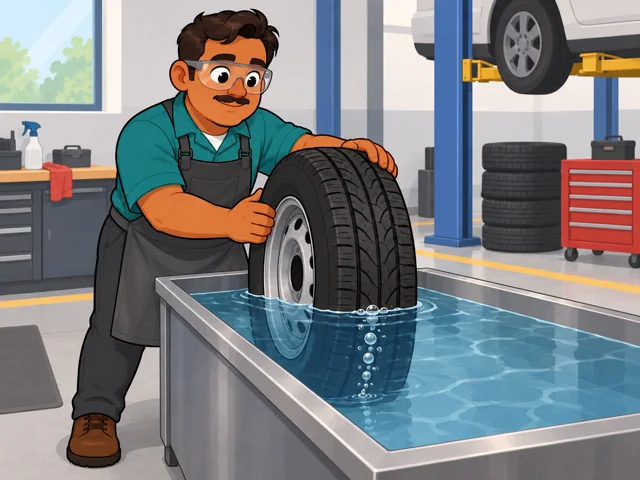
Find where the air escapes
Examine a tire that won't hold air, and try a water test so bubbles can mark the hole.
Career profile
Tire repairers and changers find air leaks, fix punctured tires, and replace worn-out ones.
Hands-on work with wheels and rubber: each job starts with a tire problem and ends with a finished fix that can be checked afterward.

Examine a tire that won't hold air, and try a water test so bubbles can mark the hole.
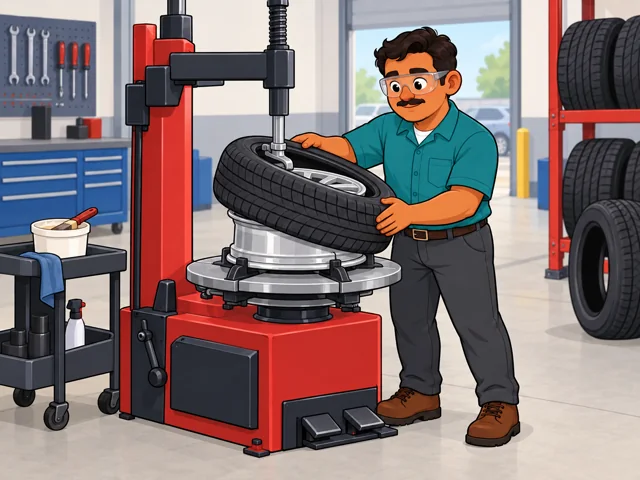
Use the tire changer to pull the old tire off the wheel, then fit the new one.
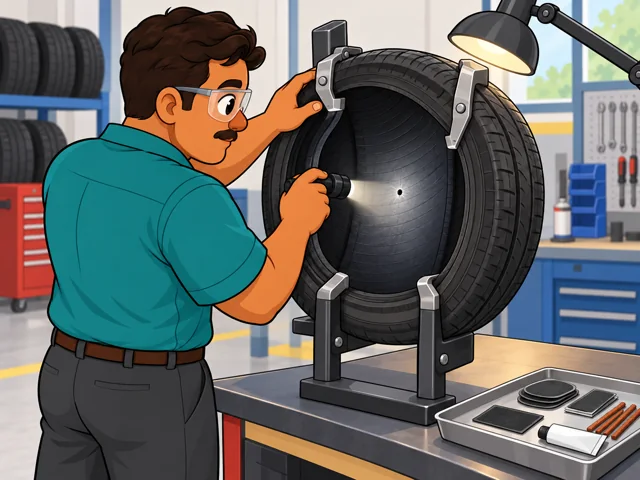
Judge the tire's condition before you fix the hole, because a puncture does not guarantee a repair.
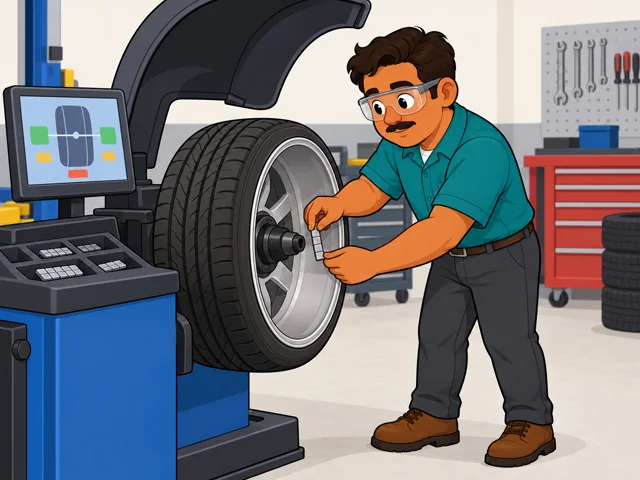
Spin the wheel and tire on the balancing machine, then add the counterweights it calls for.
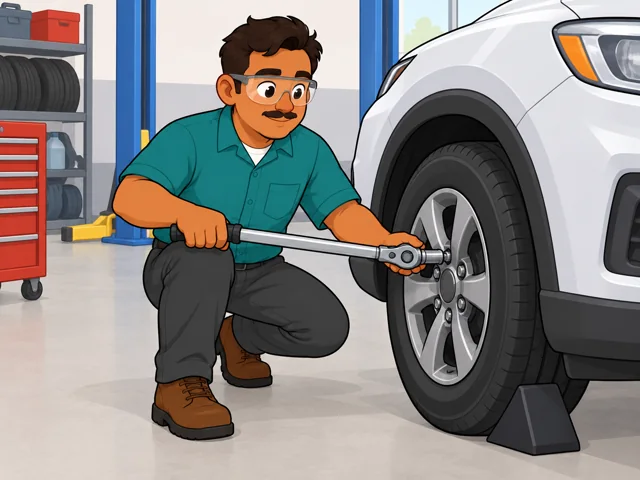
Put the wheel back on, then use a torque wrench to confirm the fasteners are tightened to spec.
United States · 2025
United States · 2025
United States · 2025–2035
Quick orientation
Typical preparation is a high school diploma or equivalent plus short-term workplace training.
The 2025 national median was $37,710 annually.
Employment is projected to grow 3.4% from 2025 to 2035.
Some tire changers automate parts of removing and mounting a tire, with screen prompts telling you when to intervene.
You still inspect tire damage, position the assembly and check the finished work.
How much of a future shift becomes machine monitoring rather than hands-on mounting will depend on the equipment shops adopt.
Pay in context
Compare the guaranteed wage and expected hours before counting any bonuses.
In 2025, median pay was $37,710 a year, or $18.13 an hour. This is the middle of the occupation's wage distribution, not a promised starting rate.
The lowest-paid 10% earned $30,010 or less annually; the highest-paid 10% earned $50,230 or more. These groups are not the same as beginners and experienced workers.
For an older national comparison, tire technicians averaged $17.27 an hour at automotive parts, accessories and tire retailers, $17.07 in automotive repair and maintenance, and $21.25 at general merchandise retailers in May 2023. These are industry averages for this occupation, not current offers or starting rates.
About 12,900 openings per year are projected nationally for 2025–35, alongside 3.4% employment growth. Annual openings include replacement needs, not just newly created jobs.
Workplace training is the usual way in. A high school diploma or equivalent is typical; hiring requirements differ.
After entry
This starts where the entry routes leave off: early work, growing capability, and advancement or specialization.
Make vehicle lifting and wheel installation checks a reliable habit before concentrating on speed.
Develop your tire-condition judgment and learn to diagnose the sensors in a tire pressure monitoring system.
With further training, pursue alignment work: measuring and adjusting wheel angles to address uneven wear or a vehicle that does not track straight.
You work alongside other technicians on customer vehicles. Promised pickup times shape the pace, and coordinating the next job matters.
You travel to disabled fleet vehicles, then return to shop work between calls. Some positions rotate after-hours coverage, so the workday can extend into evenings or weekends.
Try it
Watch the tire-changing demonstration on Hunter's Revolution page. List what the technician does and what the machine does. Notice whether setting up, checking and repeating the work interests you.
Stay safe: Keep this exercise observational; do not lift a vehicle or operate tire equipment to try it.