
Career profile

Tool and Die Maker

Tool and die makers build and repair the precise tooling factories use to shape parts.

A die can look right yet turn out wrongly shaped parts. So you measure, fit and adjust its pieces until they work together.
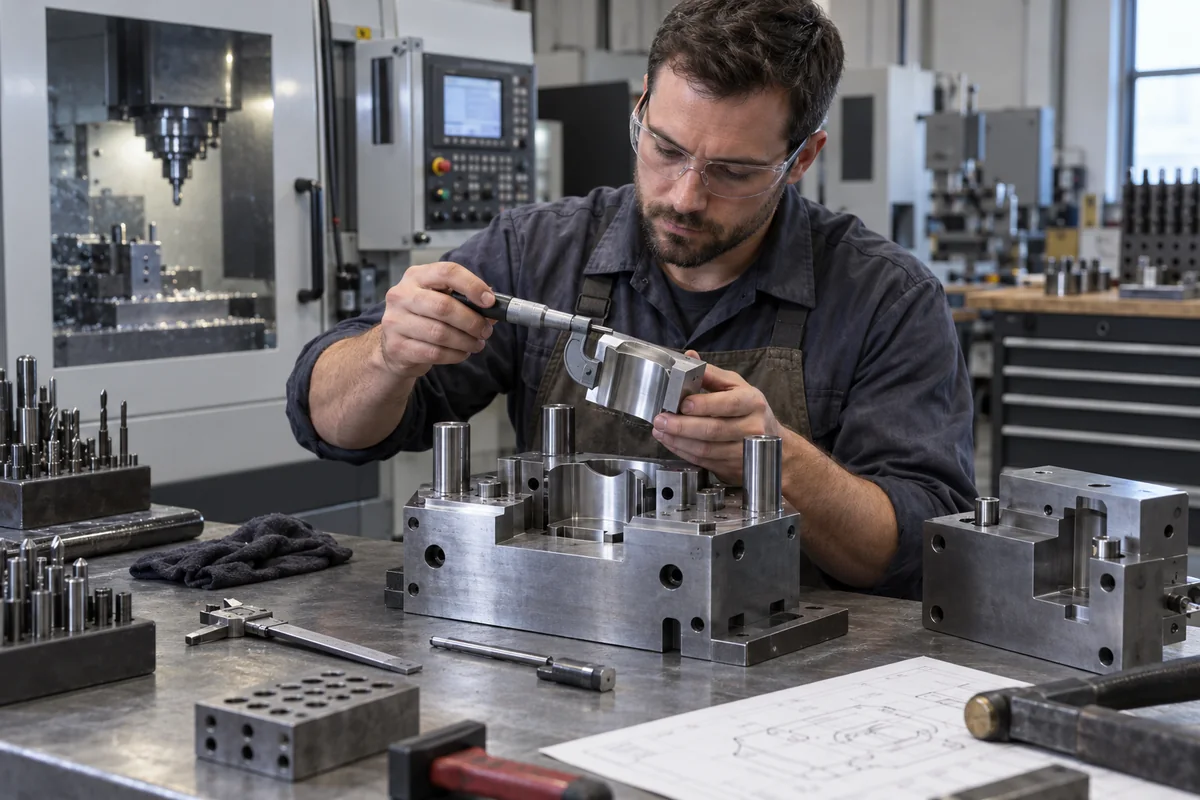
A tool and die maker checks a machined die insert with a micrometer.

A day in the life

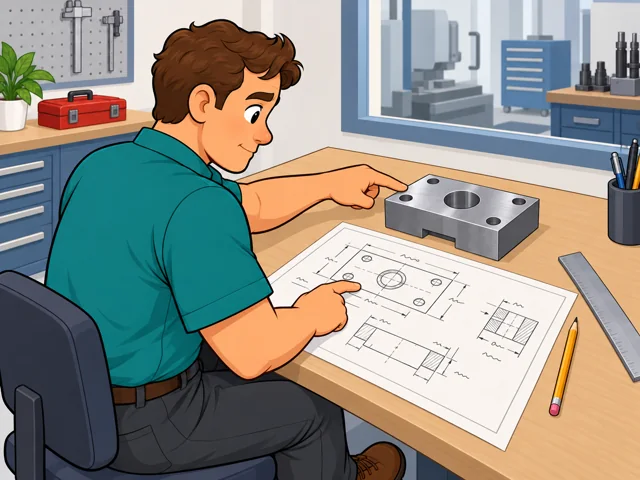
1A tool and die maker studies a drawing and identifies the first surface to machine on a steel blank.

Plan the order of cuts

Study the tool's drawing and its allowed size variation, then decide which surfaces to machine first.
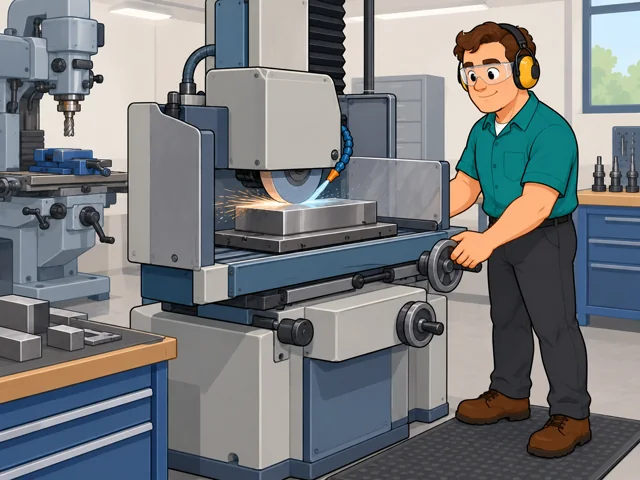
2The maker finishes a milled die component on a guarded surface grinder.

Mill and grind a die piece

Set up a milling machine to rough out the piece, then finish it exactly on a surface grinder.
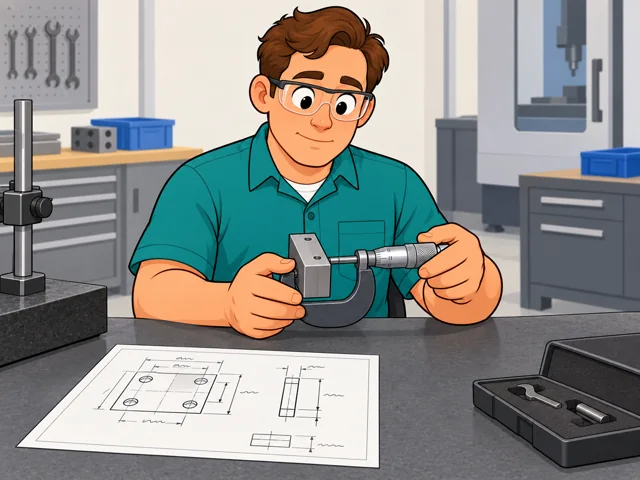
3The maker measures a component with a micrometer and compares its thickness with the drawing.

Measure a critical dimension

Before you accept the piece, take a micrometer reading and compare it with the size on the drawing.
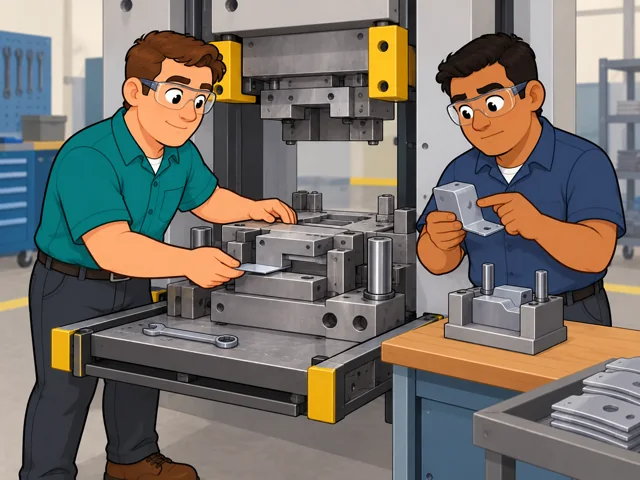
4The maker shims a die insert while a coworker checks a trial-stamped sample against a fixture.

Fit the die and test it

Grind or shim pieces to fit, then rework the die if a trial sample misses specifications.
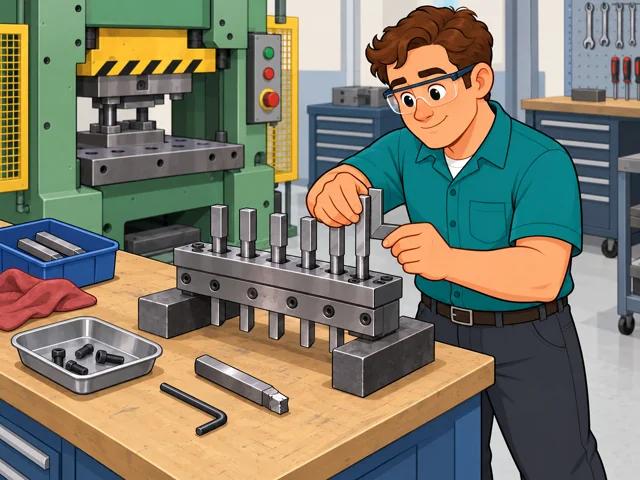
5The maker replaces a chipped stamping punch and checks the new punch's alignment in its holder.

Fix a worn punch

On stamping jobs, find damaged tooling, replace or sharpen it, then recheck the setup.

Quick facts

Preparation

Technical training + shop experience

United States

Pay

$64,050 a year

United States · May 2025

Outlook

4,300 openings a year

United States · 2025–2035

Quick orientation

Preparation, pay & outlook

Preparation

Technical training + shop experience

Build skills through an apprenticeship or technical program, with substantial learning on the job.

Geography
United States
Period
Not applicable

Pay

$64,050 a year

National median employee wage; about $30.79 an hour.

Geography
United States
Period
May 2025

Outlook

4,300 openings a year

Employment is projected to fall 9.2% during 2025–35, with openings still expected as workers leave.

Geography
United States
Period
2025–2035

Fit, tradeoffs & changing tools

Things to weigh

  • Expect standing, machine noise, and close attention to protective equipment.
  • Some production-support jobs run overnight, which can reshape your sleep and social schedule.

Where AI may help

Computer-aided design models tooling; computer numerical control, or CNC, runs programmed machine movements.

What people still lead

You still investigate wear, judge repairs, and help resolve troublesome die setups.

What we can’t predict yet

Automation may absorb more programming and machining work; how much hands-on fitting remains will vary with the tooling.

Pay in context

Earnings

The U.S. median was $64,050 annually, or $30.79 hourly, in May 2025. Half earned more and half less.

The wage spread

The lowest-paid 10% earned below $44,680; the highest-paid 10% earned above $92,680. These are wage percentiles, not beginner and senior rates.

Geography
United States
Period
May 2025
Pay basis
Annual employee wage thresholds for tool and die makers

Workplace matters

Annual medians were $78,200 in transportation equipment manufacturing, $63,160 in fabricated metal products, and $62,780 in machinery manufacturing.

Geography
United States
Period
May 2025
Pay basis
Industry-specific median annual employee wages for tool and die makers

Pay while learning

Apprentice pay increases as skill and experience milestones are reached.

Geography
United States
Period
Not stated
Pay basis
Apprenticeship wage progression; no starting rate specified

Openings despite fewer jobs

About 4,300 openings are projected annually during 2025–35, alongside a 9.2% employment decline. Openings do not mean the occupation is growing.

Geography
United States
Period
2025–2035
Pay basis
Employment projection, not compensation

Getting started

Join an employer apprenticeship

Several years; the Wisconsin tool and die maker route described here takes five.Paid
What the route involves
Learn machining with experienced workers while taking classes in drawings, shop math, materials, and digital tooling.
What it can lead to
Develop practical tool-and-die skills while earning wages and completing the apprenticeship's workplace and classroom training.
What to check
Requirements depend on the sponsor. Moraine Park's Wisconsin route requires applicants to be 18, have a high school diploma or equivalent, and submit an apprentice/employer application.

Complete a tooling program

Moraine Park's technical diploma takes two years; compare local programs' entry requirements and costs.
What the route involves
Practice blueprint reading, precision measurement, CNC programming, and building mold and stamping dies in a technical college shop.
What it can lead to
Gain initial skills for tooling and machining roles. Moraine Park's diploma also covers the related classroom training for Wisconsin's Tool and Die Technologies apprenticeship.
What to check
Expect further workplace training to become fully competent.

Choose between learning through an employer and building initial skills in a technical program.

After entry

Career paths

This starts where the entry routes leave off: early work, growing capability, and advancement or specialization.

  1. Get dependable at the bench

    After entry, build consistent habits in safe machine setup, measurement, and fitting. Learn to explain your inspection results to the experienced maker checking your work.

  2. Connect the whole build

    Develop from individual machining operations toward taking a tooling component from its drawing through cutting, inspection, and assembly.

  3. Become the person others consult

    Specialize in complex stamping dies, tackle difficult setup problems, and train apprentices as your experience grows.

Where you can work

Stamping production plants

You work with die engineers to keep production tooling usable. Repairs and die changeovers matter here, and some positions cover night shifts.

  • Indoors
  • Shift work
  • Safety-sensitive

Product development tooling centers

You build dies, molds, and assembly tools for sample products. The work helps test engineering ideas, so the focus is proving a new tool can work.

  • Indoors
  • Safety-sensitive

Try it

See whether the job clicks before you commit to the path.

Sketch a fixture that would hold a rectangular eraser in the same position each time. Mark where it touches the fixture and how you would check its position. Revise the sketch if the eraser could slide. Notice whether you enjoy working out the fit.

Stay safe: Keep this a paper exercise; no cutting or powered tools are needed.

Explore more careers

Sources

  1. O*NET OnLine. Tool and Die Makers — 51-4111.00. Accessed 2026-10-03.
  2. U.S. Bureau of Labor Statistics. Machinists and Tool and Die Makers. Accessed 2026-10-03.
  3. U.S. Bureau of Labor Statistics. Occupational projections and worker characteristics, 2025–35. Accessed 2026-10-03.
  4. Moraine Park Technical College. Tool and Die Technologies Apprenticeship. Accessed 2026-10-03.
  5. Moraine Park Technical College. CNC / Tool and Die Technologies Program. Accessed 2026-10-03.
  6. TE Connectivity. 3rd shift — Tool & Die Maker III, Greensboro. Accessed 2026-10-03.
  7. TE Connectivity. Manufacturing Technician Co-op, Middletown. Accessed 2026-10-03.

Your message goes to the Great Jobs team. How we use your information