

Hear how the symptoms began
Ask when the urinary symptoms began, go over medical history and interpret test results before picking a treatment.
Career profile
Urologists treat urinary tract and male reproductive problems with drugs, procedures and surgery.
On one possible day, you explore a clinic patient's trouble urinating and later remove a stone in surgery. Urology blends careful listening with hands-on care.
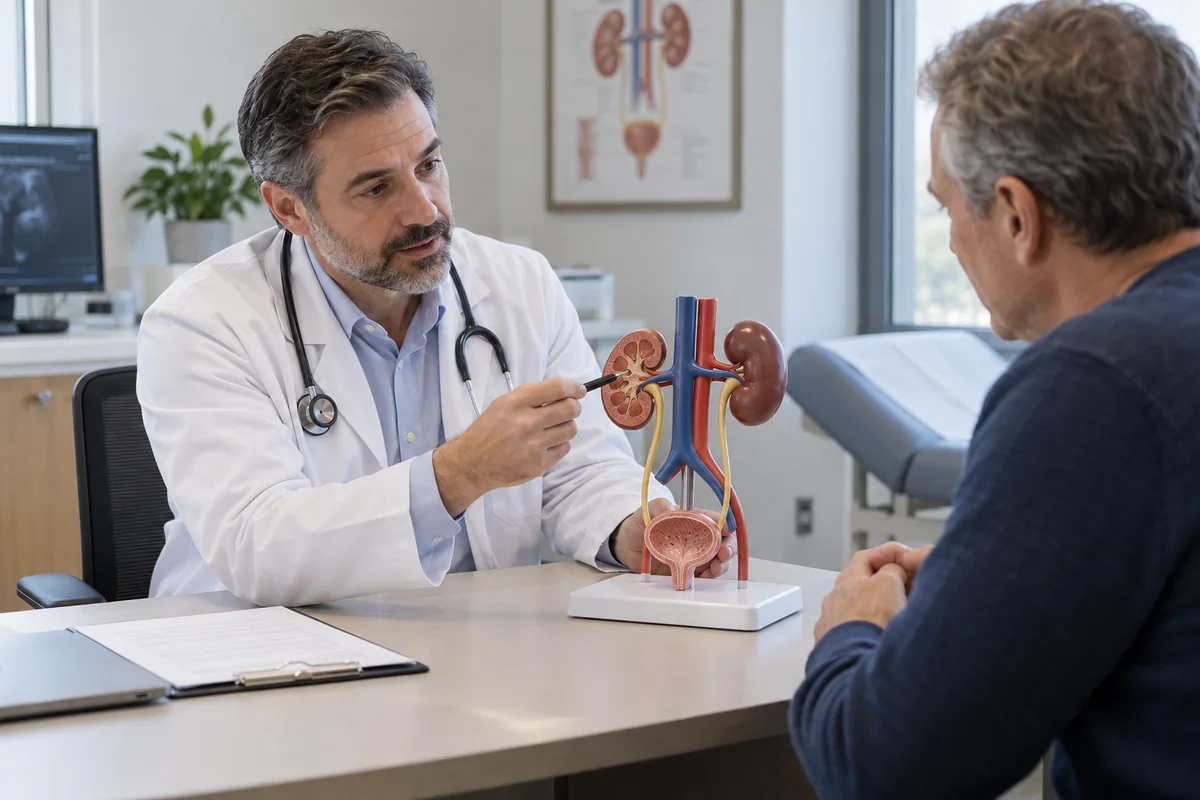
Ask when the urinary symptoms began, go over medical history and interpret test results before picking a treatment.
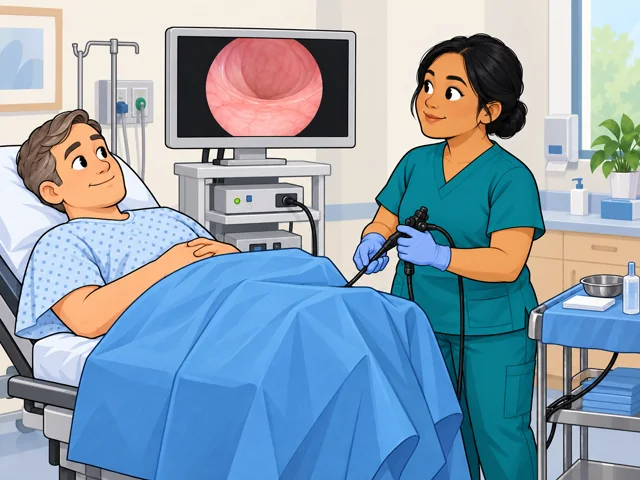
Use a cystoscope, a thin camera-and-light tool, to see the bladder lining when symptoms need a closer look.
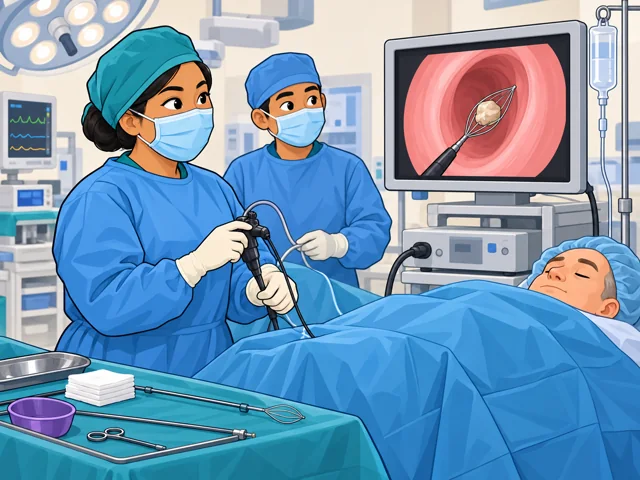
Steer a thin scope through the urinary tract, find the stone, then remove it whole or fragment it.
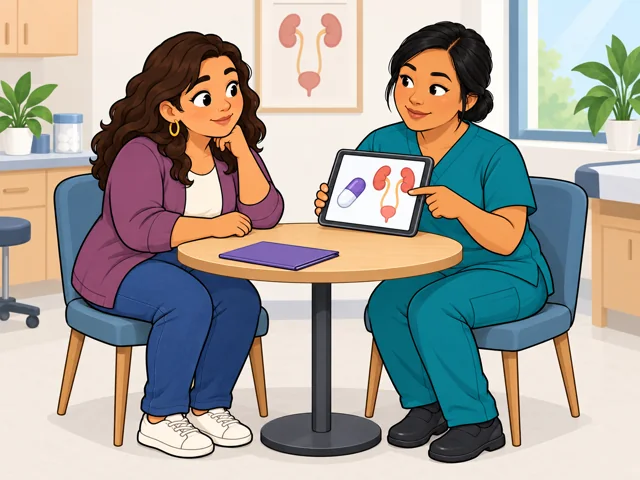
For an already diagnosed problem like an infection, prescribe a drug and explain what it should accomplish.
United States
United States · 2025
Your options depend on location and the kind of urology practice you want to join.
Quick orientation
After college and medical school, the standard specialty pathway includes at least five clinical years of postgraduate training.
A 2025 survey-based estimate for full-time urologists; this is an average, not a median or starting salary.
Your options depend on location and the kind of urology practice you want to join.
In some operations, a computer-assisted surgical system lets you control small instruments from a console while viewing the surgical area in three dimensions.
You choose the approach and control the instruments. Current robotically assisted systems require direct human control.
How much future systems will automate individual surgical steps remains uncertain; changes will also affect what surgeons need to learn and monitor.
Pay in context
Specialist earnings come after years of training. National compensation estimates and a job’s base salary describe different things.
Average annual urology compensation was $566,740 in the 2026 Doximity report, using 2025 survey data from full-time physicians. Dividing by 2,080 hours gives about $272 an hour, but that is only a comparison: actual physician hours vary, and this is not an hourly wage.
A general-urology faculty position at the University of Southern California lists $350,000–$700,000 in annual base salary across assistant through full professor ranks. Responsibilities, experience, and training influence the offer. This is a position-specific range, not the national pay spread.
These are consecutive steps. You typically complete a bachelor’s degree before medical school; no single undergraduate major is required.
After entry
This starts where the entry routes leave off: early work, growing capability, and advancement or specialization.
Build your practice and keep clear case records. Reviewing those records helps you examine treatment decisions and supports the board-certification practice review.
If your practice uses robotic surgery, complete device-specific training and obtain the facility credentials needed to add those procedures.
A fellowship in urologic oncology—care of urinary and male reproductive cancers—can deepen your surgical skills while adding research and teaching experience.
In an integrated practice, you can move between clinic visits and hospital procedures, work with referring doctors, and share call with other urologists. The mix may support broad general practice plus a particular interest.
Clinical faculty jobs can combine patient care with teaching residents and collaborating on research. Explaining decisions to trainees becomes part of the working day.
Try it
Read a public explanation of cystoscopy and ureteroscopy. Sketch the kidneys, ureters, bladder, and urethra, then explain aloud where each scope goes and what it helps a urologist see. Notice whether understanding the anatomy and explaining a procedure both interest you.
Stay safe: Use diagrams only; this is an explanation exercise, not practice performing a procedure.