
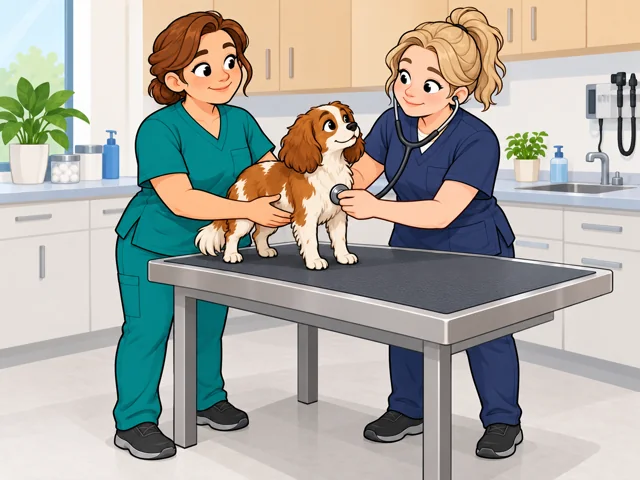
Hold an animal for the vet
Keep the animal from moving while the veterinarian examines it.
Career profile
Veterinary assistants help animals through exams and recovery and keep the clinic ready for them.
Hold a dog steady during its exam, then clean that room for whichever animal is next. You handle both patient care and cleanup.
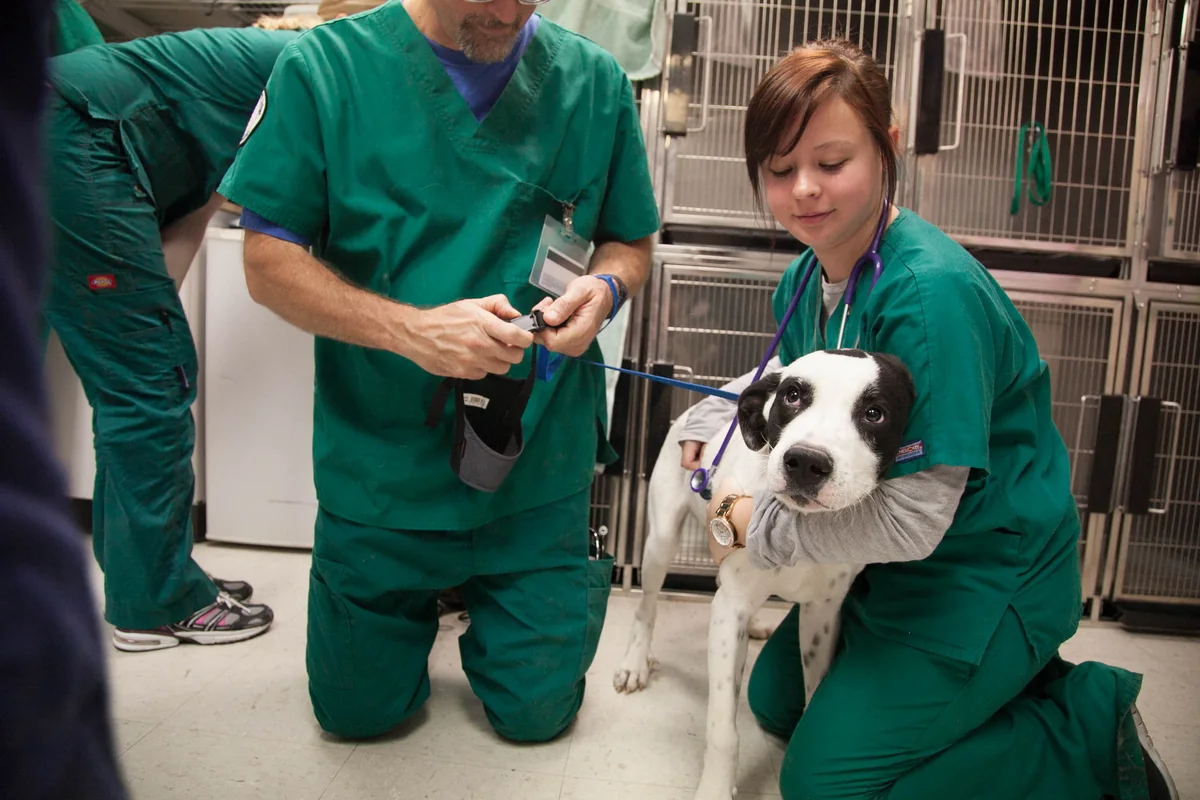
Keep the animal from moving while the veterinarian examines it.
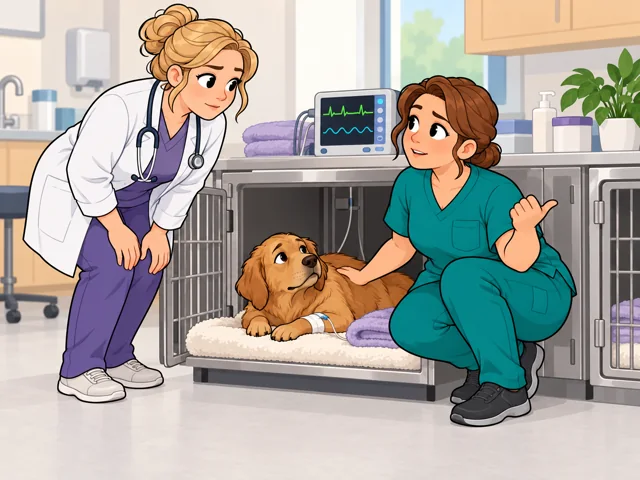
Stay close as the animal wakes up and report anything unusual to the vet.
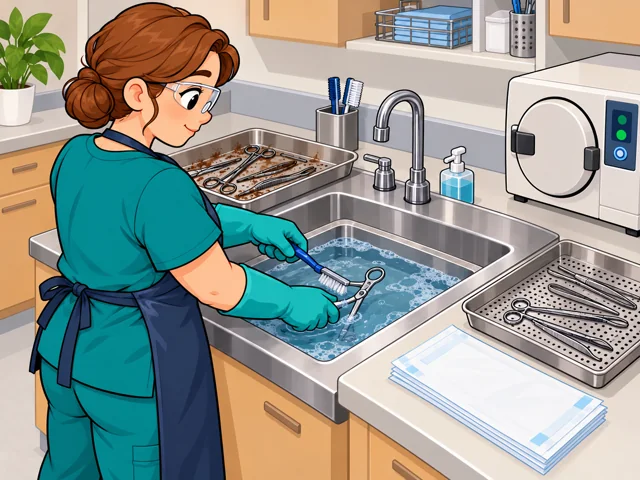
Wipe down kennels and exam surfaces, then wash and sterilize the instruments so the room is ready again.
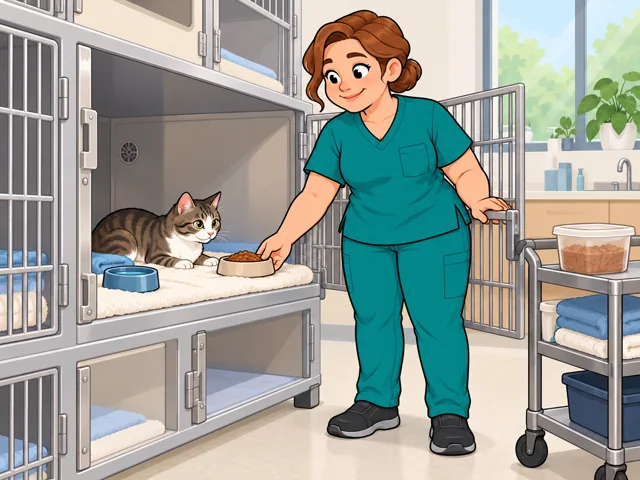
In hospital settings, you feed the animals staying in and help with their daily care between treatments.
United States · 2025–2035 classification
United States · May 2025
United States · 2025–2035
Quick orientation
Typical preparation for veterinary assistants and laboratory animal caretakers is a high school diploma or equivalent plus short-term on-the-job training.
Median for veterinary assistants and laboratory animal caretakers combined; $18.34 per hour.
For veterinary assistants and laboratory animal caretakers combined, with 23,200 openings per year on average.
Some clinic software sends appointment reminders and saves client messages automatically, reducing repeated clerical steps.
Holding an animal and noticing a change during recovery still require direct attention.
How much automation changes your day depends partly on whether your job includes front-desk work or mostly animal care.
Pay in context
These U.S. figures combine veterinary assistants and laboratory animal caretakers.
In the combined group, the lowest-paid 10% earned below $30,120 annually; the highest-paid 10% earned above $49,150. These are not starting and experienced pay rates.
Combined-group annual medians were $37,930 in veterinary services, $47,860 in educational services, and $49,230 in scientific research and development.
The combined group is projected to have 23,200 openings annually, on average, during 2025–2035. That includes replacing people who leave, not just newly created jobs.
The usual route for veterinary assistants and laboratory animal caretakers is to learn at work. Assistant training programs offer another preparation option.
After entry
This starts where the entry routes leave off: early work, growing capability, and advancement or specialization.
Build consistent habits in cleaning and animal handling.
With further workplace training, develop skills in caring for admitted animals and checking vital signs. Emergency hospitals are one setting for this work.
For broader clinical responsibilities, explore veterinary technology. Technicians usually complete a two-year associate degree and meet state requirements for an exam and registration, licensing, or certification.
You work beside veterinarians and technicians through examinations and treatments, preparing rooms and equipment between animals.
Some assistant roles focus on animals admitted for continuing care. Feeding patients and checking vital signs bring repeated contact with the same animals during their stay.
Try it
Watch a familiar pet resting or moving normally for five minutes. Write a short handoff describing only what you saw, without guessing a diagnosis. Would you enjoy paying this much attention repeatedly during a shift?
Stay safe: Observe without restraining the animal or changing its care.