

Career profile

Restaurant Server

Waiters and waitresses answer menu questions, take orders and keep meals moving until the bill.

Good service means noticing what a seated table needs and working with the kitchen staff to get it covered.
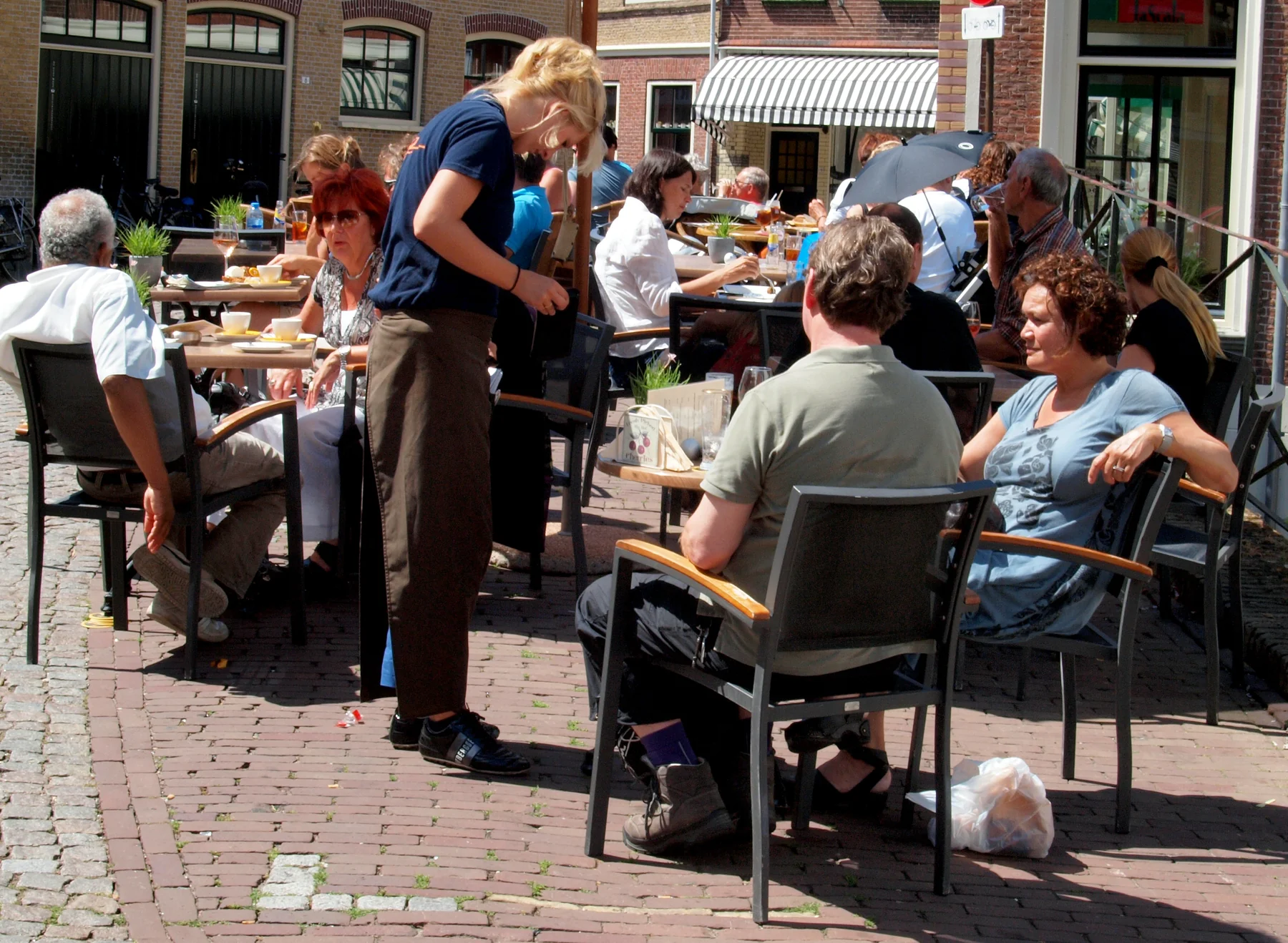
Restaurant Server serves diners at outdoor restaurant tables.
zoetnet / Wikimedia Commons, CC BY 2.0

A day in the life

1A restaurant server listens as one diner points to a menu choice and writes his order while his companion waits.

Take the table's order

Explain the menu choices, note any changes a guest asks for, and record each person's order.
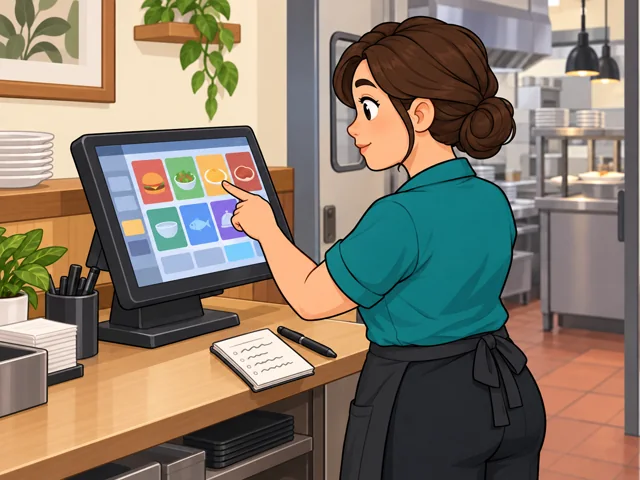
2The server checks her written order while entering meal selections into a restaurant ordering terminal.

Send orders to the cooks

In restaurants with networked ordering software, you key items into a handheld or terminal for the cooks.

3The server places a meal before the diner who ordered it while holding his companion’s plate.

Bring each guest's plate

Carry the dishes to the table and set each in front of the guest who ordered it.

4The server explains a diner’s cold-food complaint to a kitchen coworker beside the returned meal.

Handle a cold-food complaint

When a guest says the food isn't hot enough, get details, then talk to the kitchen staff.

5The server collects a payment presenter as the meal ends, with used dishes ready to clear and clean settings nearby.

Settle up and reset the table

Take the guests' payment, clear away the dirty plates and dishes, and lay out fresh place settings.

Quick facts

Preparation

Learn on the job

United States · 2025

Pay

$16.94/hour

United States · May 2025

Outlook

2% projected growth

United States · 2025–2035

Quick orientation

Preparation, pay & outlook

Preparation

Learn on the job

Typically no formal educational credential; short-term workplace training.

Geography
United States
Period
2025

Pay

$16.94/hour

National median, including tips.

Geography
United States
Period
May 2025

Outlook

2% projected growth

About 423,100 openings annually, mostly replacing workers who leave.

Geography
United States
Period
2025–2035

Fit, tradeoffs & changing tools

Things to weigh

  • You spend most of the shift on your feet; pausing when you want may be difficult.
  • Evenings and weekends can conflict with your social schedule.

Where AI may help

Some ordering systems let guests order and pay on their phones, sending items directly to the kitchen.

What people still lead

You still explain choices and respond when a meal goes wrong.

What we can’t predict yet

How much ordering shifts to guests—and how that changes the number of tables a server handles—will vary by restaurant.

Pay in context

Earnings

These national figures cover waiters and waitresses across dining establishments.

The median and spread

The median was $16.94/hour, about $35,230 at 2,080 hours. The lowest 10% earned under $8.70/hour; the highest 10% exceeded $31.12. Part-time work is common.

Geography
United States
Period
May 2025
Pay basis
Hourly wages including tips; annual figure is a full-time equivalent.

Compare the setting

Hourly medians were $16.93 in food services and drinking places and $17.09 in traveler accommodation.

Geography
United States
Period
May 2025
Pay basis
Industry medians for waiters and waitresses, including tips.

Getting started

Train in a restaurant

What the route involves
Enter without prior experience where accepted, then learn alongside an experienced server.
What it can lead to
Learn the restaurant’s ordering and payment systems so you can serve tables.

Start with banquet service

What the route involves
Join an event-serving crew to set tables, serve meals, and clean up. Some positions accept beginners.
What it can lead to
Build experience with tableside, buffet, and passed-food service.
What to check
Employers may prefer hospitality experience and require you to meet alcohol-serving age rules.

Check local food-handler and alcohol-service requirements for your age and duties.

After entry

Career paths

This starts where the entry routes leave off: early work, growing capability, and advancement or specialization.

  1. Get established

    Make accurate orders and checkout your routine.

  2. Handle the rush

    Coordinate several tables without losing track of requests.

  3. Move into fine dining

    Use experience to pursue more formal restaurant service.

Where you can work

Restaurants without bussers

Clearing and cleaning tables also falls to you, adding work between serving customers.

  • Indoors
  • Shift work
  • Physical demands

Hotel banquets

You work with an event crew, setting up the room, serving a group, and breaking down afterward. Service may involve buffets or trays of passed food.

  • Indoors
  • Shift work
  • Physical demands

Try it

See whether the job clicks before you commit to the path.

Make a short pretend menu and take orders from two friends. Have one change an item while you record the other order, then read both back. Notice whether listening, correcting details, and keeping people informed feels satisfying.

Explore more careers

Sources

  1. O*NET OnLine. 35-3031.00 — Waiters and Waitresses. Accessed 2026-10-02.
  2. U.S. Bureau of Labor Statistics. Waiters and Waitresses — Occupational Outlook Handbook. Accessed 2026-10-02.
  3. U.S. Bureau of Labor Statistics. Occupational projections, 2025–35, and worker characteristics, 2025. Accessed 2026-10-02.
  4. U.S. Bureau of Labor Statistics. Waiters and waitresses — Occupational Requirements Survey. Accessed 2026-10-02.
  5. Toast. Toast Mobile Order & Pay Overview. Accessed 2026-10-02.
  6. White Lodging / Marriott Careers. Banquet Server — Westin Austin Domain. Accessed 2026-10-02.

Your message goes to the Great Jobs team. How we use your information